

 Buy Online
 08 9671 1500
 office@dsatco.com
Why Worm Activity in Your Soil Is a Sign of a Thriving Garden Ecosystem
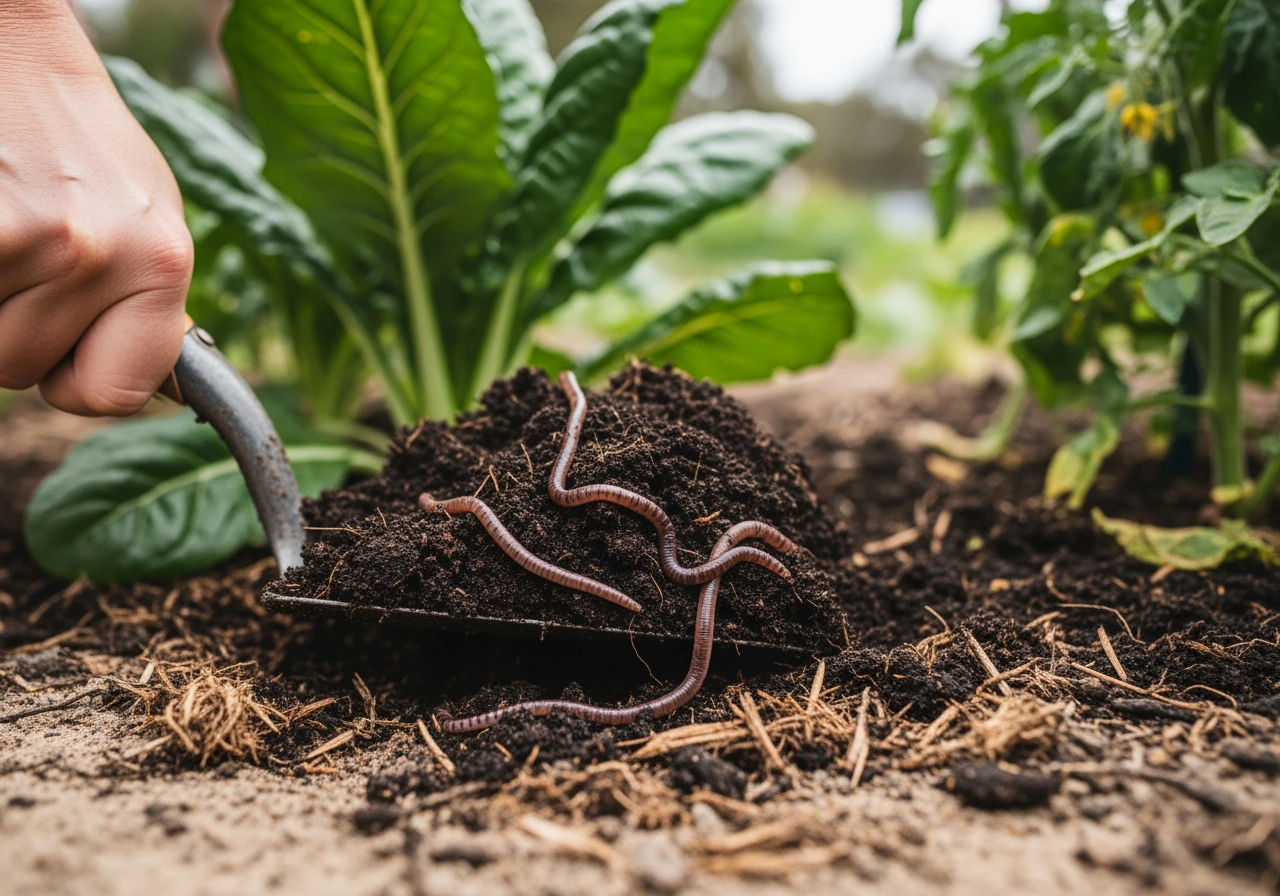
You are digging a planting hole in a bed you have been mulching and composting for two seasons. The spade goes in and there it is – a thick, healthy earthworm uncurling in the upturned soil. For a Perth gardener who started with grey Bassendean sand two years ago, this is not a minor observation. It is evidence that something fundamental has changed in your soil.
Earthworm population health is one of the most reliable indicators of a functioning soil ecosystem in any garden, but it carries special meaning in WA. Perth’s sandy coastal soils are naturally hostile to earthworms. They drain too fast, dry out too quickly in summer, and contain almost no organic matter for worms to feed on. When earthworms establish in a Perth garden bed, it means that moisture, food, and temperature conditions have all reached levels capable of supporting a complex living soil ecosystem. That is exactly the outcome that soil improvement efforts are building toward.
The connection between worm activity and broader soil fertility indicators runs deep. Earthworms do not thrive in isolation – they require the bacteria, fungi, and organic matter that together make up a functioning soil food web. Their presence confirms that the whole system is working. Their absence, in a bed you have been improving, is a signal about which condition still needs attention.
This guide explains what earthworms do for soil, why WA soils struggle to support them, and how to build the conditions that attract and sustain an earthworm population in Perth’s challenging sandy environment.
Earthworms as Indicators of Soil Health
Seeing earthworms in your Perth garden beds signals that multiple conditions are met simultaneously. There is enough moisture for worms to breathe through their skin. There is enough decomposing organic matter to feed the population. Soil temperature is within the range where earthworms remain active. The absence of toxic chemicals allows the biological community to function. And crucially, the soil has enough physical structure for worms to move through. Earthworms are among the most reliable soil biology indicators available to any WA gardener – better than any test kit.
In Perth’s raw sandy soils, none of these conditions exist naturally. Soil dries out within hours of irrigation. Organic matter is almost entirely absent. Summer temperatures drive worms into dormancy. When you find healthy earthworms in a bed, it is confirmation that your soil improvement work has reached a genuine threshold.
What Earthworm Presence Tells You About Your Soil
Active soil fertility indicators like earthworm populations in WA are meaningful precisely because of how difficult they are to establish. The combination of organic matter inputs, consistent moisture management, and surface temperature regulation that allows worms to survive Perth’s conditions is also the combination that builds the soil structure, carbon, and biological diversity that makes gardens genuinely productive.
DSATCO Piggypost is one of the most effective inputs for creating the below-ground conditions earthworms need. This mature compost product introduces the humus, biological activity, and food sources that worms require to establish and sustain populations in sandy WA soils. Applied before planting and incorporated into the top soil layer, it creates the kind of biologically rich, moist-holding environment that earthworms colonise within weeks of application.
The Connection Between Soil Fertility Indicators and Plant Performance
Earthworm populations in WA gardens do not just indicate soil health – they drive it forward. Each worm that establishes in your soil adds to the fertility-building processes that make the garden more productive. More worms means more castings, more tunnelling, more biological activity. The soil becomes a progressively better growing environment with each season that an established earthworm population is active.
Gardens with thriving earthworm populations consistently show stronger plant growth, better drought tolerance, and fewer nutrient deficiency symptoms than adjacent beds with depleted biology. The worms are not just a symptom of good soil health. They are actively maintaining and improving it, contributing worm activity garden performance that compounds season after season.
What Earthworms Actually Do in Your Garden
Earthworms perform functions in soil that gardening tools and products can supplement but never fully replace. They are simultaneously engineers of physical structure, processors of organic matter, and distributors of biology – a combination that makes them the single most valuable organism in any productive Perth garden.
DSATCO Lupin Mulch provides the surface organic matter that feeds earthworm populations in Perth garden beds. Made from WA lupin plant material and chicken manure, it breaks down progressively to deliver a continuous food supply in the top few centimetres of soil where earthworms naturally feed. As worms pull decomposing lupin material into their burrows, they distribute the nitrogen and microbial life it carries throughout the soil profile – a natural and thorough incorporation process that improves earthworms WA gardeners can see expressed in stronger plant growth.
How Earthworm Tunnelling Improves Soil Structure
The burrows earthworms create in soil serve multiple purposes. They are pathways for water infiltration, allowing rainfall and irrigation to penetrate evenly rather than draining rapidly through the surface layer or running off. They create channels for air circulation that maintains the aerobic conditions beneficial microbes need. And they allow plant roots to follow the path of least resistance deeper into the soil profile, reaching moisture reserves that shallow roots in compacted or structureless sand never access.
In Perth’s sandy soils, where water infiltration is often too fast rather than too slow, this might seem counterproductive – but the difference is in drainage control. Worm tunnels do not prevent drainage. They create a network of passages at different soil depths that allow water to move more slowly and evenly, holding it in the root zone longer before it drains below plant reach. This is a structural benefit that no amendment or conditioner produces as effectively as an established earthworm population.
Worm Castings as Premium Soil Fertility
Earthworm castings are among the most nutrient-dense materials naturally available to garden soil. They contain macro and trace nutrients in immediately plant-available forms, coated in the beneficial bacteria that worms spread as they move through soil. The casting surface is also physically structured to resist nutrient leaching better than surrounding sandy soil, creating small zones of improved fertility wherever worms are active.
An established earthworm population delivers castings continuously and throughout the root zone, not in a single application. The fertility production is ongoing, distributed, and perfectly placed – at root level where plants can access it most efficiently. This is a form of soil fertility indicators expression that no bag-applied product can match in terms of distribution and timing.
Why Sandy WA Soils Struggle to Support Earthworms
Perth’s Bassendean sands create conditions that are genuinely hostile to earthworm populations without deliberate intervention. The same characteristics that make WA soils challenging for plants also make them difficult for earthworms to inhabit.
DSATCO Triple-C Mulch provides the sustained surface organic matter that maintains the conditions earthworms need between seasons. Applied at 50 to 75mm depth, it moderates soil temperature and moisture at the surface layer where earthworms are most active, creating a buffer zone that extends the period when worms can remain active in Perth’s variable climate.
The Moisture and Organic Matter Deficit
Earthworms breathe through their skin using moisture as the medium. When soil dries out, earthworms cannot extract oxygen from dry soil particles and must either burrow to find moisture deeper in the profile or enter dormancy. Perth’s sandy soils dry out from the surface downward within hours of summer irrigation, making the top 10 to 20 centimetres – the most biologically active and food-rich zone – essentially uninhabitable for extended periods.
The organic matter deficit compounds the moisture problem. Even if moisture could be maintained, worms need a continuous supply of decomposing organic material to feed on. Raw Perth sand provides almost none. Building worm activity garden health requires providing both moisture stability and food supply simultaneously – which is exactly what a consistent mulch layer over compost-amended soil achieves.
Summer Heat and Soil Temperature
DSATCO is a Western Australian company that produces premium organic mulch and garden products, grown and sourced 100% from WA farms. The product range addresses the specific conditions that make earthworm establishment difficult in Perth soils – through products that provide food, moisture retention, and temperature moderation from the surface down.
Perth’s summer soil temperatures in unprotected sandy beds reach levels that drive earthworm populations into deep dormancy or push them far below the root zone. A consistent organic mulch layer is the most effective tool for keeping surface soil temperatures in the range where earthworms remain active. Each degree of temperature reduction from mulch coverage extends the window during which earthworms can feed, breed, and contribute to soil health across the season.
How to Create Earthworm-Friendly Conditions in Perth Gardens
Creating the conditions that support earthworm populations in Perth’s sandy soils requires addressing moisture, food supply, and temperature simultaneously. Each of these three factors is essential – improving two without the third will not produce a sustainable earthworm population.
DSATCO Sugar Cane Mulch is particularly effective for vegetable gardens and annual beds where earthworm population establishment is a priority. Its lighter texture and faster decomposition rate deliver food to surface-feeding earthworms more quickly than denser composted products, supporting population growth in the most biologically active zone of the soil during Perth’s prime earthworm seasons.
Organic Mulch as the Key to Worm Attraction
A 50 to 75mm organic mulch layer addresses all three earthworm requirements at once. It moderates soil temperature by insulating the surface from solar radiation. It retains moisture by blocking evaporation and slowing drainage. And as it breaks down, it provides the continuous food supply that sustains worm populations through the full season. For Perth gardeners looking to attract and retain earthworms WA soils do not naturally support, consistent mulch cover is the single most effective step.
DSATCO Lawn Maximizer builds the organic matter and moisture retention in lawn root zones that supports earthworm activity beneath turf. Perth lawns managed with organic topdressing develop more active earthworm populations than those maintained on synthetic fertilisers alone – and the visible result is healthier, more drought-tolerant grass that recovers faster from summer stress.
Soil Conditioners That Create Worm Habitat
Incorporating composted organic matter before planting creates below-ground conditions that earthworms colonise rapidly once surface mulch provides the food and moisture support from above. Piggypost dug into the top 15 centimetres before planting introduces the humus, microbial activity, and physical looseness that earthworms need to move freely through the soil. Combined with a quality surface mulch, this two-layer approach accelerates earthworm establishment in new Perth garden beds.
Seasonal Worm Activity and Soil Improvement Timing
Perth’s Mediterranean climate creates distinct seasonal patterns for earthworm activity that WA gardeners can work with to maximise the biological return from soil improvement efforts.
Autumn is the most productive season for building soil fertility indicators and earthworm populations in Perth. As temperatures moderate and the first rains arrive, earthworms emerge from summer dormancy, begin feeding actively, and breed rapidly if conditions are right. Applying fresh mulch and incorporating composted soil conditioner in April and May gives worms the improved conditions they need at exactly the time when they are most responsive to them.
Peak Activity Seasons for WA Earthworm Populations
Winter through early spring is when Perth earthworm populations are most active at the surface. Consistent moisture from winter rainfall, moderate temperatures, and abundant decomposing organic material from autumn mulch applications create ideal conditions. This is when castings accumulate, tunnelling occurs throughout the root zone, and the biological work that builds long-term soil fertility is most intense.
The full DSATCO product range is available online with bulk bag options for gardeners wanting to cover large areas comprehensively. Planning your autumn mulch and soil conditioner applications to coincide with the peak earthworm activity season delivers the fastest improvement in soil biology Perth healthy soil ecosystem goals require.
Managing Through Summer Dormancy
Summer dormancy for earthworms in WA gardens is normal and expected. It does not indicate failure or loss of progress. What matters is that the surface conditions at the end of summer – when worms emerge from dormancy in late March and April – are welcoming enough for populations to resume activity and expand.
Maintaining mulch cover through summer is the most important management action for sustaining long-term earthworm populations in Perth gardens. Even dormant worms at depth benefit from the cooler, moister soil conditions a mulch layer creates at the surface. And when autumn arrives and temperatures drop, the mulch layer is already in place as the first food source for reactivating populations.
For Vivantes Triple-C Mulch available through Bunnings, the same seasonal timing and application depths apply. The WA-grown organic material delivers the food, moisture retention, and temperature moderation that earthworm populations need, regardless of which retail channel you choose.
Healthy soil pays for itself in every season. Find the right DSATCO product for your garden or call 08 9671 1500 for advice.
Latest Posts
- How to Stage Bulk Bags For Soil Improvers Versus Lawn And Mulch
- How to Size Multi-Bed Garden Orders From Bulk Bag Coverage
- Coordinating Metro Stockists Sourcing and Bulk Transport for Large Projects
Reviews from
Happy Gardeners
 "Results have been spectacular. The grass has never looked healthier."
Rod


