

 Buy Online
 08 9671 1500
 office@dsatco.com
Why Composted Chicken Manure Blends Deliver Steady Nutrient Release
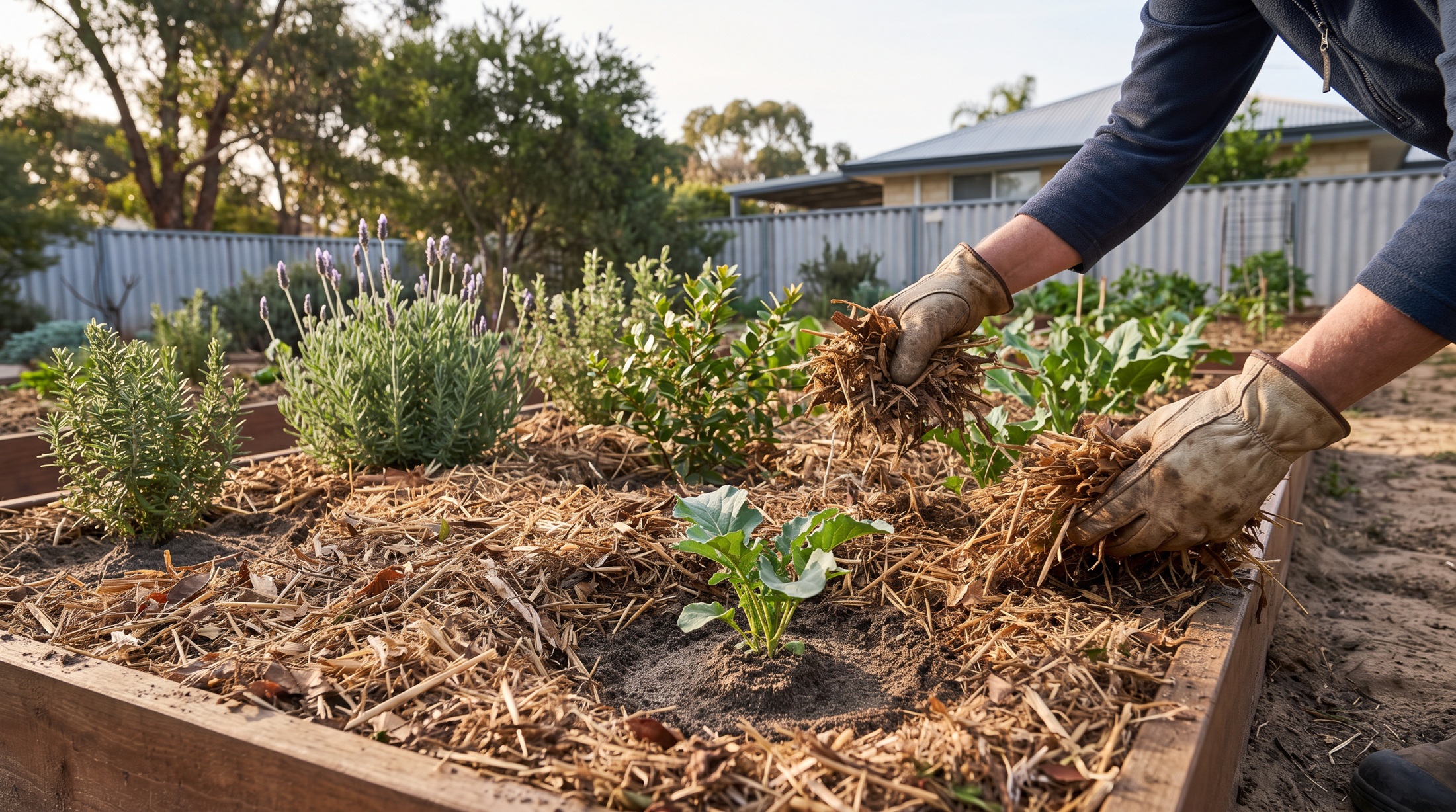
Gardeners often want nutrients to stay available without relying on repeated, separate feeding steps. That makes the way organic material breaks down just as important as the nutrient source itself. A well-made mulch can cover the soil while its organic ingredients gradually decompose.
This matters in Western Australia because many Perth gardens sit on sandy, free-draining soils. Organic matter can support better soil structure and moisture retention as it breaks down. In that setting, composted chicken manure can be useful when it forms part of a balanced organic blend rather than being treated as a stand-alone cure.
The key question is how these blends provide organic garden nutrients over time. This guide explains how gradual breakdown, processed organic material and soil biology shape that nutrient-release pattern.
Why Composted Organic Blends Release Nutrients Gradually
What Makes Nutrient Release More Gradual?
Organic mulch does not sit unchanged on the soil forever. Its plant material breaks down progressively and becomes part of the soil. That is why nutrient release from an organic blend can feel steadier than a single application of a separate garden input.
DSATCO Lupin Mulch is made from organically sourced WA lupin plant material with chicken manure. DSATCO states that it gradually releases nutrients into the soil as the mulch breaks down. This directly supports the idea behind steady organic garden nutrients.
The mulch also contains organic material that eventually becomes humus. DSATCO says this process increases soil carbon and improves soil texture. The value is therefore not limited to feeding plants. The mulch is also intended to support the soil environment around their roots.
What Role Does Chicken Manure Play in the Blend?
Chicken manure is one nutrient-bearing ingredient, but DSATCO does not present it as the whole formula. The plant materials around it are also important because they give the mulch structure and organic matter.
The composted Triple-C blend combines cereal crops, chicken manure and canola. DSATCO describes it as nitrogen-rich and water-retaining. The product page also states that its organic matter breaks down slowly while nutrients become available to plants.
That distinction matters. The manure component works within the blend rather than acting as a separate surface dressing. Gardeners get a mulch layer, decomposing organic matter and nutrient-bearing ingredients in one application.
Why This Matters in Western Australian Gardens
Why Can Sandy Soils Benefit From Organic Matter?
Perth’s sandy soils can lose moisture and nutrients quickly. A surface layer of organic mulch helps shield the soil while also contributing material that breaks down over time.
Where soil needs more direct improvement before mulching, DSATCO Piggypost is a separate soil enhancer rather than a chicken-manure mulch. DSATCO describes it as mature compost that adds humus, supports nutrient and moisture retention, and contains living microbes.
This difference is useful when planning a garden bed. A soil enhancer works within the soil, while a mulch sits over the surface and gradually integrates. They have related roles, but they should not be described as the same product.
How Do Mulch and Soil Biology Work Together?
DSATCO’s mulch pages describe naturally occurring microbial bacteria within its organic products. These microbes form part of the soil-life story rather than a guaranteed performance claim.
The DSATCO range is produced for Western Australian gardens using locally sourced organic materials. In this context, the company’s mulch products are designed to protect the soil surface while organic material breaks down and contributes to soil biology.
For gardeners comparing organic mulch blends, this is an important point. Nutrient release is tied to an active organic system. It is not presented as an instant or fixed-dose process.
Choosing a Chicken-Manure Blend for the Garden
When Does Lupin Mulch Fit the Job?
Lupin Mulch suits gardeners who want a nutrient-rich mulch made from WA lupin plant material with chicken manure. DSATCO states that the product is pasteurised to ensure it is weed, seed and disease free.
The same core formula is also listed as Vivantes Lupin Mulch. That product is described as organic lupin plant material with added chicken manure and is part of DSATCO’s Vivantes range.
This makes Lupin Mulch relevant when organic garden nutrients are wanted alongside surface mulching. It is especially useful to think of it as a mulch that feeds the soil as it breaks down, not simply as bagged composted chicken manure.
When Does Triple-C Mulch Fit the Job?
Triple-C is a different formula. Its cereal crops, chicken manure and canola create a light-brown composted mulch with a stated pH of 6.5.
For retail buyers comparing the Vivantes range, Vivantes Triple-C uses the same named blend of cereal crops, chicken manure and canola. DSATCO describes it as water-retaining and able to reduce evaporation by insulating the soil surface.
This makes Triple-C relevant when the garden needs both moisture management and a composted organic mulch. Its role is broader than nutrient supply alone.
Applying Nutrient-Rich Mulch Correctly
How Deep Should the Mulch Layer Be?
DSATCO gives the same general application depth for Lupin Mulch and Triple-C. Both product pages direct gardeners to spread the mulch at 40-50 mm over the desired area.
That depth matters because the mulch is intended to function as a surface layer. It should cover evenly rather than being mixed through the bed like compost.
Gardeners comparing other options can view the full DSATCO range and check each product’s own use directions. Application guidance differs by product, so one rate should not be assumed for the entire range.
Why Should Mulch Stay Away From Plant Stems?
For Lupin Mulch and Triple-C, DSATCO instructs users to leave 100 mm around the base of plants. The product should then be watered thoroughly after application.
This creates a practical routine: prepare the bed, spread an even layer, keep the plant base clear and water the mulch in. Following the published directions is more reliable than applying a thicker layer in the hope of getting faster results.
The same principle applies to organic garden nutrients. More material is not automatically better. Product-specific application guidance should determine how much is used.
Frequently Asked Questions
Does Composted Chicken Manure Release Nutrients All at Once?
No fixed release timetable is stated on DSATCO’s product pages. Lupin Mulch is described as gradually releasing nutrients, while Triple-C’s organic matter is described as breaking down slowly.
That means the safest description is steady or gradual nutrient availability as the organic material decomposes. It should not be converted into an unsupported number of days, weeks or months.
Is Every DSATCO Mulch Made With Chicken Manure?
No. DSATCO’s products have different formulations. Lupin Mulch and Triple-C both include chicken manure, while Sugar Cane Mulch has a different raw straw-based formulation.
Always check the relevant product definition before choosing. This avoids treating every organic mulch as if it supplies the same organic garden nutrients.
Can These Mulches Replace Every Fertiliser Program?
DSATCO states that Lupin Mulch can reduce or remove the need for separate fertiliser and mulch applications. Triple-C is also described as having nutrients already composted and available to plants.
Those statements should stay product-specific. Plant type, existing soil condition and site needs still matter, so it is not appropriate to claim that one mulch replaces every fertiliser program in every garden.
Conclusion
Composted chicken manure can contribute useful nutrients when it forms part of a properly processed organic mulch blend. The larger benefit comes from the full mix of organic material, gradual breakdown, moisture management and soil biology.
For WA gardeners, choosing between Lupin Mulch and Triple-C should start with the job the garden needs done. One centres on lupin plant material and chicken manure. The other combines cereal crops, chicken manure and canola with a stronger moisture-management role.
For help matching a nutrient-rich mulch to your garden, ask about nutrient-rich mulch on 08 9671 1500.
Latest Posts
- How to Stage Bulk Bags For Soil Improvers Versus Lawn And Mulch
- How to Size Multi-Bed Garden Orders From Bulk Bag Coverage
- Coordinating Metro Stockists Sourcing and Bulk Transport for Large Projects
Reviews from
Happy Gardeners
 "Results have been spectacular. The grass has never looked healthier."
Rod


