


 Buy Online
 08 9671 1500
 office@dsatco.com
How to Size Multi-Bed Garden Orders From Bulk Bag Coverage
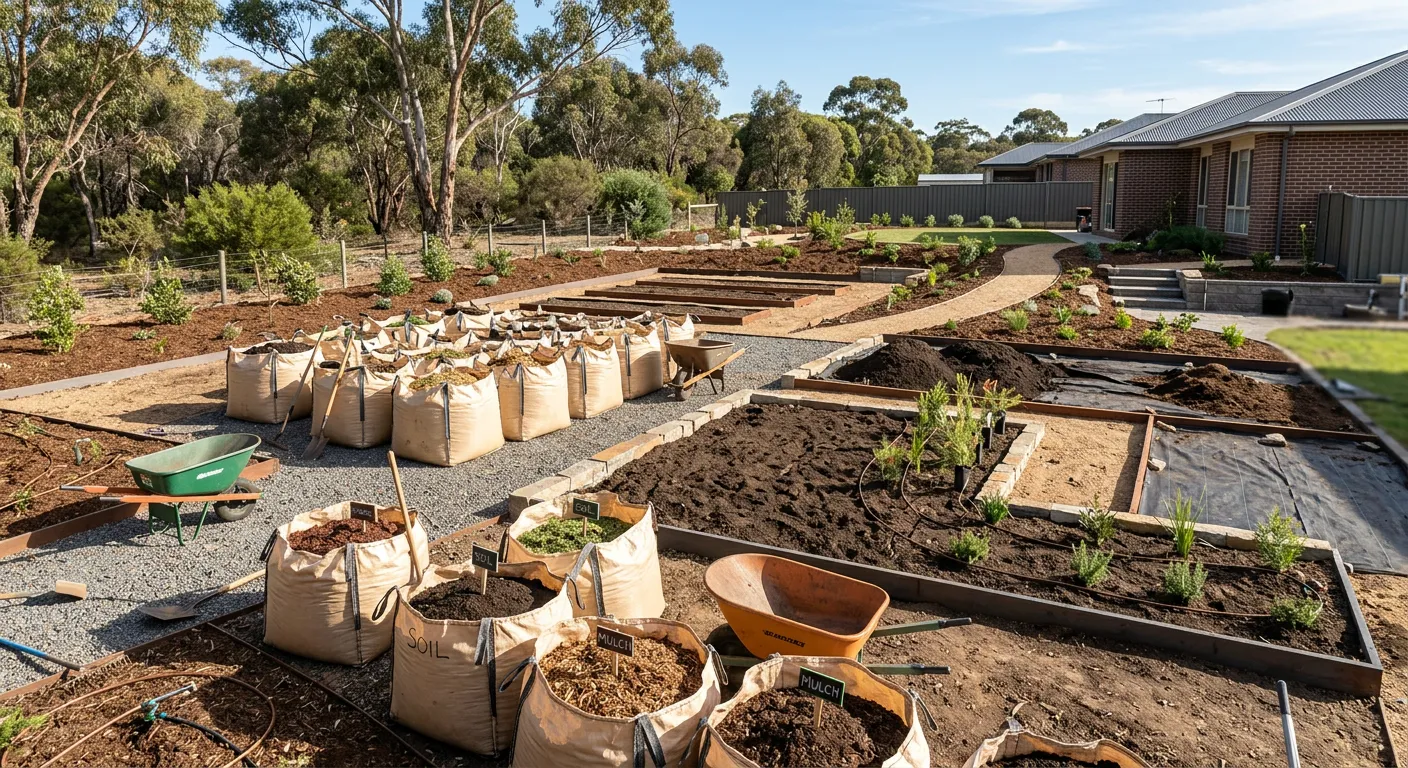
Several small garden beds can require more material than expected once their areas are combined. Guessing from appearance makes it difficult to plan a multi-bed upgrade accurately.
A reliable approach starts with measurements, not bag counts. Each bed needs its own area, intended application depth and selected product before totals are combined.
This guide shows how to turn those measurements into bulk bag coverage for several garden beds, using the bag sizes we actually pack.
Begin With Three Inputs
What Measurements Are Needed?
Start with the actual surface area that will receive the product. For a rectangular bed, measure its length and width.
Then decide the intended application depth for the selected product. Do not include paths, paving or other spaces that will not receive material.
The third input is the product itself. A correct area calculation can still lead to a poor order if the wrong product or application method is used.
Write the depth beside the product. Triple-C is applied 40 to 50mm thick. Sugar cane straw uses 50 to 100mm on a first cover and 30 to 40mm when straw is already on the soil. Piggypost is mixed two parts soil to one part, so that line is not a surface-layer depth. Lawn Maximizer is a top dress on existing grass, not a garden-bed mulch depth.
Those four handling notes stay with their own coverage figures. Do not borrow a Triple-C 40 to 50m2 bulk bag coverage number for a 55L sugar cane straw bed, and do not borrow Lawn Maximizer 15m2 per 35L for a mixed Piggypost bed.
How Does Area Become a Bag Count?
For a rectangular bed, multiply length by width to find the surface area. Then compare that area with the bulk bag coverage for the blend you chose.
Write metres for length and width. Convert a 50mm layer to 0.05m only if you still need a cubic volume. For most multi-bed upgrades the faster check is square metres against the coverage figure for that bag.
Use a tape on the planted face only. If a path cuts a corner, measure around it rather than across it.
Calculate Each Bed Before Combining Totals
Why Should Separate Beds Stay Separate at First?
A front border, side bed and rear planting area may have different dimensions. Measuring them separately makes each step easier to check.
Record the area for one bed in a notebook, calculate its required volume, and write the product name beside that number. Repeat for the next bed before adding anything together.
If one measurement changes, only that bed needs to be recalculated. Leave the other notebook lines alone so a new width on the front border does not silently rewrite the side bed. That is the point of one record per bed.
For a bed that steps in and out, break it at each step. Measure the wide part as one rectangle and the narrow part as another. Add those two areas. The bulk bag coverage you apply later is for the planted total, not for the largest rectangle you could draw around the whole shape.
If two beds share a long border, still treat them as two records. A shared edge does not mean they share depth or product. When you later turn those records into an order from DSATCO, you want each line to point at one blend and one area.
How Can Irregular Beds Be Measured?
An irregular bed can be divided into smaller rectangles or other simple sections. Measure each section separately and add those areas. If the bed is L-shaped, measure the long arm and the short arm as two rectangles. Add those two areas, then apply the depth for that product only. Do not average depths across the L. Walk the tape on the soil, not on path pavers. Keep the product name on that same line when a project contains more than one garden material.
Match Each Bed to Coverage You Can Order
Which Products Come in Bulk Bags?
When several beds will take the same blend, open the bulk bags range before you add bag counts. Lawn Maximizer, Lupin Mulch, Piggypost and Triple-C are the materials we pack in that format, so the coverage figure you use has to belong to one of those four.
Lawn Maximizer is a top dress fertiliser for existing lawns. Piggypost is a soil enhancer. Triple-C is a garden mulch. Size each of those from bulk bag coverage, not from a single mixed total.
How Should Coverage Convert Area Into Bags?
Triple-C is a nitrogen-rich blend of cereal crops, chicken manure and canola, applied 40 to 50mm thick, leaving about 100mm around plant stems, then watered in. The 1000L bulk bag covers about 40 to 50m2 at that depth. Wear a mask and gloves, and keep the mix damp while you apply it. Use that bulk bag coverage as the order check, not a guess from empty soil.
Sugar Cane Mulch is a 55L bag covering about 3 to 4m2, with a first layer of 50 to 100mm and a replenishment layer of 30 to 40mm. Leave a little space at the stems and water thoroughly after spreading. Count bags from that 3 to 4m2 figure for every bed that will take that straw layer. Do not default to the 50 to 100mm first-cover depth on soil that still has straw on it.
If the same upgrade also includes soil mixing, keep that line separate. Piggypost is mixed two parts soil to one part Piggypost. A 20L bag covers just over 1m2 at the recommended rate. An 800L bulk bag covers about 25 to 30m2. Keep the 20L just-over-1m2 figure on mixed beds. The 800L bulk bag at 25 to 30m2 is the same mix, not a Triple-C 40 to 50mm layer. Use those figures on the beds that will be mixed, not on the beds that only need a surface layer.
Lawn Maximizer is applied to existing lawns as a top dress fertiliser. The blend is lupin chaff, canola straw and chicken manure, pasteurised before it is bagged. The 35L bag covers 15m2. The 900L bulk bag covers around 380 to 400m2. That top dress is shredded to a fine consistency. Best results come in warmer weather, on grass lawns, with morning irrigation. Size turf from those numbers, not from a Triple-C or Sugar Cane coverage line.
Group Beds That Share a Product
After each bed has been calculated, group only the beds using the same product and application depth. Then add those individual areas.
Add the square metres of every bed that will take that 40 to 50mm Triple-C layer, then compare the total with 40 to 50m2 per 1000L bag. Use Piggypost and Lawn Maximizer with their own coverage. Do not average those three figures into one bulk bag coverage number.
Frequently Asked Questions
Should Lawn Top Dress Join a Mulch Total?
No. Lawn Maximizer is a top dress fertiliser for existing lawns. Keep that quantity on the turf line when you plan multi-bed upgrades.
What If Two Beds Look the Same Size?
Measure both. Combine them only when they use the same product and the same depth. Multi-bed upgrades fail when a similar-looking bed is assumed rather than taped.
Conclusion
Measure each planted face, write the product beside that area, then convert with bulk bag coverage for that blend. Use Triple-C bulk bag coverage only on the beds that will take that 40 to 50mm layer. Use Piggypost coverage on mixed soil. Use Lawn Maximizer coverage on existing lawn. Sugar cane straw stays on the 55L 3 to 4m2 count, not on a 1000L Triple-C line. That is how multi-bed upgrades stay as separate order lines instead of one mixed guess.
If the notebook now has more than one product line, keep those bag counts apart when you order. Speak with us to check bag size and delivery options.
Latest Posts
- How to Stage Bulk Bags For Soil Improvers Versus Lawn And Mulch
- How to Size Multi-Bed Garden Orders From Bulk Bag Coverage
- Coordinating Metro Stockists Sourcing and Bulk Transport for Large Projects
Reviews from
Happy Gardeners
 "Results have been spectacular. The grass has never looked healthier."
Rod


