


 Buy Online
 08 9671 1500
 office@dsatco.com
The Water Saving Benefits of Mulching Rose Gardens and Vegetable Beds in WA
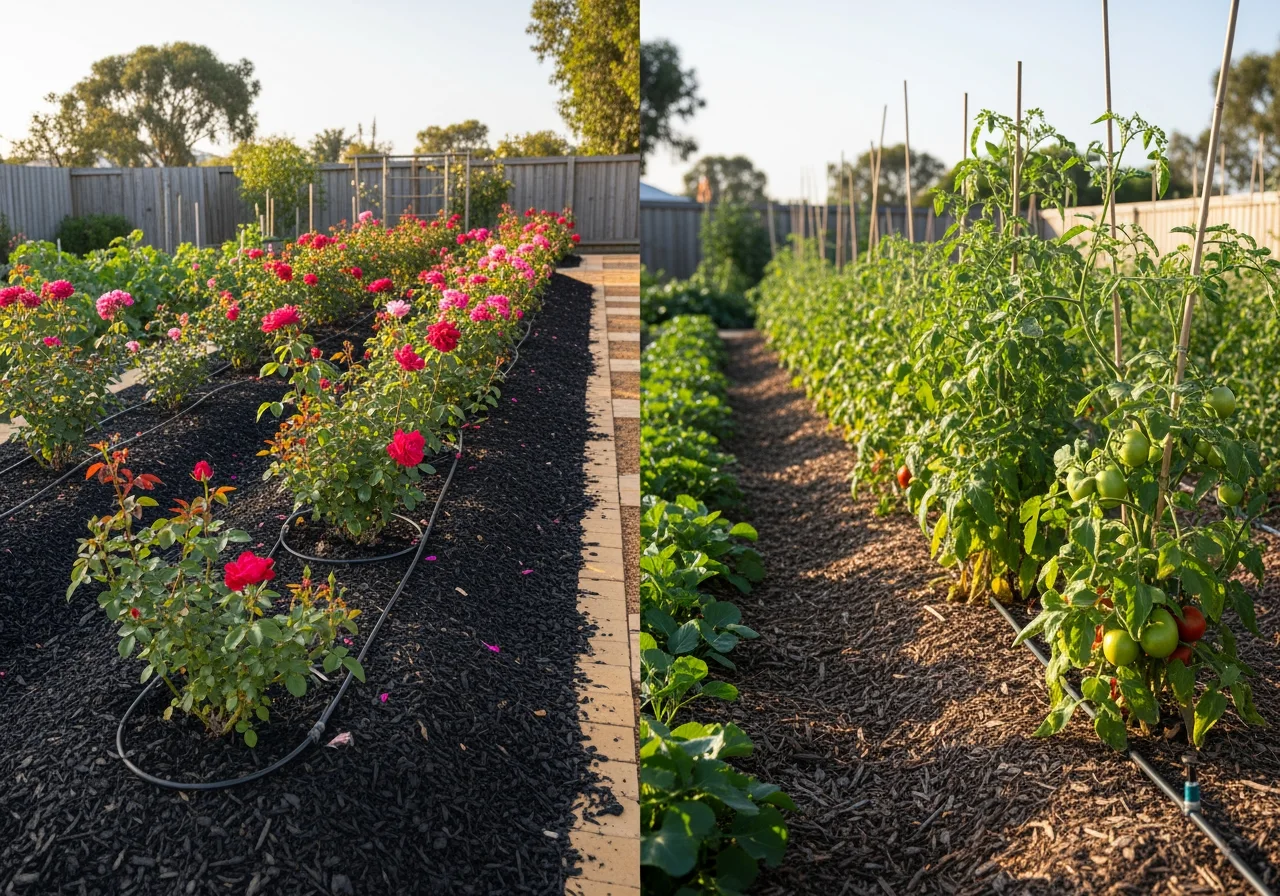
Perth gardeners who grow roses and vegetables are managing the two most water-demanding areas in any suburban garden. Roses need consistent moisture to produce their best flowering and resist disease. Vegetables at critical growth stages — flowering, fruiting, heading up — suffer immediately from moisture stress and often fail to recover the yield potential lost during dry periods. Both garden types are also particularly sensitive to the moisture swings that Perth’s sandy soils and summer heat create, cycling from wet to dry within 48 hours of watering.
Autumn in Perth is the right time to think about this. Summer is coming, water restrictions will apply, and the decisions made now about mulching and soil preparation determine how roses and vegetable beds perform through the hottest months. Rose garden maintenance that includes consistent mulching produces better flowering, stronger disease resistance, and significantly reduced water demand. Vegetable patch irrigation efficiency improves dramatically when beds are properly mulched before seasonal crops are established.
The water saving benefits of mulching rose and vegetable gardens in WA are immediate and measurable. Mulched beds maintain adequate soil moisture for days longer after each watering event than bare beds under identical conditions. That extended window of moisture availability is what separates roses that flower consistently through summer from those that drop buds in heat, and vegetables that produce well from those that yield poorly despite regular watering.
Act now, before summer heat arrives, and the mulch you apply this autumn will be protecting roots and saving water from the first hot day through to the last.
Why Rose and Vegetable Gardens Need the Most Water in Perth
Among all the plants in a typical Perth garden, roses and productive vegetables have the most demanding soil moisture requirements and the least tolerance for the moisture swings that Perth’s sandy soil and summer conditions create. Both plant groups need consistent availability of moisture in the root zone — not wet, not dry, but reliably accessible over extended periods.
DSATCO Lupin Mulch is the premier mulch rose garden WA product for Perth gardeners. Made from WA lupin plant material and chicken manure, it delivers the consistent moisture retention performance that rose gardens need while providing the slow-release nitrogen that supports strong vegetative growth and flower production. Applied at 50 to 75mm depth before summer, it extends the window of root-zone moisture availability after each watering session from hours to days.
How Moisture Swings Affect Rose Performance
Roses exposed to rapid cycles of wet soil followed by drought stress respond with reduced flowering, heightened susceptibility to black spot and powdery mildew, and physical stress symptoms including bud drop and leaf roll. These problems are not signs that the gardener is neglecting watering — they are signs that watering is reaching the soil but not staying there long enough for roses to use it consistently.
Sandy WA soils create this pattern naturally. Without mulch to reduce evaporation and without adequate organic matter to hold moisture, the root zone of a rose bed in January swings from wet to dry in 48 hours or less. Rose garden maintenance through summer means applying mulch before summer begins and maintaining it through the hottest months — it is the single most effective practice for keeping WA roses healthy and productive.
How Moisture Swings Affect Vegetable Yields
Vegetables at critical growth stages have limited tolerance for soil moisture fluctuations. Tomatoes that experience moisture stress during flowering set fewer fruit and are more prone to blossom end rot. Lettuce bolts to seed prematurely when moisture drops. Beans fail to pod properly under moisture stress conditions. These impacts are often irreversible — yield potential lost during a moisture stress event cannot be recovered by subsequent watering.
Water saving vegetable garden management in Perth starts with mulching before summer crops are established. DSATCO is a Western Australian company that produces premium organic mulch and garden products, grown and sourced 100% from WA farms. The product range is designed for Perth’s specific growing conditions — the vegetable patch irrigation challenge of maintaining consistent moisture in sandy soil through hot, dry summers is one of the primary problems DSATCO products address.
How Mulching Reduces Water Use in Rose Gardens
A properly mulched rose bed in Perth maintains adequate moisture for several days longer after watering than an unmulched bed under identical summer conditions. This extended moisture availability is the core of rose garden maintenance that reduces irrigation demand while improving plant performance.
The mechanics are straightforward. Mulch shades the soil surface, reducing the solar energy driving evaporation. It creates a humid microclimate at the soil surface that slows moisture loss. And as it breaks down, it adds organic matter that progressively improves the soil’s water-holding capacity. Each of these effects compounds over successive mulching seasons, making rose beds progressively easier to maintain with each year of consistent application.
Application Approach for Rose Beds
Apply mulch in a ring around each rose, keeping it 50 to 100mm clear of the stem to prevent moisture accumulation against the bark. Extend the ring out to at least the drip line — the outer circumference of the canopy — to protect the full spread of the root system rather than just the area immediately around the base.
DSATCO Triple-C Mulch is a composted blend well suited to rose gardens where visual presentation matters alongside moisture retention. Its dark, consistent appearance maintains visual quality through summer while providing the mulch garden beds WA performance that reduces irrigation demand.
Additional Benefits for Rose Garden Maintenance
Beyond water saving, mulching delivers several additional benefits for rose garden maintenance in Perth. Mulch absorbs irrigation water impact at the soil surface, preventing the soil splash that spreads fungal spores from soil to lower rose leaves. This soil splash reduction measurably reduces black spot incidence in mulched rose beds compared to bare soil alternatives.
Weed suppression from a consistent mulch layer reduces competition for water in rose beds — a significant benefit in Perth’s climate where winter weeds like oxalis can establish before summer crops are planted. Fewer weeds mean less water competition and less maintenance time spent on weeding rather than rose care.
How Mulching Transforms Vegetable Patch Irrigation
Vegetable gardens mulched at the correct depth before summer crops are established produce better yields with less total irrigation water than unmulched alternatives. The consistent moisture levels that mulch provides in the root zone eliminate the stress events that reduce productivity in summer vegetables grown in Perth’s sandy soils.
DSATCO Sugar Cane Mulch is the most practical choice for active vegetable beds. Lightweight and easy to pull back for replanting, it maintains the water saving vegetable garden benefits of surface coverage while remaining workable in beds where you are adding, removing, and moving plants regularly through the season.
Sugar Cane Mulch for Vegetable Gardens
Sugar cane mulch applied at 40 to 50mm depth between established vegetable rows provides effective moisture retention without impeding water penetration during irrigation. Its lighter texture suits the frequent soil disturbance of productive vegetable beds. As it breaks down within a single season, it adds organic matter to the soil and improves the moisture-holding capacity of the bed for the following season’s planting.
For WA vegetable garden water efficiency, the combination of sugar cane mulch on the surface and Piggypost incorporated before planting addresses moisture retention from both the surface down and the root zone up. DSATCO Piggypost adds the stable humus and microbial activity that builds sandy soil water-holding capacity, while the sugar cane mulch above prevents the rapid surface evaporation that depletes that stored moisture before plants can use it.
Lupin Mulch for Heavy-Feeding Vegetables
For tomatoes, corn, and brassicas where nitrogen demand is high alongside moisture requirements, lupin mulch delivers both simultaneously. The chicken manure component provides nitrogen as the mulch breaks down, reducing the need for separate fertiliser applications in the heaviest-feeding areas of the vegetable patch. Water saving vegetable garden management becomes more sustainable when fertiliser and moisture management are addressed with a single organic product.
DSATCO Lawn Maximizer extends the water saving principle to lawn areas bordering vegetable gardens and rose beds. Applied twice yearly to kikuyu, couch, and buffalo lawn, it builds the organic matter and soil health that reduces the water demand of lawn areas — freeing more of your restricted summer allocation for the productive and ornamental beds that benefit most from consistent moisture.
Timing Applications for WA’s Rose and Vegetable Seasons
The most important mulching timing for water saving in rose and vegetable gardens is the pre-summer application in October and November. This is when Perth gardens are transitioning from the cooler growing conditions of autumn and winter into the moisture-stressing heat of summer. Mulch applied at this point locks in the reasonable soil moisture levels that winter rains have delivered, protecting them through the first weeks of increasing summer heat.
Pre-Summer Mulching for Roses
October through early November is the window for pre-summer rose garden maintenance mulching in Perth. Apply or refresh mulch before daytime temperatures regularly exceed 30 degrees, giving the mulch layer time to settle and begin forming the humid microclimate that reduces evaporation before the most demanding conditions arrive.
The full DSATCO product range includes both lupin mulch and composted blends suitable for rose gardens, available in bulk bags that make it practical to cover multiple rose beds comprehensively rather than applying too thin. For Vivantes Lupin Mulch available through Bunnings stores across Perth, the same timing and depth recommendations apply.
Vegetable Garden Mulching Through the Growing Season
Apply mulch to vegetable beds when seedlings reach 10 to 15 centimetres, after they are established enough for mulch to be worked around them without smothering. This timing provides moisture protection from the point when plants become productive, rather than exposing them to moisture stress during the most vulnerable phase of summer growth.
Plan a mid-season top-up in January for vegetable beds that receive frequent irrigation. The accelerated decomposition rate of organic mulches in warm, moist conditions means coverage can reduce to below effective depth by midsummer without top-up.
Perth summers do not wait. Stock up at the online shop or contact DSATCO on 08 9671 1500 before the season hits.
Latest Posts
- How to Stage Bulk Bags For Soil Improvers Versus Lawn And Mulch
- How to Size Multi-Bed Garden Orders From Bulk Bag Coverage
- Coordinating Metro Stockists Sourcing and Bulk Transport for Large Projects
Reviews from
Happy Gardeners
 "Results have been spectacular. The grass has never looked healthier."
Rod


