


 Buy Online
 08 9671 1500
 office@dsatco.com
The Difference Between Weed Suppression and Weed Elimination in Mulched Gardens
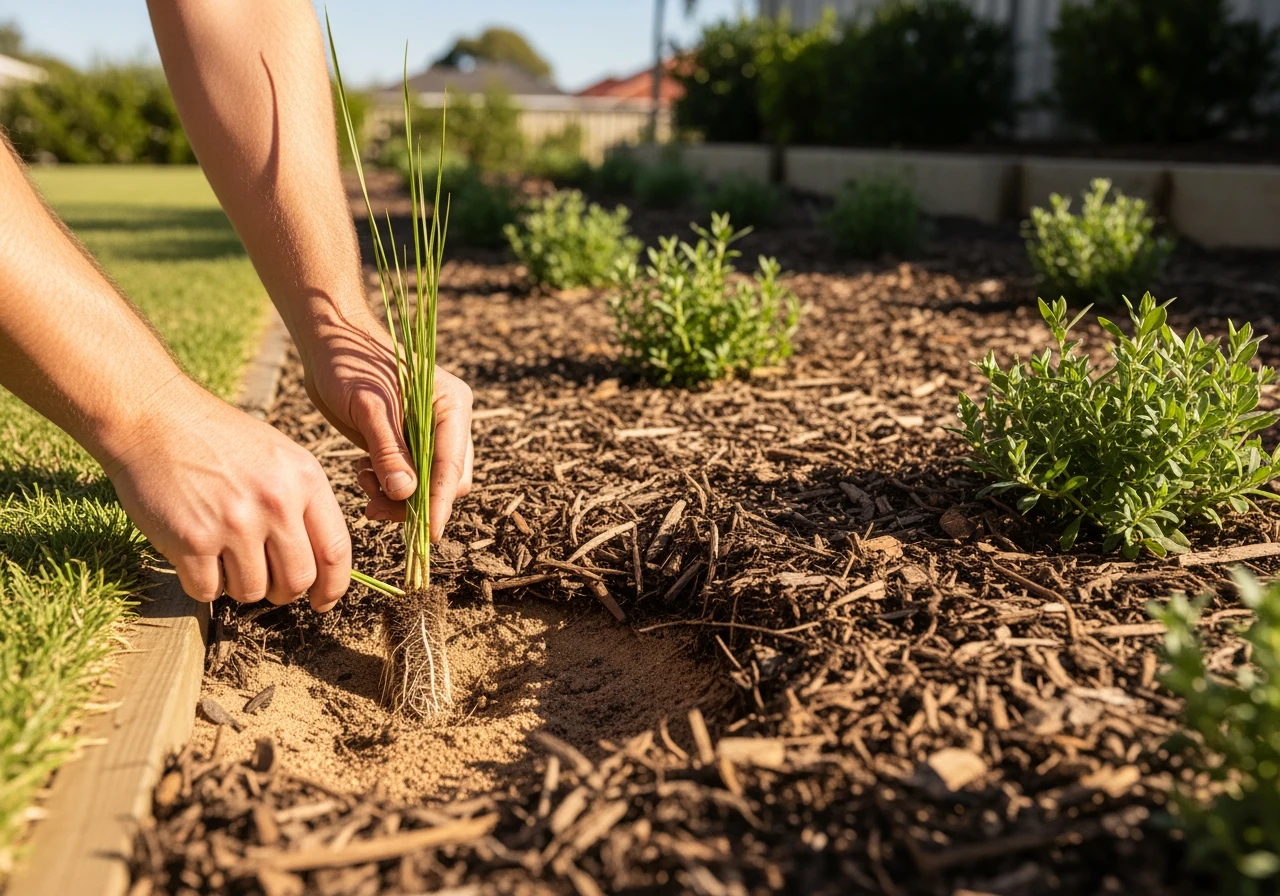
Perth gardeners who understand organic mulch often notice a frustrating pattern. The beds they mulch in spring look clean and controlled through to December. Then come January and February, and despite maintaining the mulch layer, certain weeds are back — pushing through the surface, appearing at the edges, or emerging from the same spots they appeared from last year. If you have experienced this, you already understand the practical distinction between weed suppression and weed elimination, even if you have not had a name for it.
Weed suppression is what organic mulch does best. It creates the unfavourable conditions for weed germination — no light, physical barriers, biological competition — that prevent the vast majority of annual weed seeds from ever becoming seedlings. For most common Perth weeds, a properly maintained mulch layer delivers suppression that genuinely reduces weeding time by the majority.
Weed elimination is a different category of intervention entirely. It permanently removes a weed’s capacity to regrow — by extracting the full root system, destroying the bulbs or rhizomes that allow underground re-sprouting, or applying targeted treatment to the specific plant. When mulch fails to control a weed species, the reason is almost always that the species requires elimination rather than suppression — and no organic mulch product, regardless of quality or depth, can eliminate a couch grass runner already growing beneath it.
Understanding this distinction changes how WA gardeners approach their weed management strategies and get better mulch performance from their organic products.
Suppression vs Elimination: Why the Distinction Matters in WA Gardens
Weed management strategies that produce lasting results in Perth gardens use suppression and elimination as complementary tools, not interchangeable ones. Using suppression where elimination is needed leads to the frustration of recurring problem weeds despite good mulch coverage. Using elimination methods on annual weeds that suppression would handle easily wastes time and effort.
DSATCO Lupin Mulch delivers some of the most effective suppression performance available for Perth garden beds. Its fine, dense mat creates outstanding light exclusion at 50mm depth, and the nitrogen-rich composition feeds garden plants that shade the soil with their own canopy as they grow. This suppression performance WA gardeners experience from quality lupin mulch is genuine and significant — but it operates on annual weed seeds, not on the root systems of established perennial species already growing in the bed.
What Weed Suppression Means in Practice
Suppression in the context of organic mulch means that weed germination conditions are made unfavourable for the period that effective mulch coverage is maintained. Seeds in the soil below the mulch remain dormant because the light signal they need to germinate is absent. Seeds landing on top of the mulch dry out before establishing roots. Any seedlings that do germinate in the dark have insufficient energy to reach light and die before emerging.
Organic weed management through suppression works progressively better over time as the soil seed bank depletes. Annual weeds that are prevented from completing their reproductive cycle each season produce no new seeds. Over three to five seasons of consistent suppression, the density of viable annual weed seeds in a consistently mulched bed drops substantially, and the weeding effort required drops with it.
What Weed Elimination Requires
Elimination addresses the source of weed persistence rather than its surface expression. For annual weeds whose entire above-ground and below-ground structure is removed when you pull them, elimination and suppression work together seamlessly — pull the weed, it is gone, and mulch prevents the next generation from germinating.
For perennial weeds with underground propagation structures, elimination requires removing those structures entirely. A couch grass runner extending under the mulch layer from a lawn edge will produce surface shoots wherever it finds a gap. The mulch layer above has no effect on it. Eliminating couch grass from a bed border requires physically removing the runner and any connected root mass — the mulch can then suppress germination of any seeds, but cannot address the vegetative spread of plants already below the surface.
How Organic Mulch Delivers Weed Suppression
DSATCO is a Western Australian company that produces premium organic mulch and garden products, grown and sourced 100% from WA farms. The suppression mechanisms that DSATCO products deliver are the same physical and biological mechanisms that operate in any effective organic mulch system, but the quality of the composting process and the material characteristics of WA-sourced products deliver those mechanisms most reliably in Perth’s growing conditions.
Annual Weeds That Suppression Handles Effectively
The majority of weed species that trouble Perth gardeners are annual or biennial weeds that reproduce exclusively from seed. Capeweed, wild radish, annual ryegrass, most broadleaf winter weeds, and most summer annual grasses are controlled effectively by consistent mulch suppression. Their seeds require light to germinate, their root systems are shallow enough that they emerge easily from the soil when conditions allow germination, and they produce no vegetative propagation structures that could survive below the mulch layer.
DSATCO Triple-C Mulch provides the composted cereal crop blend that delivers excellent weed suppression WA for these annual species while improving soil conditions for desirable plants. Applied at 50 to 75mm depth and maintained through Perth’s two weed seasons, it reduces annual weed germination dramatically and makes any breakthrough weeds easy to remove from the soft, moisture-retaining soil beneath.
Perennial Weeds That Suppression Cannot Eliminate
Couch grass, kikuyu, oxalis, nut grass, and bindii represent the category of Perth garden weeds that mulch suppression cannot handle. Each has underground propagation structures that mulch cannot reach: runners and rhizomes for grasses, bulbs for oxalis, tubers for nut grass. These structures survive below the mulch layer and produce new shoots wherever they find a gap in coverage.
DSATCO Piggypost applied as a soil conditioner before mulching improves the soil conditions that make physical weed elimination more effective. Moist, biologically active soil with good structure allows the full root and propagule mass of perennial weeds to be extracted more completely than from dry, hard, or structureless sand. Better soil makes elimination easier — which then allows suppression to work unimpeded.
When Elimination Must Come Before Mulching
The most common mistake in Perth garden weed management is applying mulch over established perennial weeds and expecting suppression to handle what only elimination can address. The mulch layer traps the weeds beneath it, making them harder to remove while providing no meaningful suppression of their underground regrowth. The result is weeds that are more difficult to deal with than they would be in bare soil.
DSATCO Sugar Cane Mulch applied in vegetable gardens where regular replanting means regular soil disturbance benefits most from the elimination-first approach. Each new planting rotation is an opportunity to remove any perennial weed root systems that have established since the previous season before fresh mulch is applied for the new crop.
Methods for Pre-Mulch Weed Elimination in Perth Gardens
Physical root removal is the most reliable elimination method for perennial weeds before mulching. For couch and kikuyu, thorough digging to remove runners and their connected root mass is the starting point. For oxalis, removing as many bulbs as possible before mulching and then maintaining consistent suppression to prevent the survivors from re-establishing is the practical approach — complete oxalis elimination is rarely achievable in a single session.
Cardboard sheet mulching under a heavy organic mulch layer can provide near-complete elimination conditions for annual weeds and grasses that cannot push through the combined barrier. The cardboard deprives the soil of all light while it decomposes over 8 to 12 weeks, killing existing seedlings and preventing germination. By the time the cardboard breaks down, the mulch layer above is established and provides the ongoing suppression independently.
Weed Management Strategies That Combine Both Approaches
DSATCO Lawn Maximizer as an organic topdressing for lawn areas illustrates the weed management strategies principle applied to turf. The elimination approach in lawn areas is achieved by building dense, vigorous turf growth through organic soil improvement. Thick, healthy grass that covers the soil completely is the best elimination mechanism for lawn weeds — it crowds them out through competitive elimination rather than suppression alone.
The most effective organic weed management in Perth gardens sequences elimination and suppression strategically. Before any new bed is established or any bed with known perennial weed presence is mulched, invest in thorough physical elimination. Then apply quality organic mulch at the correct depth and maintain coverage through Perth’s two weed seasons. The elimination phase removes the problem that suppression cannot address. The suppression phase handles the annual weed germination that would otherwise require constant reactive weeding.
Matching Weed Management Strategy to Garden Type
For established ornamental gardens and native plantings where soil disturbance is minimal, once-off perennial weed elimination followed by consistent suppression maintenance is the most practical long-term approach. The full DSATCO product range includes composted blends for long-term suppression maintenance and Vivantes Vivantes Lupin Mulch through Bunnings for convenient top-up access, providing the full product range for both garden establishment and ongoing suppression maintenance.
For vegetable gardens where regular planting and harvesting creates ongoing soil disturbance, the elimination-plus-suppression cycling approach — eliminate visible perennial weeds at each replanting, then suppress annual germination between crops — delivers the cleanest results with the least ongoing weeding effort. This cycling approach maximises mulch weed performance by ensuring the suppression layer is never working against established root systems that require weed elimination garden intervention first. The result is mulch weed performance that genuinely reduces weeding time rather than simply making established weeds harder to access.
Mulch performance in Perth gardens is maximised when the right strategy is applied for the right weed type. Every hour invested in perennial weed elimination before mulching saves multiple hours of reactive weeding afterwards.
Ask the DSATCO team about bag sizes, bulk options, and stockist locations on 08 9671 1500.
Latest Posts
- How to Stage Bulk Bags For Soil Improvers Versus Lawn And Mulch
- How to Size Multi-Bed Garden Orders From Bulk Bag Coverage
- Coordinating Metro Stockists Sourcing and Bulk Transport for Large Projects
Reviews from
Happy Gardeners
 "Results have been spectacular. The grass has never looked healthier."
Rod


