

 Buy Online
 08 9671 1500
 office@dsatco.com
How Organic Mulch Suppresses Weed Growth Without Herbicides
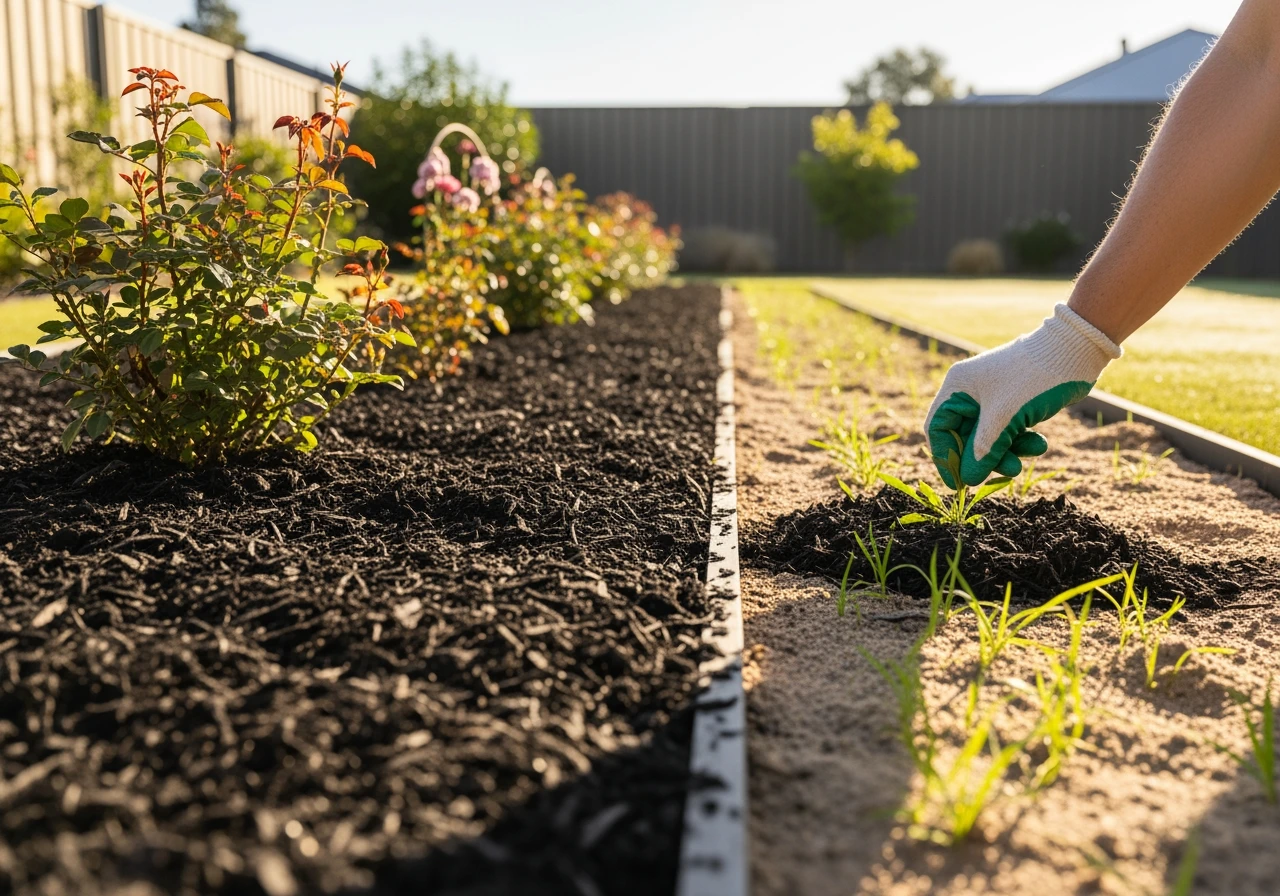
Weeds are a universal gardening frustration, but how you manage them makes a significant difference to the long-term health of your soil and the safety of your garden environment. Chemical herbicides offer a fast visible result, but they come with trade-offs that matter in Perth gardens: residual compounds that can affect soil biology, risks to nearby desirable plants, and the need for repeated applications that add cost without building anything lasting.
Natural weed control through organic mulch takes a different approach. Instead of killing weeds after they appear, it prevents most of them from germinating at all. Instead of degrading soil health with chemical residues, it actively improves the soil with every application that breaks down. And instead of requiring safety precautions and waiting periods, it is immediately safe for children, pets, and the full range of beneficial garden insects that a healthy WA garden depends on.
Perth’s sandy soils and Mediterranean climate create specific weed challenges. Sandy soil warms quickly, weed seeds have easy access to the germination moisture that drains rapidly through the soil profile, and the long growing season means weed pressure is active for most of the year. Understanding how herbicide-free mulch suppresses weeds in these conditions makes the difference between mulch that delivers real results and thin applications that look tidy but achieve little.
This guide covers the physical and biological mechanisms of organic weed suppression, which DSATCO products deliver the best results for different WA garden types, and the application approach that maximises weed control through the full year.
Why Natural Weed Control Matters for Perth Gardeners
For Perth gardeners committed to organic garden management, the question is not whether organic mulch suppresses weeds — it is how to apply it most effectively to get the maximum suppression benefit without chemical intervention. Chemical weed management addresses the symptom while organic mulch addresses the system, and the difference in long-term garden health is significant.
DSATCO Lupin Mulch is made from WA lupin plant material and chicken manure, providing the dense, nitrogen-rich surface coverage that delivers some of the most effective natural weed control available for Perth garden beds. Its fine fibrous texture creates a tight mat that blocks light from reaching the soil surface where weed seeds wait to germinate. Applied at 50 to 75mm depth, it combines immediate weed suppression with ongoing slow-release feeding that strengthens garden plants to the point where they increasingly outcompete any weeds that do establish.
The Limits of Chemical Weed Management in WA Gardens
Herbicides applied to Perth’s sandy soils face a specific problem: the same rapid drainage that makes Perth soils difficult for plants can carry dissolved herbicide residues through the root zone quickly and into groundwater. Residuals that linger in the soil can affect the germination of desirable seeds or the roots of established plants. And the fundamental soil conditions that allow weeds to establish — bare soil, depleted organic matter, low biological activity — remain unchanged after each herbicide application.
Chemical weed management does not improve WA soil biology Perth gardeners need for genuinely productive gardens. After herbicide treatment, the soil is weed-free but no healthier than before. After organic mulch application, the soil is weed-suppressed and progressively improved. The contrast in long-term outcomes is the core reason why chemical free weed management through mulching is increasingly the preferred approach for WA gardeners.
Why Organic Mulch Is the Practical Alternative
The practical case for herbicide-free mulch weed control rests on three advantages that chemical alternatives cannot provide simultaneously. First, it prevents weed germination rather than controlling weeds after establishment. Second, it improves soil organic matter, biology, and structure with every application. Third, it requires no waiting periods, no safety precautions, and no application equipment beyond a wheelbarrow and rake.
For WA gardeners managing gardens where children play, food is produced, or beneficial insect habitat is a priority, the safety advantage of chemical free weed management through organic mulch is not a minor consideration. It is the foundation of a garden management approach that serves multiple goals at once.
How Mulch Physically Blocks Weed Growth
The primary weed suppression mechanism of organic mulch is straightforward: it blocks the light that most weed seeds need to trigger germination. This light deprivation mechanism works on the vast majority of common Perth weeds, keeping dormant seeds in the soil without providing the signal they need to germinate.
DSATCO is a Western Australian company that produces premium organic mulch and garden products, grown and sourced 100% from WA farms. Every product in the range is designed for Perth’s specific weed challenges and soil conditions, providing organic weed suppression that works in WA’s climate rather than a generic approach designed for different growing conditions.
Light Deprivation and Weed Seed Dormancy
Most weed seeds have evolved to remain dormant in dark conditions, waiting for soil disturbance to bring them to the surface where light is available. A consistently maintained mulch layer keeps these seeds in perpetual darkness. The seeds do not die — they remain in the soil’s seed bank — but they do not germinate. This is why consistently mulched garden beds in Perth become progressively less weedy over seasons: the seed bank slowly depletes as seeds age without germinating, and new weed seed production is prevented by the mulch suppressing the plants that would produce them.
The depth of the mulch layer directly determines how completely light is blocked. At 20mm depth, enough light filters through to trigger germination in many species. At 50mm depth, the light exclusion is sufficient to suppress the vast majority of annual weed seeds. At 75mm, suppression improves further for the most persistent species. Mulch depth is the single most important variable in weed free garden WA management.
Physical Barrier and Temperature Moderation
DSATCO Triple-C Mulch provides composted cereal crop coverage that delivers both the physical barrier and the temperature moderation effects of organic weed suppression. Its composted consistency settles into a stable layer that weed seedlings must push through even if they do germinate in darkness. Most annual weed seedlings lack the energy reserves to emerge through 50mm of dense, settled organic material.
Temperature moderation adds a secondary suppression mechanism. Many common Perth weeds — summer grasses and winter broadleaf species — require specific soil temperature triggers to break dormancy. Mulch insulates the soil surface, reducing the daily temperature swings that some species use as germination cues. For weed free garden beds, this temperature buffering reduces the responsiveness of the soil seed bank to seasonal triggers.
The Biological Dimension of Mulch-Based Weed Suppression
Organic mulch delivers weed suppression through biological mechanisms that compound over time, working alongside the physical barrier effects to create an increasingly hostile environment for weed establishment.
DSATCO Piggypost applied before mulching builds the soil biology that contributes to the biological dimension of mulch weed control Perth gardeners need for lasting results. This mature compost product introduces beneficial microbes that colonise the soil and compete with weed seeds for resources. The organic matter it adds feeds fungal and bacterial populations that produce compounds inhibiting weed germination through the same allelopathic mechanisms observed in natural forest floors.
Microbial Competition and Allelopathic Effects
As organic mulch breaks down, it supports populations of beneficial soil fungi and bacteria that outcompete weed seeds for the moisture, nutrients, and physical space that germination requires. Some of these microbes produce allelopathic compounds — natural chemical inhibitors — that reduce the germination rate of weed seeds in the soil below. This effect is strongest in fully composted mulch products where microbial populations are already diverse and active at the time of application.
The mulch weed control Perth benefits of this biological competition accumulate over successive seasons of consistent mulching. Gardens where organic mulch has been maintained for two or more years show progressively lower weed pressure not just because the surface seed bank is depleting but because the soil biology is actively working against weed establishment at the microbial level.
How Stronger Plants Suppress Weeds Naturally
DSATCO Sugar Cane Mulch applied in vegetable gardens and annual beds provides effective mulch weed control while its carbon-rich decomposition feeds the fungal communities that improve soil structure for plant roots. As garden plants establish in biologically active, mulch-improved soil, they develop faster and spread their canopy more quickly, adding a living suppression layer that complements the physical mulch barrier above.
This secondary suppression effect from vigorous plant growth is what makes the organic weed suppression approach self-reinforcing over time. The mulch suppresses weeds, the plants grow stronger in better soil, stronger plants shade more ground, and shaded ground suppresses more weeds. Each element reinforces the others.
Product Selection for Herbicide-Free Weed Control in WA
DSATCO Lawn Maximizer extends natural weed control principles to lawn areas where surface mulch cannot be applied. Applied as an organic topdressing twice yearly, it builds the dense, healthy turf that is itself the best weed suppression available for lawn areas — strong, thick grass growth is more effective against weed invasion than any herbicide programme.
The full DSATCO product range covers every garden situation where chemical free weed management is the goal, from intensive vegetable production to established native gardens.
Application and Maintenance for Maximum Weed Control
Clearing existing weeds thoroughly before mulching is the most important step for effective weed free garden WA outcomes. Mulch prevents new weed germination. It does not eliminate established weeds. Any plant with an established root system that is left in the soil before mulching will push through the mulch layer. Thorough hand-weeding or hoeing before application is not optional for genuine chemical free weed management results.
For severely weeded areas or new garden establishment over ground with heavy weed pressure, sheet mulching — laying overlapping wet cardboard directly over cleared ground before applying mulch on top — provides near-complete suppression of both remaining weed roots and soil-surface weed seeds. The cardboard deprives the soil completely of light while it decomposes, and by the time it breaks down the mulch layer has established sufficient depth to maintain suppression independently.
Apply mulch to moist soil at 50 to 75mm settled depth. Water lightly after application to settle the layer and activate the microbial decomposition that begins both the soil improvement and the biological weed suppression processes. Vivantes Lupin Mulch available through Bunnings provides the same natural weed control performance for gardeners who prefer to source product through Bunnings stores.
Every garden in WA faces weed pressure. The gardens that manage it most effectively are the ones where organic mulch is maintained consistently, at the right depth, across the full bed area. That consistency is what transforms natural weed control from a theory into a practice that genuinely reduces weeding time season after season.
Find the right DSATCO product for your garden or call 08 9671 1500 for advice.
Latest Posts
- How to Stage Bulk Bags For Soil Improvers Versus Lawn And Mulch
- How to Size Multi-Bed Garden Orders From Bulk Bag Coverage
- Coordinating Metro Stockists Sourcing and Bulk Transport for Large Projects
Reviews from
Happy Gardeners
 "Results have been spectacular. The grass has never looked healthier."
Rod


