

 Buy Online
 08 9671 1500
 office@dsatco.com
Why Locally Grown Organic Garden Products Outperform Imported Alternatives
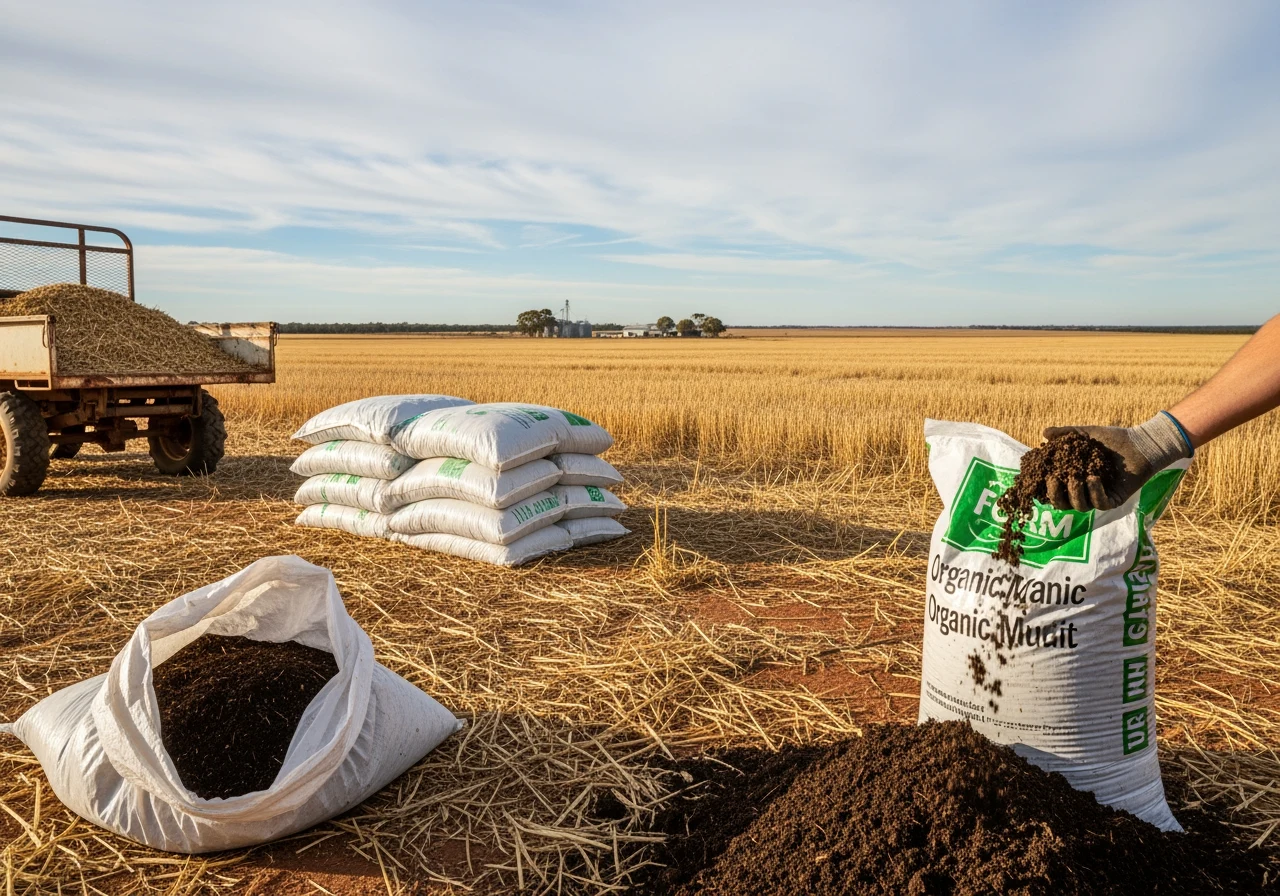
You have probably noticed that some garden products just work better than others. You put two bags of mulch side by side, both labelled organic, both apparently similar, and one of them transforms your garden beds while the other sits there doing not much. Part of that difference comes down to product formulation. Part of it comes down to freshness. And a significant part comes down to something most gardeners never think to ask: where was this product made, and was it made for soils like mine?
Perth’s sandy soils are not like most Australian soils. The Swan Coastal Plain sits on deep, free-draining sand that behaves completely differently to the clay-rich soils of Melbourne, Sydney, or Brisbane. Products formulated for those soils – and most of the national brands that dominate supermarket and hardware shelves were – do not necessarily behave the same way in Perth. They break down at the wrong rate, release nutrients too fast or too slowly, and often fail to deliver the native soil compatibility that makes a product genuinely useful in WA gardens.
Then there is the freshness question. Organic garden products are alive. Quality mulch and soil conditioner carry billions of beneficial microbes – bacteria, fungi, and other organisms that are the engine of soil improvement. Those microbes need moisture, oxygen, and stable temperatures to remain active. A product that has spent three weeks in a shipping container crossing the Nullarbor, then sat in a warehouse for another month, then occupied a shelf at a garden centre for two more months, is not delivering the same biological activity as one produced in WA and applied within days of bagging.
These are the practical reasons why local garden supplies outperform imported alternatives for Perth gardeners. This guide covers freshness, native soil compatibility, cost, seasonal availability, and how to identify genuinely WA-grown products from the national-brand alternatives filling garden centre shelves.
The Freshness Advantage of Local Organic Products
Organic garden products are perishable in the way that most consumers do not realise. The microbes that make quality mulch and compost so effective are living organisms with the same basic requirements as any living thing: moisture, oxygen, and a stable environment. Long-distance transport and extended warehouse storage degrade all three.
DSATCO Lupin Mulch is produced from WA lupin plant material and chicken manure, composted and bagged in WA for WA gardens. The product that reaches your garden has not spent weeks losing microbial activity in transit. The beneficial organisms are active, the organic matter is breaking down at the right rate, and the nitrogen content is intact. That is what fresh locally grown organic looks and performs like.
Why Microbial Activity Diminishes During Long Transit
The beneficial bacteria and fungi that drive organic matter decomposition and soil improvement need moisture and oxygen to survive. In a sealed bag on a hot truck or in a warehouse, temperature fluctuations stress microbial populations. Moisture shifts as the product heats and cools. Aerobic bacteria die back when oxygen is depleted. By the time a product from interstate reaches a Perth garden centre shelf, weeks or months may have passed since it was at peak biological activity.
This does not make imported products worthless. Organic matter is still organic matter, and some biological activity will resume once the product is applied to moist, aerated soil. But the difference in the speed and magnitude of results between a fresh local product and an older imported one is real, and it is why many Perth gardeners who switch to locally grown organic products notice faster improvements in plant health and soil condition.
What Fresh Local Products Deliver That Imports Cannot
Local garden supplies from WA producers like DSATCO arrive at your garden within days of production rather than weeks. The full biological complement of a properly composted organic product – bacteria, fungi, and other beneficial organisms – is active and ready to colonise your soil from the first application. You get the complete benefit of what you paid for rather than a partially degraded version of it.
WA garden products also benefit from production practices calibrated to WA climate. Composting processes can be adjusted for the temperature, humidity, and conditions of WA rather than the national average. Products are tested in WA soils and gardens rather than in controlled eastern states conditions. The local knowledge built into the product itself is part of what you get when you choose genuinely local.
Native Soil Compatibility: Why WA Soils Need WA Products
Perth’s sandy soils have a specific set of characteristics that make native soil compatibility the most important criterion when choosing organic garden products. The Bassendean sands that dominate the Swan Coastal Plain are coarse-textured, low in organic matter, have minimal nutrient-holding capacity, and are prone to water repellence when they dry out. These characteristics are fundamentally different from the soils most national garden product formulations are designed for.
DSATCO is a Western Australian company that produces premium organic mulch and garden products, grown and sourced 100% from WA farms. Every product in the range is formulated with Perth soil compatibility as the starting point, not an afterthought. The composting processes, particle sizes, and nutrient profiles are all calibrated for the specific challenges of WA soils rather than a national average.
Why Generic Products Fail in Perth’s Bassendean Sands
A mulch designed for the clay-loam soils of Melbourne’s suburbs holds moisture and releases nutrients differently to one designed for Perth sand. In clay-rich soils, organic matter breaks down more slowly and nutrients are retained by clay particles. In Perth sand, breakdown is faster under summer heat and nutrients leach quickly. A product designed for wetter, clay-heavy conditions may deliver its nutrients too quickly in Perth conditions, or break down before the growing season ends, leaving beds bare and exposed.
Perth soil formulation means accounting for these differences. Products that perform excellently in eastern states conditions – and are marketed nationally on the strength of that performance – may disappoint WA gardeners not because the products are inferior but because they were not formulated for our conditions.
How Locally Formulated Products Address WA’s Specific Challenges
DSATCO Piggypost is composted specifically to produce a humus-rich consistency that integrates with Perth’s sandy soil rather than sitting on top of it or creating drainage problems. Applied before planting and incorporated into the top soil layer, it binds to sand particles and progressively improves the soil’s capacity to hold both water and nutrients. A generic compost formulated for heavier soils may not achieve this binding effect in Perth sand, producing disappointing results despite apparently similar ingredients.
DSATCO Triple-C Mulch is a composted cereal crop blend calibrated for the particle size and breakdown rate that works best in Perth conditions. It provides steady organic matter addition across a season without decomposing too rapidly in summer heat or too slowly to deliver nutrients before the growing season ends. These are not minor formulation differences – they are the reason locally grown organic products outperform imported alternatives in WA gardens.
The Cost Reality of Imported vs Local Garden Products
Organic mulch and soil conditioner are heavy products. A cubic metre of mulch weighs several hundred kilograms. Transporting that weight across the country from Queensland or Victoria to Perth carries a significant freight cost that is embedded in the retail price of every bag. Local garden supplies do not carry that freight penalty.
How Transport Distance Affects Product Price
The cost of shipping bulk organic products from eastern states to Perth is substantial, and it flows directly through to the retail price you pay at the garden centre. Products manufactured in WA and sold in WA do not carry this transport premium. The saving is real and grows with the quantity you buy.
DSATCO Sugar Cane Mulch and DSATCO Lawn Maximizer are produced and distributed in WA, with pricing that reflects local production and short supply chains rather than national logistics costs. For Perth gardeners buying in bulk to cover large garden areas, the per-cubic-metre saving compared to equivalent imported products adds up significantly over a full season of applications.
The Environmental Cost of Long-Distance Garden Products
The environmental case for choosing WA garden products extends beyond garden performance. Shipping tonnes of organic material across the country generates transport emissions that local supply eliminates almost entirely. A product sourced 50 kilometres away has a fraction of the carbon footprint of one sourced 4,000 kilometres away. For gardeners who care about the environmental impact of their choices, locally grown organic is the clear option.
Local production also supports WA’s circular agricultural economy. DSATCO’s Lupin Mulch uses lupin stubble from WA’s wheatbelt. Piggypost is composted pig manure from WA farms. These are materials that would otherwise be agricultural waste. Buying local organic mulch Perth soil compatibility formulations keeps those materials cycling through WA’s agricultural economy rather than entering the waste stream.
Seasonal Timing and Local Product Availability
Perth’s gardening calendar does not follow national distribution schedules. The critical pre-summer mulching window opens in late October, weeks before the first serious heat arrives in November. The autumn planting window runs from late April through June, when soil temperatures drop enough for cool-season planting and the first winter rains provide natural irrigation. Local suppliers understand these windows. National distribution systems often do not.
Why WA’s Gardening Calendar Requires Local Supply
When Perth gardeners need to mulch in October before summer arrives, national brands running eastern states production and distribution schedules may not have fresh Perth stock available. Products produced and distributed in WA are available when WA’s seasonal calendar demands them, not according to a national supply planning cycle optimised for spring demand in Victoria and New South Wales.
Vivantes Triple-C Mulch available through Bunnings provides the same WA-formulated organic material with the retail availability that suits gardeners who prefer to shop at Bunnings stores. The same locally grown organic credentials, the same Perth soil compatibility, in a format available through Bunnings channels across the metro area.
Getting the Right Product at the Right Time
The full DSATCO product range is available online with bulk bag options, seasonal availability, and product guidance specific to WA conditions. Browsing the range before your seasonal mulching session lets you plan product selection, calculate quantities, and order for delivery at the timing that suits your garden’s needs – not a distribution warehouse’s schedule.
Local knowledge is built into the product advice as well as the product itself. When you contact DSATCO with questions about native soil compatibility, application rates, or which product suits your specific garden situation, you are getting advice from people who understand Perth soils and Perth growing conditions from direct experience.
How to Identify Genuinely Local WA Garden Products
Not all products labelled Australian-made or organic are genuinely formulated for WA conditions. National brands bagged in WA may still be made from materials sourced and processed elsewhere, delivering none of the freshness or formulation advantages of genuinely locally grown organic products.
What Genuinely Local Means on a Garden Product Label
Look for specific origin claims: produced in WA, sourced from WA farms, composted in Western Australia. These are the statements that indicate genuine local production rather than local bagging of imported materials. Reputable local producers should be able to tell you exactly where their raw materials came from. DSATCO’s lupin mulch comes from WA lupin crops. DSATCO’s Piggypost uses pig manure from WA farms. That level of traceability is a marker of genuine local production.
Be sceptical of generic claims like packed in Australia or Australian-owned. These do not tell you where the organic material was grown, processed, or whether the product was formulated for WA conditions. WA garden products that genuinely outperform imports start with WA materials, WA composting, and WA formulation – not just WA bagging.
Supporting WA’s Circular Agricultural Economy
Every purchase of locally grown organic garden products supports WA’s agricultural sector and the circular economy that turns crop residues and farm waste into soil-building resources. Lupin stubble from the wheatbelt, pig manure from WA farms, cereal crop residues – these are the inputs that become the organic garden products delivering native soil compatibility and genuine performance in Perth gardens. The money stays in WA, the emissions stay low, and the soil in your garden gets products designed for it rather than for somewhere else entirely.
Supporting local WA growers starts with what you put on your soil. Explore the DSATCO organic range or call the team on 08 9671 1500.
Latest Posts
- How Finely Textured Sugar Cane Straw Aids Moisture Retentiveness
- When to Apply Sugar Cane Mulch to Sensitive Backyard Garden Borders
- Using Lawn Maximiser as an Organic Top Dress for Perth Domestic Turf
Reviews from
Happy Gardeners
 "Results have been spectacular. The grass has never looked healthier."
Rod


