

 Buy Online
 08 9671 1500
 office@dsatco.com
Why Soil Biology Is the Foundation of a Productive WA Garden
Many Perth gardeners spend their weekends frustrated by plants that simply refuse to thrive. You buy the right seedlings, water them regularly, and add fertiliser, but the garden still looks tired and struggles through the summer heat. If you are dealing with patchy growth, high water bills, and plants that wilt the moment the temperature rises, the problem is rarely the plants themselves. The issue lies beneath the surface in the health of your soil.
Western Australia is known for having some of the most challenging growing conditions in the world. The Bassendean sands that make up much of the Swan Coastal Plain are naturally free-draining and incredibly poor in organic matter. Add our intense Mediterranean climate with long, scorching summers, and you have an environment where bare soil literally bakes. Under these conditions, the living ecosystem that should be supporting your plants simply collapses.
This guide explains what soil biology actually does and why it is the missing link in so many struggling WA gardens. We will look at how the microscopic life in your soil processes nutrients, retains moisture, and protects your plants from stress. More importantly, we will cover exactly how you can rebuild and protect this vital biological foundation using the right organic inputs.
By the time you finish reading, you will understand how to shift your focus from simply feeding plants to building a resilient, living soil ecosystem. You will learn which specific practices to avoid and how applying the right organic layers will transform your sandy Perth block into a self-sustaining, productive garden that improves with every passing season.
What Soil Biology Does in Your Garden
Bacteria, Fungi, Protozoa, and Earthworms
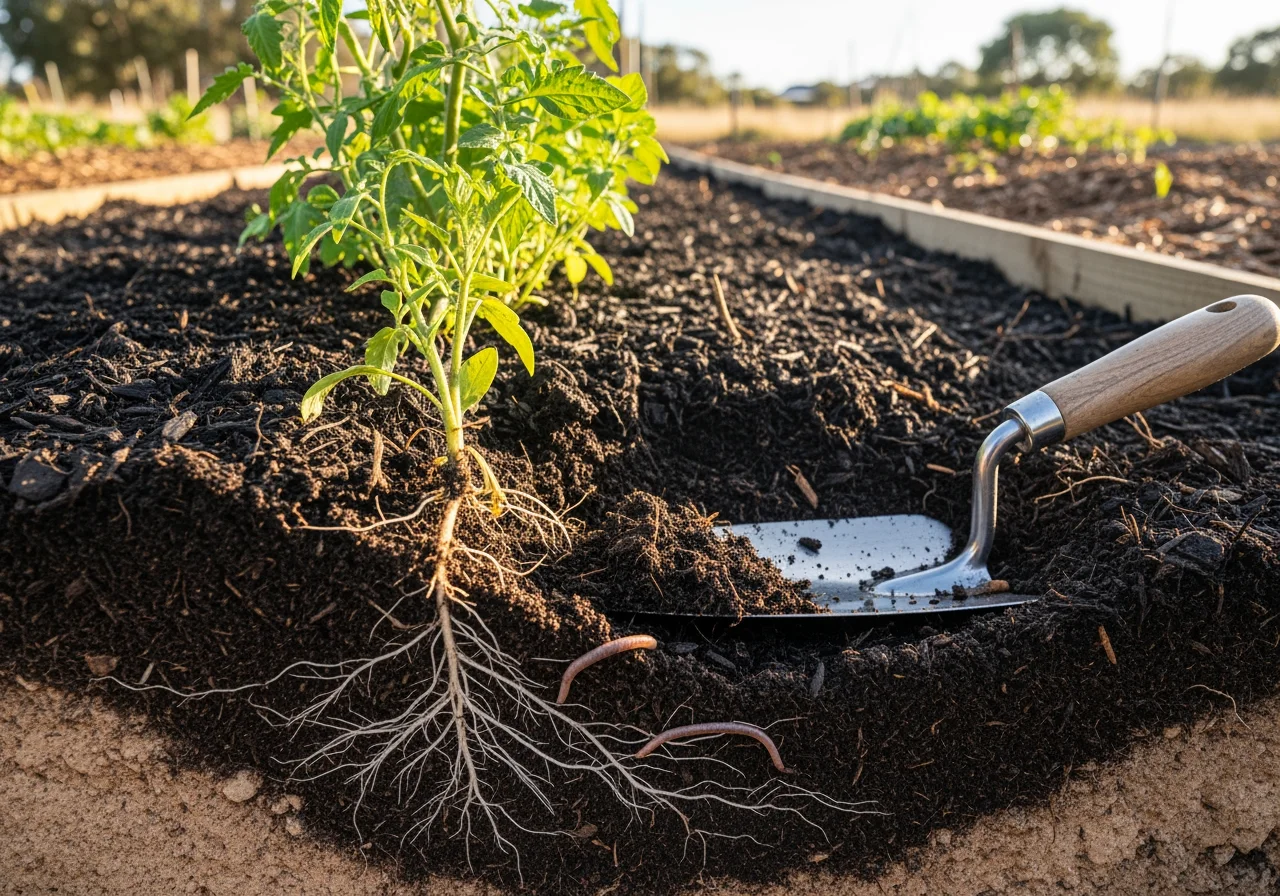
Your soil is not just a growing medium holding roots in place. It is a bustling, living system where trillions of organisms interact constantly to feed and protect your plants. Without this vibrant biological activity, your sandy WA soil is essentially inert. It becomes a sterile substrate that cannot sustain healthy plant growth without constant external inputs like synthetic fertilisers.
A truly productive soil ecosystem processes organic matter efficiently. It cycles vital nutrients, improves water retention dramatically, and suppresses harmful disease pathogens. All of this happens naturally beneath the surface without your direct involvement. A diverse biological community is exactly what separates a productive Perth garden from one that struggles year after year.
When soil biology functions well, your garden produces much better results with significantly less effort. The living organisms build the physical structure that supports deep, healthy root development. They create the tiny air pockets and moisture channels that roots desperately need to breathe and grow deep into the soil profile.
How Microbes Convert Organic Matter into Plant Food
Plants cannot directly absorb the complex organic molecules found in raw compost, thick mulch, or fresh manure. They desperately need nutrients delivered in specific, highly soluble forms that their root hairs can take up easily. This is where the unseen microbial workforce steps in to perform the vital conversion process. Beneficial bacteria break down complex proteins and organic compounds rapidly.
Fungi process tougher materials like lignin and cellulose found in woody mulches. The combined work of thousands of microscopic species transforms raw organic matter into a steady, reliable stream of plant nutrition. Without this microbial processing, even nutrient-rich soil remains essentially unavailable to your growing plants.
This is exactly why building WA soil biology matters so much more than simply looking at the raw nutrient analysis on a fertiliser bag. When you focus on building a productive soil ecosystem, you are building the exact workforce that makes everything you add actually work. The true benefits of mulch only become apparent when you have the active biology ready to process it into usable plant food.
The Role of Mycorrhizal Fungi and Soil Predators
Mycorrhizal fungi are perhaps the most important allies your garden has in the harsh Perth climate. These fascinating fungi form deep, symbiotic partnerships with plant roots. They extend their effective reach far beyond what the plant’s root hairs alone could ever access. The fungal network acts like an internet of the soil, reaching out to gather distant resources.
It trades vital water and minerals specifically phosphorus to the host plant in exchange for rich carbon sugars. This incredible relationship improves drought tolerance, nutrient access, and disease resistance simultaneously. In Perth’s punishing dry summers, plants connected to healthy mycorrhizal networks perform dramatically better under severe water stress.
Protozoa and beneficial nematodes complete the complex soil food web. They feed heavily on bacteria and fungi, releasing the nutrients stored in microbial cells in immediately plant-available forms. This continuous predator-prey cycle drives the steady nutrient release that makes organically managed WA soils so much more productive over time.
Why WA’s Sandy Soils Struggle Without Biological Support
Perth Soils and Low Organic Matter
Perth’s sandy soils present very specific, difficult challenges for establishing active soil biology. The Bassendean sands of the Swan Coastal Plain are notoriously coarse. They are incredibly low in natural organic matter and generally biologically poor. They drain fast, heat up quickly, and provide almost no natural food source for microbial communities to thrive on naturally.
This combination creates conditions where soil biology simply collapses without regular, deliberate inputs from the gardener. Creating a living soil Perth gardeners can rely on requires consistent attention to adding the right organic matter. Without this constant addition, the sands simply return to their naturally barren, lifeless state.
How Perth’s Summer Heat Damages Soil Biology
Summer in Perth is undeniably the most damaging period for WA garden soil biology. Topsoil temperatures in bare, unmulched beds regularly reach levels that push beneficial microbes into deep dormancy. In many cases, the blazing radiant heat kills them outright. Bare unmulched soil loses almost all biological activity by mid-summer, setting back the entire growing ecosystem drastically.
When this happens, the nutrient cycling and water retention benefits of a productive soil ecosystem simply disappear. The garden loses its fundamental biological foundation precisely when the plants need it most to survive the heat. Without active biology, plants become highly stressed and much more susceptible to disease and pest attacks.
What Depleted Soil Biology Means for WA Gardeners
Soil completely without biology cannot process nutrients efficiently, regardless of how much expensive fertiliser is added. Synthetic fertilisers completely bypass biological processing and deliver nutrients directly to plant roots. However, those highly soluble nutrients wash through sandy WA soil incredibly quickly after just one watering.
Without thick organic matter to hold them and active biology to cycle them, the feeding cycle never becomes self-sustaining. You apply fertiliser, it washes away immediately, and you are forced to apply more. Rebuilding biological gardening foundations after years of chemical management takes consistent organic inputs over multiple seasons to finally break this expensive cycle.
How Organic Matter Feeds the Soil Food Web
If active soil biology is the engine of your garden, quality organic matter is undoubtedly the fuel. Every single application of compost, mulch, or manure directly feeds the living ecosystem that feeds your plants. Different organic materials support very different parts of the complex soil biology food web. DSATCO provides organic solutions grown and sourced entirely from WA farms that are designed specifically to feed these local soils.
A healthy diet that includes a wide range of carbon sources creates a diverse, highly resilient biological community. Using dsatco lupin mulch introduces vital nitrogen and rich organic material that feeds the soil biology WA gardens desperately need. Applying the right organic matter is the absolute most effective way to build long-term fertility in sandy, unforgiving soils.
Products That Rebuild Biological Activity in WA Soils
Choosing the right organic inputs is crucial for establishing long-term soil health from the ground up. The dsatco piggy post compost is one of the most effective tools for rapidly rebuilding organic soil health in Perth’s sandy beds. You can easily add DSATCO Piggypost before planting to introduce beneficial bacteria directly into the root zone to start the rebuilding process.
For many home growers, finding the best mulch for vegetable garden australia conditions means looking for something that breaks down quickly to feed the soil. This is why sugar cane mulch suits vegetable gardens perfectly where a lightweight, fast-decomposing mulch feeds bacterial populations rapidly. Layering a good soil conditioner below and DSATCO Sugar Cane Mulch above creates the most effective combination for biological gardening success.
How Mulch Feeds Soil Biology from the Top Down
Organic mulch actually feeds the complex soil food web from the surface downward. It perfectly mimics the natural process by which forest floors maintain their incredible fertility without any external inputs. Bacteria quickly colonise the damp mulch surface first. Fungi follow closely behind, sending long hyphae deep into the decomposing organic material.
As these organisms process the organic matter, they constantly release nutrients that move slowly into the root zone below. Choosing the right organic mulch carefully determines exactly how quickly biological activity establishes in your specific garden beds. For gardeners wanting excellent weed suppression and moisture retention alongside biology building, DSATCO Triple-C Mulch is an outstanding choice.
Protecting Soil Biology Through Perth’s Extreme Seasons
WA soil biology faces its absolute greatest threat during the height of Perth’s summer. The brutal combination of extreme heat, low humidity, and extended dry periods creates incredibly stressful conditions. Protecting the delicate biological community you have built through these months is critical.
Mulch is simply the most effective tool available for keeping soil biology active through summer heat and heavy winter rain. A truly living soil Perth gardeners can rely on requires dedicated year-round protection, not just seasonal inputs. Understanding the profound benefits of mulch changes how you view your entire gardening calendar and watering schedule.
Temperature Regulation and Moisture Retention
A thick, consistent organic mulch layer moderates soil temperature highly effectively. It keeps microbial populations active and working hard right through the hottest summer months. It shades the surface completely and absorbs intense radiant heat before it can penetrate the soil profile and damage fragile root systems.
Consistent moisture held near the soil surface where biological activity is highest sustains the delicate food web between rains. For gardeners looking for a premium option to regulate soil heat, vivantes triple c mulch provides excellent coverage and temperature regulation. Using Vivantes Triple-C Mulch effectively shields your topsoil from rapid evaporation during the harshest February afternoons.
The Self-Sustaining Soil System
The long-term reward of consistent biological gardening is a soil that progressively becomes more fertile with each passing season. Each active season of microbial decomposition adds highly stable humus to the soil profile. This dramatically improves structure and increases the vital water-holding capacity of your entire garden block.
Nutrient cycling becomes much more efficient as microbial diversity grows naturally beneath the surface. Disease suppression improves significantly as beneficial populations actively crowd out harmful pathogens. By applying DSATCO Lupin Mulch, you ensure the system has the nitrogen required to keep these biological processes humming perfectly all year. When you use dsatco lupin mulch regularly, your garden becomes a highly resilient environment that relies less on synthetic fixes.
Common Mistakes That Damage WA Soil Biology
Understanding exactly what harms delicate soil biology helps WA gardeners actively protect the productive ecosystem they have invested in building. Several very common gardening practices actually undermine the biological systems you are trying so hard to build.
Many gardeners unknowingly destroy their soil health while trying to fix perceived problems. Knowing what to avoid is just as critical as knowing what to add to your garden beds.
Chemical Inputs and Excessive Tillage
High-salt synthetic fertilisers and harsh pesticides can severely damage or completely kill the microbial populations driving soil health. These strong chemicals bypass the natural biological systems entirely and can burn tender new roots. Excessive digging or aggressive rototilling actively destroys fragile fungal networks that took months to establish.
It also exposes carefully accumulated organic matter to rapid oxidation in the hot WA air. Once your garden beds are well established, disturbing the soil as little as possible allows fungal hyphae to spread naturally. Adding a biologically active soil amendment like dsatco piggy post works far better than constantly disturbing the soil with harsh synthetic fertilisers.
Leaving Soil Bare and Overwatering
Leaving bare soil exposed in summer is one of the fastest possible ways to destroy the biological foundation in Perth gardens. The intense UV radiation and extreme surface temperatures sterilise the top few centimetres of soil rapidly. Overwatering creates the exact opposite problem, but it is equally destructive to soil life.
Constantly waterlogged soil severely depletes available oxygen in the root zone. This quickly kills beneficial aerobic microbes while heavily favouring harmful anaerobic species that produce toxic compounds. Maintaining a thick layer of sugar cane mulch helps regulate moisture perfectly, preventing both extreme drying and dangerous waterlogging. If you prefer to browse the range, you will find solutions for every garden type. Applying DSATCO Lawn Maximizer to your turf areas also ensures the soil biology beneath your grass receives the same protection and nutrition as your garden beds.
Conclusion
Building a productive WA garden starts from the ground up, and soil biology is the undisputed foundation. By feeding the complex microbial ecosystem with quality organic matter, you create a self-sustaining environment that naturally cycles nutrients and holds vital moisture. Protecting that biology from Perth’s harsh summer heat with a thick mulch layer ensures your garden thrives rather than just survives.
For gardeners focused on building long-term soil health, finding the best mulch for vegetable garden australia conditions makes a massive difference to seasonal yields. Whether you are improving sandy coastal soils or establishing a new garden bed, feeding the biology first is the secret to lasting success. You can find excellent options like vivantes triple c mulch to start your soil improvement journey today.
Give your soil the foundation it needs to thrive in WA conditions. Shop online or contact the team on 08 9671 1500 to find the right product for your garden beds.
Latest Posts
- How Finely Textured Sugar Cane Straw Aids Moisture Retentiveness
- When to Apply Sugar Cane Mulch to Sensitive Backyard Garden Borders
- Using Lawn Maximiser as an Organic Top Dress for Perth Domestic Turf
Reviews from
Happy Gardeners
 "Results have been spectacular. The grass has never looked healthier."
Rod


