

 Buy Online
 08 9671 1500
 office@dsatco.com
How Microbial Activity in Organic Mulch Improves Nutrient Uptake for Plants
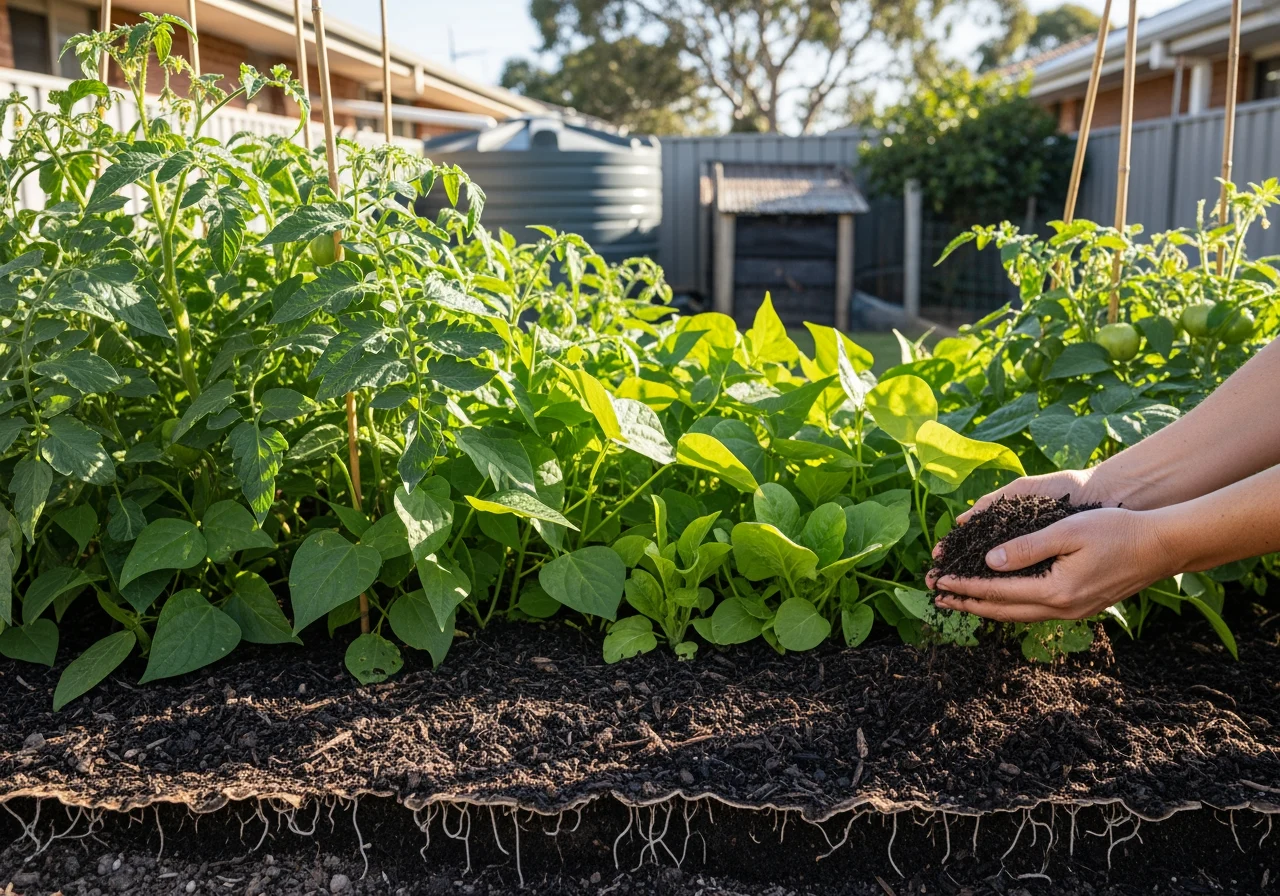
Healthy soil is alive. That is not a metaphor – it is the biological reality that separates Perth gardens that thrive from those that struggle despite regular fertilising and watering. Beneath every productive garden bed, millions of microorganisms break down organic matter around the clock, converting it into the specific nutrient forms that plant roots can actually absorb. Without this microbial workforce, nutrients sit locked in organic molecules that plants have no mechanism to access.
Plant nutrient absorption is not primarily about how much you add to your soil. It is about how effectively soil biology processes what you add into plant-available forms. In Perth’s sandy soils, where nutrients leach rapidly and organic matter breaks down quickly under summer heat, building and sustaining active microbial populations through quality organic mulch is the most direct route to genuine plant nutrition.
This matters practically because it changes how you think about feeding your garden. The question is not just “how much fertiliser does this plant need?” It is “does my soil have the microbial activity to make any nutrient source actually available?” Once that question is answered, the role of bioactive mulch in productive WA gardening becomes clear.
This guide explains how microbial activity converts organic mulch into plant nutrition, which microbial groups drive nutrient uptake WA plants need, and how to manage your mulch applications to maximise the biological activity that feeds your garden.
Why Nutrient Availability Depends on Microbial Activity
Plants absorb nutrients in specific chemical forms: nitrate and ammonium for nitrogen, orthophosphate for phosphorus, dissolved mineral ions for everything else. These forms do not naturally occur in organic matter – they are produced by microbial processing. The gap between nutrient presence and plant nutrient absorption is almost entirely biological.
When you apply quality organic mulch and the microbial activity it supports is functioning well, that gap is bridged continuously through the growing season. When microbial populations are depleted – as they are in Perth’s sandy, organic-matter-poor soils without regular inputs – the gap remains open regardless of how much organic matter you add.
The Gap Between Nutrient Presence and Nutrient Availability
Perth gardeners often experience a frustrating pattern: they add what appears to be good quality organic matter and see limited plant response. The likely explanation is depleted soil biology. Organic matter is present but the microbial community capable of processing it into plant-available forms is too sparse to work efficiently. The nutrients are chemically present but biologically locked up.
DSATCO Lupin Mulch addresses this problem directly. Made from WA lupin plant material and chicken manure, it combines high nitrogen content with an organic matrix that supports rapid microbial colonisation. The chicken manure fraction provides immediately available nitrogen while the lupin material supports sustained microbial activity over months. This dual approach ensures both quick availability and long-term nutrient uptake WA gardens need.
Why Bioactive Mulch Outperforms Sterile Alternatives
A bioactive mulch carrying living microbial populations begins improving nutrient availability within days of application. As the mulch comes into contact with soil moisture and existing soil organisms, populations multiply rapidly. Bacteria colonise the mulch surface first, followed by fungi that extend hyphae through the material. This biological activity drives the decomposition that releases nutrients and makes them available to plant roots.
Inert surface coverings – gravel, pebbles, plastic sheeting – provide none of this benefit. They may suppress weeds and reduce evaporation, but they add nothing to soil biology and contribute nothing to plant nutrient absorption. In Perth’s nutrient-poor sandy soils, choosing organic mulch over inert alternatives is one of the most consequential decisions a WA gardener makes.
How Microbial Decomposition Releases Plant Nutrients
The conversion of organic mulch into plant-available nutrients is a staged biological process. Different microbial groups handle different stages of decomposition, with each stage producing progressively simpler compounds that the next group processes further. Understanding this process clarifies why maintaining diverse, active microbial populations matters more than simply adding any single organic input.
DSATCO Piggypost is a mature compost product made from pig manure, rich in both stable humus and living microbial populations. Applied before planting and incorporated into the soil, it introduces the biological community that drives nutrient cycling in the root zone. It is particularly effective at improving organic mulch nutrients availability in new garden beds where soil biology is starting from a depleted baseline.
Nitrogen Cycling Through Microbial Activity
Nitrogen cycling demonstrates the staged microbial process most clearly. Organic nitrogen in mulch, compost, and manure exists as proteins and amino acids – complex molecules that plants cannot absorb. Decomposer bacteria break these down and release ammonia. Nitrifying bacteria then oxidise ammonia to nitrite, and specialist bacteria convert nitrite to nitrate – the form most plants prefer for nitrogen uptake.
This staged process produces nitrogen at a rate that matches plant demand more closely than synthetic fertiliser applications. Fast-release nitrogen delivered all at once to Perth’s sandy soils largely washes through the root zone before plants can use it. Nitrogen released through microbial activity soil processes appears gradually, reducing waste and improving the efficiency of every nutrient input.
Phosphorus and Micronutrient Release
Phosphorus management is where microbial activity delivers its most dramatic improvement for WA gardens. Perth’s soils naturally contain phosphorus, but in forms that are chemically bound to calcium, iron, or aluminium and inaccessible to plant roots. Synthetic phosphorus fertiliser faces the same fate within weeks of application – it converts to insoluble forms that plants cannot use.
DSATCO Triple-C Mulch supports the fungi and bacteria that unlock this bound phosphorus. Mycorrhizal fungi produce organic acids that dissolve mineral-bound phosphorus. Decomposer bacteria release it from organic compounds. The combination of these microbial mechanisms makes phosphorus available in WA soils where chemical approaches consistently disappoint. The same principle applies to micronutrients like iron, zinc, and manganese, which microbial activity keeps soluble and mobile in the soil solution.
The Microbial Groups Driving Plant Nutrient Absorption
Healthy soil microbiology involves multiple groups of organisms performing different but complementary roles. Each group contributes to the overall nutrient cycling that drives plant nutrient absorption, and a diverse community produces more consistent, reliable results than one dominated by a single type.
DSATCO is a Western Australian company that produces premium organic mulch and garden products, grown and sourced 100% from WA farms. The composting processes used across the product range are designed to support diverse microbial communities that begin improving soil biology from the first application.
Bacteria, Fungi, and the Nutrient Loop
Bacteria are the most numerous and fastest-responding microbes in healthy soil. They colonise fresh organic matter within hours of moisture contact, breaking down simple compounds and releasing nutrients rapidly. Fungi take longer to establish but process tougher structural materials and create the stable humus that improves soil structure and water retention. Protozoa feed on bacteria and release the nitrogen and other nutrients stored in bacterial cells in immediately plant-available forms – a process called the microbial loop that accelerates nutrient cycling throughout the soil profile.
DSATCO Sugar Cane Mulch provides pure carbon that feeds fungal populations particularly well, making it ideal for vegetable gardens where improving soil biology Perth growers need for consistent production is the goal. Pairing it with a nitrogen-rich input ensures both bacterial and fungal communities receive the balanced nutrition that supports efficient nutrient uptake WA gardens need through the growing season.
How Organic Mulch Feeds Each Microbial Group
Different mulch types feed different microbial communities based on their carbon-to-nitrogen ratio. High-nitrogen mulches like lupin mulch support rapid bacterial proliferation and fast nutrient cycling. Carbon-rich materials support fungal communities and slower, more sustained organic matter processing. Composted blends like Triple-C Mulch provide a pre-established, diverse microbial community along with varied carbon sources that support the full range of soil biology.
For lawns and turf areas, DSATCO Lawn Maximizer builds organic soil microbes Perth lawns need beneath kikuyu, couch, and buffalo grass. Applied as a topdressing and watered in, it improves the microbial activity and organic matter in the root zone beneath the turf, supporting stronger growth, better drought tolerance, and reduced synthetic fertiliser dependency.
Choosing Bioactive Mulch for WA Conditions
The effectiveness of organic mulch at improving plant nutrient absorption depends significantly on product selection. Not all organic materials deliver equal microbial benefit, and choosing a product matched to your garden type and nutrient requirements maximises the return from every application.
High-Nitrogen Mulches for Heavy-Feeding Plants
For vegetable gardens, rose beds, and ornamental borders where plants have high nutrient demands, lupin-based mulches provide the best combination of surface protection, weed suppression, and nutrient cycling support. The nitrogen-rich profile drives rapid bacterial activity that feeds heavy feeders consistently through the growing season without requiring separate synthetic fertiliser applications. This makes lupin mulch the most practical bioactive mulch choice for productive WA kitchen gardens and ornamental borders alike.
For gardeners sourcing through Bunnings, Vivantes Triple-C Mulch delivers a composted blend with established microbial populations in a format available through Bunnings stores across Perth. The same soil biology benefits, the same WA-grown organic material, available through the retail channel that suits you.
Composted Blends and Soil Conditioners
Browse the full DSATCO product range online to compare mulch types, particle sizes, and nutrient profiles before deciding which product suits each area of your garden. For new beds or significantly depleted soils, the combination of a composted soil conditioner incorporated before planting and organic mulch applied on top delivers the fastest improvement in plant nutrient absorption. The conditioner builds the biological foundation in the root zone while the mulch sustains it from the surface.
Maximising Microbial Activity in Perth Garden Beds
Microbial activity responds to moisture, temperature, organic matter availability, and soil aeration. Managing these factors correctly determines whether organic mulch delivers its full benefit or falls short despite the quality of the product applied.
Moisture, Depth, and Aeration
Microbial populations require consistent moisture to remain active. Dry mulch hosts dormant organisms waiting for rain or irrigation. Keep your mulch layer consistently damp but not waterlogged – the texture of a wrung-out sponge is the target. In Perth’s summer, this typically means deep watering twice weekly to maintain soil moisture without creating the anaerobic conditions that kill beneficial aerobic microbes.
Apply organic mulch at 40 to 50mm depth for optimal microbial activity. This depth maintains the moisture that supports biology while allowing air to circulate through the mulch layer and into the soil beneath. Thicker applications can restrict aeration, favouring anaerobic organisms over the beneficial aerobic bacteria and fungi that drive plant nutrient absorption.
Seasonal Timing for WA Gardens
Applying organic mulch in autumn, as soil temperatures moderate and the first rains arrive, gives microbial populations time to establish before summer heat peaks. By the time Perth’s hottest weather arrives in November and December, the biological community is active and producing nutrients at the rate that growing plants need most.
Refreshing the mulch layer before summer – in late October – maintains the surface coverage that protects established soil biology from heat stress. Each fresh application introduces new organic matter and renews the microbial food supply that keeps nutrient cycling active through the dry months. This twice-yearly rhythm, keyed to Perth’s Mediterranean climate, is the most effective schedule for sustaining the microbial activity that improves plant nutrient absorption across every season.
Browse the full range online or get personalised advice by calling 08 9671 1500.
Latest Posts
- How Finely Textured Sugar Cane Straw Aids Moisture Retentiveness
- When to Apply Sugar Cane Mulch to Sensitive Backyard Garden Borders
- Using Lawn Maximiser as an Organic Top Dress for Perth Domestic Turf
Reviews from
Happy Gardeners
 "Results have been spectacular. The grass has never looked healthier."
Rod


