

 Buy Online
 08 9671 1500
 office@dsatco.com
What Is Soil Carbon and Why WA Gardeners Should Be Working to Increase It
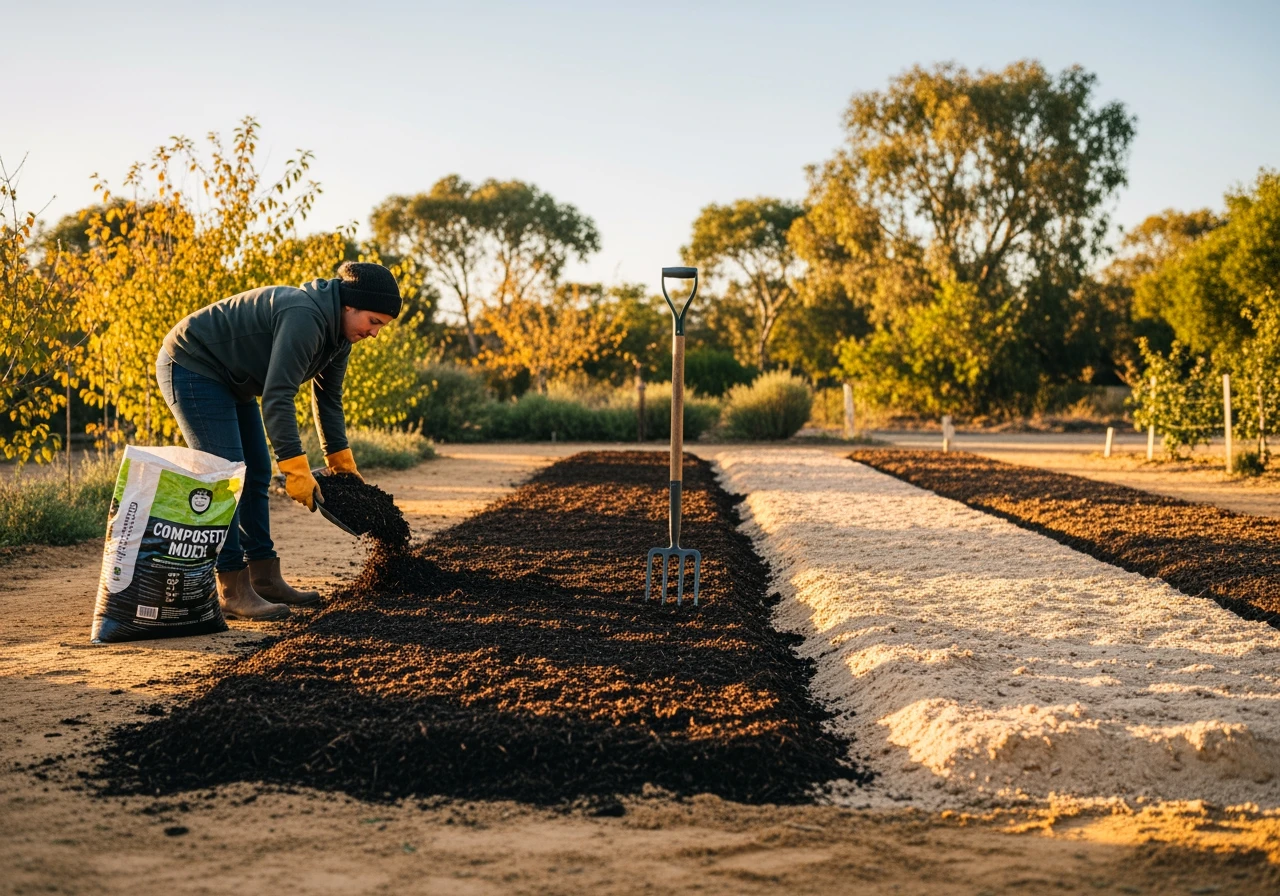
There is a moment in April when Perth’s garden conditions finally shift. The worst of the scorching summer heat is firmly behind you. The harsh afternoon sun begins to lose its intense bite. The first true autumn rains are either here or just around the corner.
Soil temperatures are dropping from their stressful summer peaks. They are entering a comfortable range where underground biological activity thrives. This is the optimal window for your garden. It makes these few weeks the most important of the entire year for building soil health. The steps you take now will determine how your garden performs through the next summer.
Soil carbon is not an abstract concept for Western Australian home gardeners to ignore. It is a practical and measurable foundation. It dictates how much organic matter has accumulated in your garden beds. This directly determines how much water your soil can hold. It decides how fertile the ground is and how well it supports deep plant roots.
Perth’s sandy coastal plains naturally sit at very low carbon levels. This is the root cause of almost every frustration local gardeners face. It explains the rapid drainage and the constant nutrient leaching. It is why your soil completely dries out mere hours after heavy watering. Act now to build your soil carbon before the summer window closes.
What Soil Carbon Is and Why WA Soils Have So Little of It
Soil carbon sequestration in local gardens does not happen by accident. Perth’s intense heat actively accelerates the breakdown of organic matter. Our sandy soil completely lacks the clay particles needed to bind carbon compounds.
This leaves them unprotected from rapid oxidation. Without deliberate interventions, your soil carbon will silently decline season after season.
Many local gardeners are unknowingly managing severely carbon-depleted soil. They constantly wonder why their plants always need more water and endless feeding just to survive.
Soil carbon exists in two distinct forms within your garden. Inorganic carbon is fixed. This includes materials like crushed limestone fragments. It cannot be significantly built or depleted by standard gardening practices.
Organic carbon is the specific type that actually matters for garden performance. It is built from decomposed plant material and broken-down microbial biomass. It also includes the stable humus compounds that form when microscopic organisms process organic matter over time.
This is the highly valuable carbon that local gardeners can actively build. You achieve this through consistent and high-quality organic inputs.
Perth’s ancient weathered soils are notoriously deficient in this organic material. When you apply DSATCO Lupin Mulch, you add one of the most effective inputs available. It builds the soil carbon that sandy gardens desperately need.
This mulch delivers the high-nitrogen organic matter that drives rapid microbial activity. Beneficial microbes process the raw lupin material. They break it down into usable nutrients.
They successfully convert a significant portion of the carbon into stable humus compounds. These compounds persist in the soil profile for months to years. They progressively accumulate with each application.
How Carbon Gets Into and Out of Sandy WA Soils
Plants are nature’s original carbon capture mechanism. They pull invisible carbon dioxide directly from the atmosphere. They convert it into complex sugars, starches, and structural materials through photosynthesis.
When plant matter eventually dies and enters the soil ecosystem, microscopic organisms break it down. They convert some carbon back into the air as gas. The rest is transformed into stable organic compounds.
This highly stable fraction successfully accumulates as soil organic carbon. It creates that beautiful dark and crumbly texture every gardener wants. The difference it makes to root development is staggering.
Unfortunately, Perth’s extreme environmental conditions work tirelessly against this process. Sandy soil inherently lacks fine clay particles. These particles are needed to physically bind to organic carbon molecules and protect them.
Regular summer heat dramatically accelerates the oxidation of organic matter. It literally burns through your garden’s valuable carbon reserves. High soil temperatures destroy delicate microbial networks.
Long dry summers severely limit natural plant growth. This heavily reduces vital carbon inputs from living roots. The benefits of mulch become incredibly obvious when you see how quickly bare soil degrades.
What Low Soil Carbon Means for WA Garden Performance
Most unimproved Perth soils start with an organic carbon reading well below one percent. At this critically low level, the practical impacts are severe. Your plants will struggle to thrive.
The soil behaves exactly like a sieve. It holds almost no moisture between regular watering sessions. Any liquid nutrients applied to the surface rapidly leach below the active root zone.
They are often completely wasted before plants can absorb them. Without constant organic inputs, soil biology simply cannot establish sustainable populations.
Consequently, your plants become entirely dependent on constant external feeding and heavy irrigation. Increasing the organic carbon content completely changes these negative outcomes.
Stable carbon acts exactly like a microscopic sponge. It physically grabs and holds water directly in the root zone. It chemically and biologically binds vital nutrients to the soil structure.
It physically prevents them from washing away during heavy winter rains. Ultimately, it makes your soil hold moisture and grow plants significantly better. Experiencing the long-term benefits of mulch application is key to breaking this dependency cycle.
Why Now Is the Right Time to Build Soil Carbon
The strategic timing of your organic matter inputs actually matters just as much as the inputs themselves. Carbon added to local soils in the mild autumn months integrates beautifully. It creates a robust foundation.
With moderate temperatures and returning regular rainfall, environmental conditions are ideal. Peak microbial activity ensures the organic matter breaks down perfectly. It emerges in spring as measurably improved soil carbon.
The Autumn Window for WA Carbon Building
The critical period from April through June is the most productive timeframe for building organic carbon. Soil temperatures have finally dropped from their extreme summer peaks. The earth begins to cool.
They reach the perfect middle range where complex microbial populations truly thrive. The arrival of autumn rain provides consistent gentle moisture. This drives thorough biological processing without waterlogging the ground.
This massive microbial workforce is highly active and remarkably responsive to new inputs. It simply cannot work this efficiently during heat-stressed dry summer months. Booking a mulch delivery perth service now ensures you have materials ready.
This is the perfect time to incorporate DSATCO Piggypost into your beds. This product utilises properly composted pig manure to deliver immediate biological activity. It breathes life into tired sand.
It is extremely rich in stable humus and living microbes. When incorporated into the top ten centimetres of soil before planting, it kickstarts the entire carbon-building process.
What Happens If You Wait Until Summer
Summer is undeniably the absolute worst time of year to attempt building organic carbon. Extreme heat rapidly accelerates the surface decomposition of any organic matter you apply. The sun bakes the soil mercilessly.
It aggressively oxidises the material. This releases the valuable carbon straight back into the atmosphere as gas. It happens before the carbon has any real time to integrate into stable soil organic matter.
Essential microbial activity is highly stressed. Microbes retreat deep underground or go completely dormant to survive extreme surface temperatures. Finding a good mulch for gardens acts as a protective shield, but the actual building of deep soil carbon must be completed beforehand.
Applying a premium protective layer like DSATCO Triple-C Mulch as a thick surface barrier works double duty. It actively feeds and protects the fragile microbial community as it establishes.
It steadily adds organic carbon from the surface down as it slowly decomposes over the wet winter months. This is the most practical and effective autumn choice for long-lasting protection. Seeking advice from bulk mulch suppliers perth properties trust will help you calculate the exact volumes needed.
Practical Ways WA Gardeners Build Soil Carbon
Building the organic carbon that Perth soils require is not a complicated scientific process. It certainly requires consistency and patience. You must select exactly the right inputs for your specific garden goals.
Every thick layer of organic mulch actively adds to long-term carbon accumulation. Every careful incorporation of composted pig manure makes a difference over multiple seasons.
Arranging a reliable mulch delivery perth service in early autumn ensures you are ready. You will have enough material on hand to treat your entire garden at the optimal time. Working with trusted bulk mulch suppliers perth guarantees you receive quality materials without multiple trips to the hardware store.
DSATCO is a proudly Western Australian company. They produce premium organic mulch and dedicated garden products grown and sourced from local WA farms.
Organic Mulch as the Primary Carbon Input
Quality organic mulch is widely considered the most accessible method for adding vital organic carbon. When planning your autumn garden prep, booking a reliable mulch delivery perth option makes the massive job significantly easier.
To get the full benefits of mulch, it should be applied at an even forty to fifty millimetre depth. It should be faithfully refreshed twice a year. This consistent surface layer adds continuous carbon to the ecosystem.
Each individual layer directly contributes to stable humus accumulation. This persists in the soil profile long after the original physical mulch has completely broken down. It creates a lasting legacy of rich soil.
Finding a good mulch for gardens means choosing a product that breaks down to feed the soil. It must also provide essential surface protection against evaporation. Reputable bulk mulch suppliers perth homeowners use can provide options tailored to sandy soils.
Products like DSATCO Sugar Cane Mulch physically break down slightly faster. They deliver their stored carbon to the complex soil food web much more quickly. This makes it an exceptionally good autumn choice for active vegetable gardens.
Composted Organic Matter and Cover Crops
Your lawn is often the largest single planting in your entire garden. The soil beneath it is frequently the most severely carbon-depleted.
If you are wondering when to top dress lawn perth properties, autumn is the absolute perfect window. The harsh heat is gone, and the soil is ready to absorb nutrients.
Using DSATCO Lawn Maximizer specifically builds soil carbon directly beneath established lawn areas. It dramatically improves the organic matter content of turf soils. It thickens the grass naturally.
Understanding exactly when to top dress lawn perth grass varieties helps maximise the organic carbon absorbed. Applied strategically, it adds the rich organic matter WA lawns desperately need for robust drought tolerance.
For dedicated vegetable gardeners, planting specific cover crops like lupins adds massive amounts of carbon. The rapidly growing root system actively feeds hungry soil microbes.
Products formulated with fully composted pig manure provide a rich source of sustained nutrients. This helps cover crops establish quickly. The green manure then rapidly processes into highly stable carbon.
Reducing Carbon Loss in Perth Gardens
Successfully building soil carbon requires more than just adding high-quality organic inputs. You must also actively reduce common gardening practices that drastically accelerate carbon loss.
Many deeply ingrained gardening habits unfortunately work directly against carbon accumulation. Using a quality mulch delivery perth service provides the materials needed to shift to better practices.
Minimising Tillage and Soil Disturbance
Regularly tilling, digging, and heavily turning your garden soil is destructive. It physically exposes deeply accumulated organic matter to harsh surface oxygen. The fragile fungal networks are completely destroyed.
This rapidly accelerates its natural decomposition. Every major tillage event can easily set back many months of careful carbon accumulation. It oxidises the organic matter that was slowly building your stable soil.
Once your garden beds are established, the most effective approach is no-dig gardening. Consistently add organic inputs to the surface. Allow the natural soil biology to incorporate them downward at its own steady pace.
Top-dressing your established beds with high-quality compost helps immensely. Carefully layering thick mulch directly on top lets native earthworms do the heavy lifting. This highly effective approach is universally considered the most carbon-protective method available.
Why Synthetic Fertilisers Alone Cannot Build Carbon
Standard synthetic chemical fertilisers deliver concentrated mineral nutrients. Plants can immediately use them for a quick flush of green growth. They offer a short term visual boost.
However, they add absolutely no organic matter to the soil structure. More importantly, they do nothing to support or feed vital microbial activity. They bypass the soil ecosystem entirely.
Sandy soils managed primarily with synthetic chemical fertilisers almost always decline in total carbon content. This occurs because essential biological processes are completely starved of raw organic matter. The soil essentially becomes sterile sand.
The full DSATCO product range offers premium organic alternatives. They cover absolutely every feeding and mulching requirement in your garden. From rich soil conditioners to specialised mulch products, they help finally build the deep organic carbon Perth soils need.
How to Measure Soil Carbon Progress in Your Garden
True soil carbon improvement is not always immediately visible after a single application. However, it consistently produces reliable and observable signals over the first few seasons.
Passionate gardeners are often amazed by the physical transformation of their soil structure. Once carbon levels begin to truly rise, the changes are undeniable. Your garden will feel entirely different.
Signs That Soil Carbon Is Increasing
Soil colour is the most direct and obvious visual indicator of increasing carbon content. Severely carbon-depleted Perth sand is typically a very pale grey or yellow.
As valuable organic carbon accumulates, the soil darkens progressively. It moves toward a rich brown, eventually reaching a beautiful dark brown-black appearance. This distinct colour shift is a direct reflection of increasing organic matter.
You will quickly notice the ongoing benefits of mulch as your soil structure changes. Your plants will become much more resilient to sudden temperature shifts. The foliage will look thicker and healthier.
Water retention is the most practical daily indicator of your success. Pay close attention to exactly how long your beds stay moist after a deep watering.
Carbon-depleted sandy soil completely dries out within mere hours. As soil carbon increases, this crucial moisture retention naturally extends to several days. This massive improvement translates directly into significantly reduced watering frequency.
Earthworm presence is the ultimate biological indicator of a healthy environment. Earthworms simply cannot survive in hot, dry, carbon-depleted sand. When they naturally appear and multiply, it signals that your soil ecosystem is functioning perfectly.
Realistic Timelines for WA Soil Carbon Building
It is highly important to set realistic expectations. Rebuilding heavily depleted sandy soils takes time. It is a biological process, not an instant chemical fix. Understanding the true benefits of mulch goes beyond just aesthetics.
Noticeable physical progress typically takes two to three full seasons of highly consistent organic inputs. The first year is often simply about stopping ongoing carbon loss. It gets dormant biological systems slowly working again. Sourcing a good mulch for gardens early in the season is a smart strategy.
The second year brings noticeable improvements in summer water retention. Plant resilience dramatically improves. You will see less heat stress during the brutal January and February peaks.
By the third year of consistent autumn preparation, your garden will require significantly less water. It will handle Perth’s brutal summer heat with far less stress. Each incremental carbon increase delivers compounding benefits.
Conclusion
Building and protecting soil carbon is the single most important long-term investment any Western Australian gardener can make. It solves the root cause of poor water retention and weak plant growth.
By taking advantage of the ideal autumn weather window, you can successfully add vital organic matter. Quality organic mulch and mature compost break down efficiently in the cooler and wetter months. Knowing when to top dress lawn perth environments is crucial for seasonal recovery.
This builds a resilient and moisture-holding foundation that protects your precious plants when extreme summer heat returns. Do not wait until the heat arrives to protect your soil. The window for autumn soil prep is short.
Get your garden sorted before the season changes. Order online now or call the team on 08 9671 1500 to check stock.
Latest Posts
- How Finely Textured Sugar Cane Straw Aids Moisture Retentiveness
- When to Apply Sugar Cane Mulch to Sensitive Backyard Garden Borders
- Using Lawn Maximiser as an Organic Top Dress for Perth Domestic Turf
Reviews from
Happy Gardeners
 "Results have been spectacular. The grass has never looked healthier."
Rod


