


 Buy Online
 08 9671 1500
 office@dsatco.com
When to Apply Sugar Cane Mulch to Sensitive Backyard Garden Borders
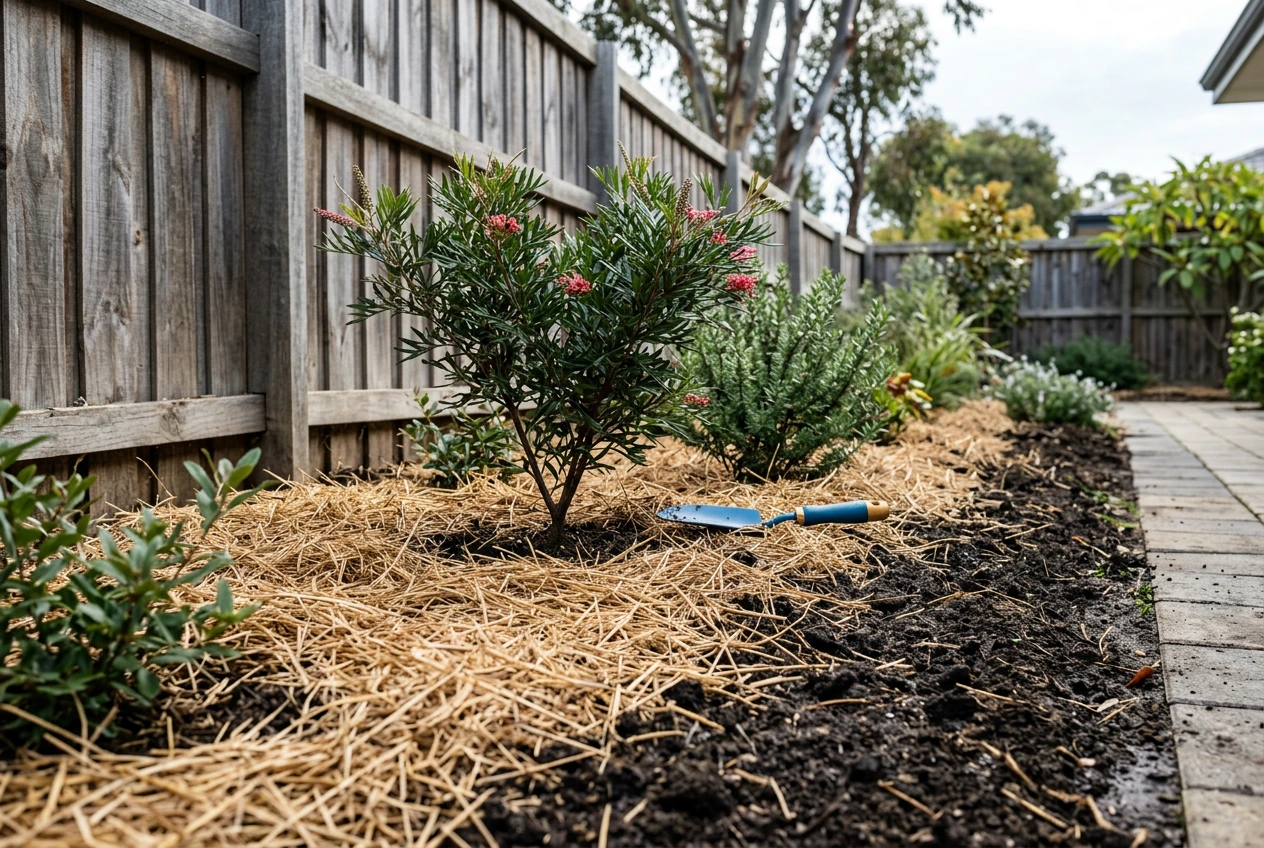
Garden borders often contain plants with different root depths, watering needs and stem structures. That makes timing and placement just as important as the mulch material itself.
A sensitive backyard border, here, is a mixed bed where plants sit close enough that stem clearance and an even surface layer decide whether the cover helps or crowds the row.
Match the mulch to the job on that bed, then follow stem-clearance and watering guidance rather than a general calendar rule.
We grow this cover as a raw straw mulch for garden beds. Applying sugar cane mulch along a mixed backyard edge is a surface job: the straw goes on open soil, with a little space left at each stem, rather than being mixed through the profile.
Choose the Timing Around the Bed, Not a Fixed Calendar Date
Apply a First Cover on Open Soil
The useful question when applying sugar cane mulch is whether the border needs a first raw straw cover or only a thinner refresh. Use Sugar Cane Mulch when the border needs a raw straw surface cover. Time the work from the open soil in front of you, then follow the first-cover or replenishment depth that matches that job.
Spread the mulch over the open soil, leave a little space between plant stems and the mulch, then water thoroughly. The watering is to improve water retention and to protect the soil from wind damage.
Replenish When Coverage Has Thinned
Organic mulch changes as it breaks down. A garden border mulch should be inspected rather than treated as a permanent skin on the bed.
A first cover is thicker than a refresh: 50-100mm when you are mulching for the first time, then 30-40mm when you are only restoring a worn layer.
On open soil that has never had a straw layer, applying sugar cane mulch as a first cover means spreading to 50-100mm so the surface is actually covered. When the old layer has worn thin, stay at 30-40mm. A 55L bag covers about 3-4m2, so use that coverage figure against the open soil you measured, not against the length of the planted strip as it looks from the path.
Use the same two depths when you estimate how much material to bring to the border. A first cover at 50-100mm on open soil takes a deeper layer than a 30-40mm refresh. A 55L bag covers about 3-4m2, so the bag count comes from the open soil you measured and from whether that soil needs the first-cover depth or only the replenishment depth.
If heavy rain or a thin patch leaves soil showing, replenish at 30 to 40 millimetres. Watch for bare patches after heavy rain, then restore the layer instead of waiting for a season name to appear on a chart.
Prepare Sensitive Borders Carefully
Keep Stem Clearance Along the Mixed Edge
In a mixed border, work around each plant rather than dragging straw across the whole strip in one pass. Keep a little space at the stem, then keep using that gap as you move along the edge.
The gap is there so the cover sits on soil, not on the stem. Keep that space visible on every plant as you spread, because the straw is meant to cover open soil along the edge.
Match Thickness and Plant-Base Space
Natural ground cover still has to follow the mulch you actually put down. Thickness and the space near plant bases still need to match the mulch you are using, and the water after spreading is part of that same application.
Why Fine Sugar Cane Mulch Suits Detailed Border Work
Fine Shredding Helps Around Irregular Spaces
A border rarely has the open geometry of a large empty bed. Plants, edging and small gaps make even spreading harder, which is why the texture of the mulch matters on this job.
We shred Sugar Cane Mulch to a fine consistency for even distribution. On a planted edge, that even distribution is what lets you cover the open soil between plants to a consistent depth instead of leaving the layer patchy.
The Mulch Supports Surface Moisture Management
After you water thoroughly, the layer is there to help the soil keep that moisture rather than leaving the surface bare.
Gardeners across Western Australia can review DSATCO organic mulch options before covering a mixed backyard border. A mixed edge can need a raw straw cover on open soil, and looking at the range first helps you match the bag to that surface job.
Plants in one border often share soil while using moisture differently. Water each plant for what it needs rather than treating the whole edge as one watering job.
When Soil Improvement May Need a Separate Product
Work Organic Matter Into the Soil First
A thin or tired soil profile may need more than a cover. If the border is hungry below the surface, a soil improver belongs in the profile first, and the straw belongs on top after that work is done.
Sugar Cane Mulch is placed on the surface. As it breaks down it builds soil carbon and turns organic material into humus, which helps structure over time.
Blend Piggypost into the soil first if the border needs organic matter below the mulch. That mix-in is an in-soil step, so it happens before the straw goes on.
Compare the Job Before Choosing the Product
Use Triple-C Mulch when the border needs a composted cover. Apply that composted, nitrogen-rich garden mulch 40-50mm thick and leave 100mm around plant bases, then water thoroughly after spreading.
A Simple Border-Mulching Sequence
Before Application
Walk the border and mark plant stems and the open soil you intend to cover. That walk tells you where the straw should sit and where the stem gap must stay visible.
Measure the open soil, not the whole bed including foliage. A 55L bag covers about 3-4m2, so a long, narrow border can need several bags even when the planted strip looks modest from the path. Order the 55 L size when a backyard border only needs bagged coverage, and count bags from that open-soil area rather than from how short the border looks when the plants are in leaf.
During Application
When applying sugar cane mulch, spread it over the open soil. Keep the layer even across open soil and leave visible clearance around stems as you go. Stop at the stem gap rather than filling every last corner of the bag against the plant.
After Application
Water the mulch after spreading, then walk the border again. Look for straw that has slumped onto stems or left a bare patch you thought you had covered.
Recheck the surface as the organic material settles and breaks down. A garden border mulch layer that looked even on day one can still need that later check, especially after heavy rain has moved or thinned the cover.
Frequently Asked Questions
Is Sugar Cane Mulch Suitable for Every Sensitive Plant?
Sugar Cane Mulch is a raw straw mulch for garden beds. Keep a little space between the stem and the mulch on every plant in the row.
When Should I Apply Garden Border Mulch?
Time garden border mulch from the cover still sitting on the soil, not from a calendar date. Use the first-cover depth on bare soil when applying sugar cane mulch for the first time, and the thinner replenishment depth when you are only restoring a worn layer.
Does Applying Sugar Cane Mulch Remove the Need to Weed?
Covering exposed soil helps reduce weed growth. Keep weeding as needed; a straw cover does not make the border weed-free.
Can Sugar Cane Mulch Improve the Soil?
It builds soil carbon and contributes to structure as it breaks down. If the border needs organic matter mixed through the profile, do that as a separate step before you cover.
Time the Cover From the Condition of the Border
The practical answer for applying sugar cane mulch to a sensitive backyard border is to time it from the cover job in front of you: a first raw straw layer on open soil at 50-100mm, or a 30-40mm refresh when the old layer has worn thin, with stem clearance and watering as part of the same application. Restore the layer if heavy rain leaves bare patches, and keep the work tied to that condition rather than to a single date.
If you need the 55L bag count or Perth Metro delivery checked against a measured border, Speak with us before you order.
Latest Posts
- When to Apply Sugar Cane Mulch to Sensitive Backyard Garden Borders
- Using Lawn Maximiser as an Organic Top Dress for Perth Domestic Turf
- How to Blend Piggypost Into Existing Garden Beds to Support Earthworm Activity
Reviews from
Happy Gardeners
 "Results have been spectacular. The grass has never looked healthier."
Rod


