


 Buy Online
 08 9671 1500
 office@dsatco.com
Using Lawn Maximiser as an Organic Top Dress for Perth Domestic Turf
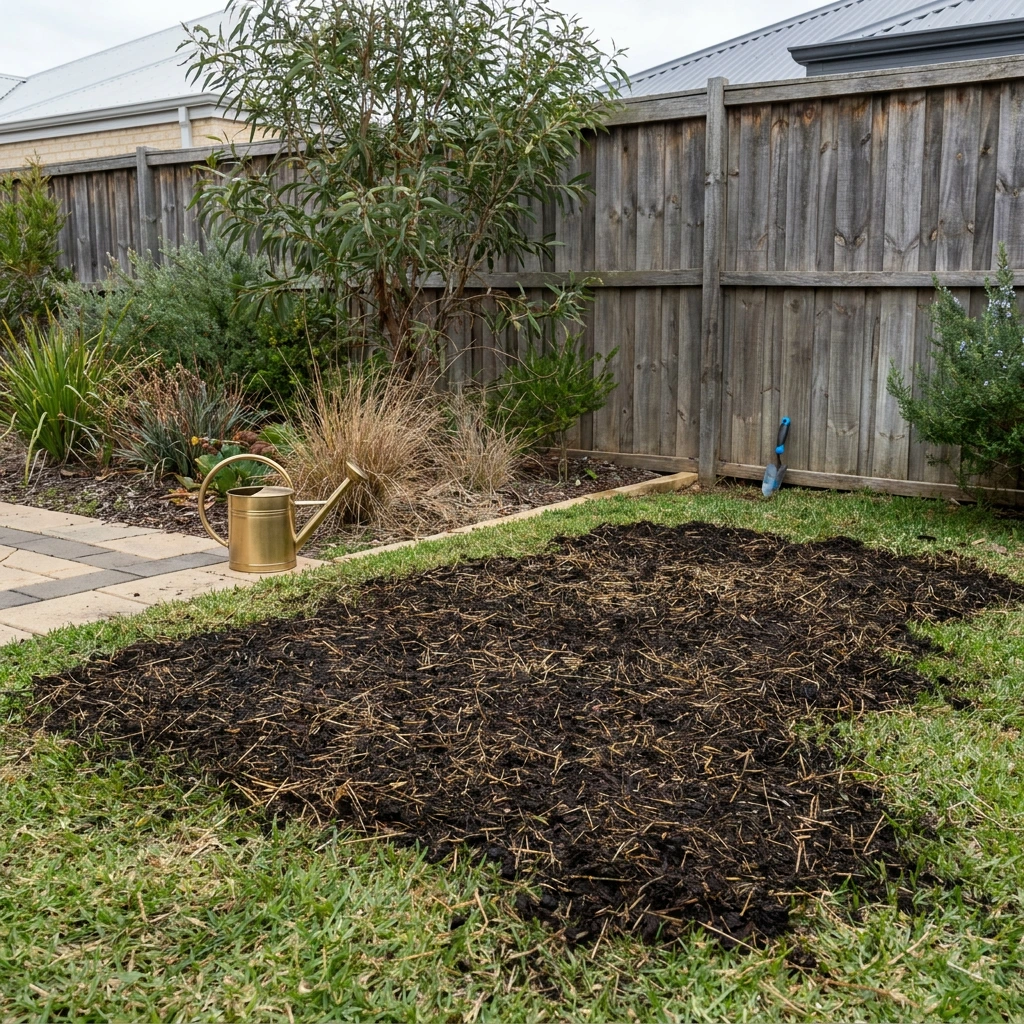
Established turf can look uneven when the soil surface becomes tired, compacted or low in organic material. Adding more water alone does not change the condition of the material around the grass roots.
Top dressing adds a thin layer of suitable material over an existing lawn. The purpose is to support the turf and soil surface without burying the grass.
For Perth homeowners, the key question is whether a top-dressing product is actually designed for existing lawns. Product purpose matters more than broad lawn-recovery promises.
Lawn Maximiser is for turf that already has a living sward. If the grass would disappear under a deep cover, the layer is too thick for this job.
What Lawn Maximizer Is Designed to Do
An Organic Top-Dress Fertiliser for Existing Lawns
We make Lawn Maximizer from lupin chaff, canola straw and chicken manure. The mix is shredded to a fine consistency and then pasteurised so it spreads as one dressing rather than a mixed pile of straw and manure.
We apply this product to existing lawns as a top dress fertiliser. Garden-bed mulch is a different tool. It usually sits as a thicker surface layer around plants, with space left at the stems. On turf, the grass has to stay visible so light, air and mowing can continue.
A 35L bag is intended to cover 15 m2 of existing lawn. A 900L bulk bag is intended to cover around 380 to 400 m2 on existing lawns. Those figures are for dressing turf already in place, not for filling a new soil profile or building a garden bed. Measure the grassed area first, then choose Lawn Maximizer in the pack that covers that living sward rather than the whole backyard including beds and paving.
The dressing carries organic carbon and a nitrogen, phosphorus and potassium profile. Listed concentrations include nitrogen at 25 g/kg, phosphorus at 6.2 g/kg, potassium at 16 g/kg and carbon at 315 g/kg, with calcium, sulphur, magnesium and several trace minerals also present. Those numbers help you compare this organic dressing with other lawn feeds. They do not tell you how a particular patch will respond, because irrigation, shade, mowing height and the soil underneath still govern growth.
Fine Texture Supports Even Distribution
A lawn dressing has to travel across the sward, not sit in lumps. We shred the mix finely so it can be distributed evenly rather than left in isolated piles that smother some grass and leave the rest untreated.
That does not mean every lawn needs the same quantity. Turf density, grass type, thatch and the existing soil all change how much material you should put down in one pass. A thin, worn patch may take a little more; a tight, healthy sward needs less before the leaf starts to disappear.
The practical goal is simple: spread Lawn Maximiser so the grass remains visible and the organic material can settle around the turf surface.
Preparing an Existing Lawn Before Top Dressing
Start With the Lawn You Actually Have
Before applying anything, walk the lawn. Look for areas that are thin, heavily thatched, dry, compacted or physically damaged. Mark low spots that hold water and high spots that dry first. Those observations tell you whether a dressing is the next useful step, or whether irrigation throw, drainage or wear needs attention first.
When you top dress your lawn Perth in summer, check the root zone as well as the leaf. Sandy profiles often let moisture move quickly, so the condition of the soil around the roots matters as much as the material you spread on top.
Check moisture a few centimetres down, not only the colour of the leaf. A lawn can look dry at the tips while the soil below is still damp, or look green while the root zone is powder-dry. Either mistake changes how you should water after dressing.
Keep the Application Focused on Existing Turf
Our instructions are for established lawns, not a seed-raising mix, turf underlay or replacement soil. Keep this dressing on a mature sward rather than on newly sown or newly laid turf.
Once you know the sword is established enough to dress, you also know how much grassed area you actually have to cover. Gardeners across WA can order through DSATCO once they know the area and bag size they need. Measuring first keeps the pack in proportion to the lawn, instead of to the fence line.
For garden beds rather than lawns, use a mulch or soil improver made for planted soil. The turf dressing stays on grass; the bed products stay where stems, shrubs and vegetables sit in open ground. Spread Sugar Cane Mulch on open beds where you need a surface cover, not turf dressing. That cover is a layer around plants, with space left at the stems; the same depth on a lawn would hide the leaf.
Before spreading, rake off leaves, sticks and clippings that would stop the material reaching the turf. The aim is contact with the existing lawn, not a layer sitting on garden waste.
How Organic Top Dressing Supports the Turf Environment
Root-Zone Support Comes From the Soil System
Lawn Maximiser is meant to put organic matter and nutrients where the grass already grows. Leave bed improvers in planted soil; this dressing stays on the turf that is already in place. Blend Piggypost into garden beds if you also want more organic matter around shrubs. Mixing a soil improver through planted ground is a different job from laying a thin fertilizer on a sward.
Healthy turf still depends on suitable watering, mowing, sunlight and the underlying condition of the lawn. If those are wrong, a dressing cannot rewrite the site. Compacted ground, broken sprinklers and deep shade will still show after the particles have settled.
At the soil surface, organic material can become part of the root-zone environment as it settles and breaks down. That is why top dressing is different from applying a decorative mulch. The particles need to work down around crowns and thatch, not form a blanket that hides the grass.
Watering Remains Part of Lawn Management
Irrigation remains your job after the dressing goes down. Perth turf needs a watering pattern that matches season, soil and grass type, whether or not organic material is sitting in the sward.
Keep checking the soil and turf rather than relying on appearance alone. After you top dress your lawn Perth on an established lawn, keep watering so the particles can settle, then return to a pattern that suits the root zone.
A Practical Top-Dressing Approach
Spread for Coverage, Not for a Thick Surface Layer
A common mistake is treating top dressing like garden mulch. Spread Lawn Maximiser across existing turf rather than forming a deep cover over the grass. If you can no longer see the leaf, you have put too much in that spot. A mulch ground cover on a bed is meant to stay as a surface layer, while this dressing has to leave the grass able to grow, take light and be mown.
Work across the lawn methodically. Distribute small amounts, then level the material with a broom, lute or the back of a rake so grass blades remain exposed. Light watering after spreading helps the particles drop into the sward instead of sitting as a dry crust on the leaf.
If a section receives too much material, move the excess to a thinner area. Evenness matters more than creating a visibly thick layer.
Match Bag Size to the Area You Need to Cover
Measure length and width of the lawn, subtract obvious paving and beds, and compare the result with 15 m2 per 35L bag or about 380 to 400 m2 per 900L bag. Buying by guesswork usually produces either a leftover pile or a thin, patchy pass that never quite reaches the far edge. Order 35L bags when you only need to cover a smaller existing lawn area, because that pack is sized for a courtyard or a narrow strip rather than a wide back lawn.
Use a Bulk Bag on Broad Turf
Large domestic lawns waste time if you shuttle many small bags across the same area. A bulk bag is the better match when the measured area sits near the 900L coverage band, or when several adjoining lawns will be dressed in the same job, because you then spread from one bulk unit instead of opening a line of small bags.
A courtyard strip and a wide back lawn on the same block still need different packs. Square metres of grass decide pack count when you top dress your lawn Perth from verge to back fence, not a single bag count for the whole yard.
Observe the Lawn After Application
After top dressing, continue normal lawn care and watch how the turf responds. Colour, density and wear tolerance change with season, grass type and watering, so judge the lawn by those conditions rather than by a set number of days.
Warmer weather is the window we prefer for this dressing on grass-type lawns. Cool, waterlogged or heavily shaded turf can sit with the material on the surface for longer before it settles. Adjust irrigation to the weather you actually have, not to a calendar promise.
If one bay greens and another stays thin, look at water throw, compaction and shade before adding another full dressing. A second heavy pass on an already covered area can bury the leaf.
Frequently Asked Questions
Is Lawn Maximizer a Mulch for Garden Beds?
No. Lawn Maximizer is an organic top dress fertiliser for existing lawns. Garden-bed mulches have different purposes and application depths. Use the turf product on grass, and a bed mulch or soil improver where plants sit in open soil.
Can Lawn Maximizer Be Used on Newly Laid Turf?
Apply Lawn Maximizer to existing lawns. Newly laid turf is a separate job from dressing a living sward, and new turf still needs contact with soil and careful watering.
Why Is the Fine Texture Relevant?
We shred the product to a fine consistency for even distribution. That matters when you need an organic top dressing to move across an existing lawn surface without leaving clumps that block light or catch in the mower.
Conclusion
Choose Support for the Lawn You Already Have
Using Lawn Maximiser as an organic top dress makes sense when the job is to support an existing lawn rather than cover a garden bed. We position Lawn Maximizer for that top-dressing job, with organic carbon, nitrogen, phosphorus and potassium in a fine, pasteurised texture meant to sit in the sward.
Measure the area, keep the layer thin enough that grass stays visible, water so the material can settle, and keep ordinary mowing and irrigation in place. That is the practical answer for domestic Perth turf.
If the measured area, grass type or delivery suburb is still unclear, Speak with us before you order.
Latest Posts
- Using Lawn Maximiser as an Organic Top Dress for Perth Domestic Turf
- How to Blend Piggypost Into Existing Garden Beds to Support Earthworm Activity
- Why Clean Sugar Cane Mulch Provides an Effective Protective Soil Barrier
Reviews from
Happy Gardeners
 "Results have been spectacular. The grass has never looked healthier."
Rod


