


 Buy Online
 08 9671 1500
 office@dsatco.com
How Finely Textured Sugar Cane Straw Aids Moisture Retentiveness
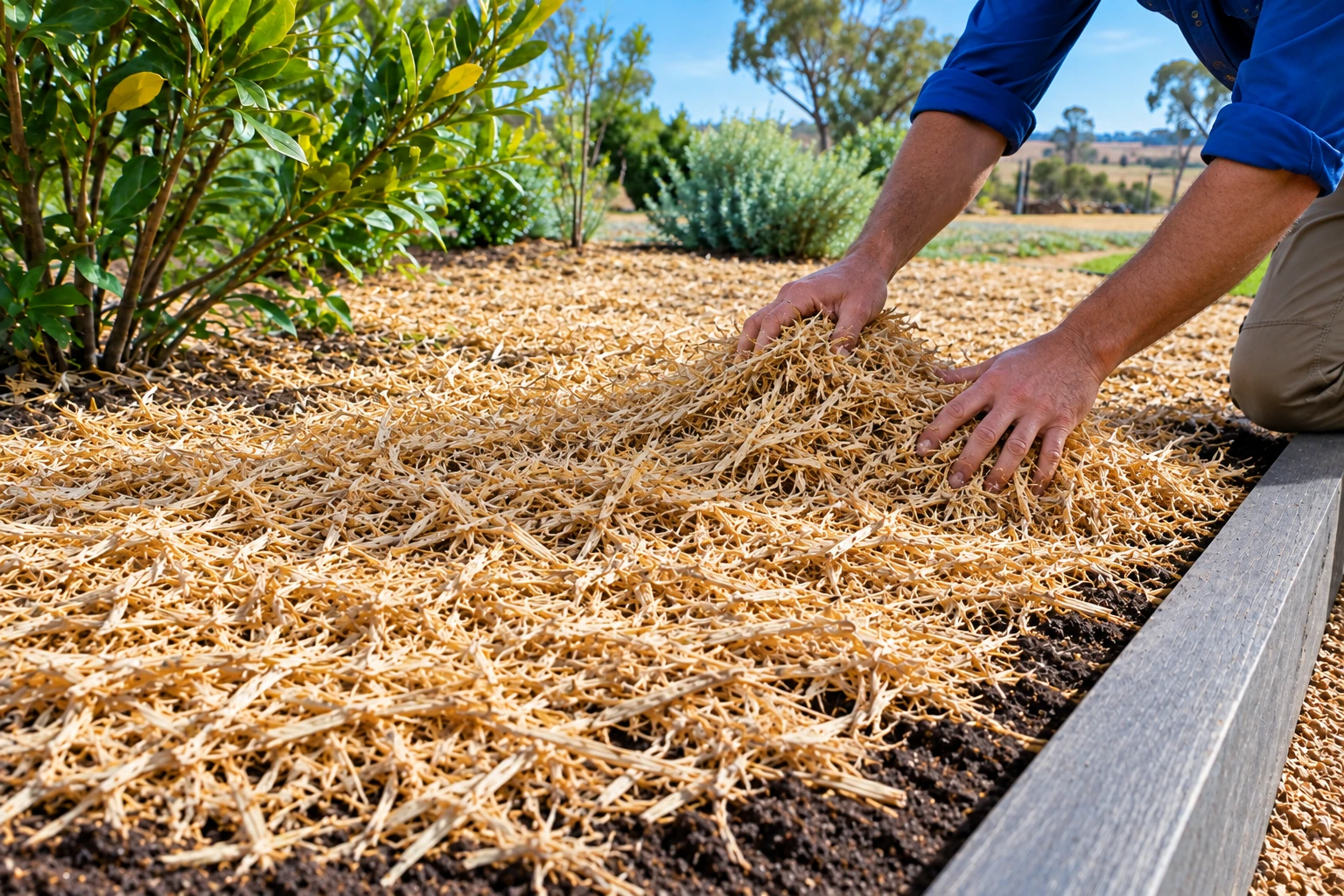
We shred sugar cane straw to a fine consistency so it is easier to spread. Even distribution is the point of the texture: a cover you can work to a consistent depth, with fewer gaps where soil stays open. Fine sugar cane straw is then ready to water through, which is how the cover supports moisture retentiveness on the soil below.
Open soil dries from the top down when sun and wind can reach it. A gap in the cover is not a small cosmetic miss; it is a window where the surface can lose moisture while the rest of the bed stays protected. Working the straw to a consistent depth is how you close those windows. The texture does not lock water on top of the bed. It gives you a layer you can place evenly, so the soil underneath is the part that stays covered.
It is a raw straw based mulch, grown and produced in Wongan Hills, that you can work to a consistent depth on vegetable beds, flower beds and around fruit trees. Once the soil is ready, this is the surface straw we put on those beds, not a mix you bury as you plant.
Check the planting zone while it is still open: if that soil needs more organic matter, mix the enhancer through it now, because you will not be digging the straw in later. When the ground is ready, the straw stays on top. Burying it as you plant takes away the surface cover that moisture retentiveness depends on.
Why Texture Matters at the Soil Surface
Fine Shredding Makes the Material Easier to Spread
Our Sugar Cane Mulch is a finely shredded straw cover made for even spreading over garden beds. The fine cut is there so the cover can sit evenly from edge to edge on soil that is ready to be covered. That even sit is what you want from this raw straw before you water the bed.
Even coverage is the reason that texture matters. Fine sugar cane straw can be laid as one complete cover instead of a patchy heap, which is the handling you want before you pick up the hose.
Even Cover And Soil Moisture
Fine sugar cane straw supports moisture retentiveness when that even layer is in place and irrigation has reached the soil. Keeping the cover complete also leaves fewer open patches for weeds. Both of those uses sit on the same surface straw while it is still a cover, before later breakdown.
What Happens After Water Reaches the Mulch Layer
Water Still Needs to Enter the Root Zone
Watering should reach through the sugar cane straw and into the soil below. The useful watering is the one that has gone through the straw and into the root zone. The straw stays a surface cover while that water is meant for the soil and root zone underneath.
Water thoroughly after application so the soil can hold moisture and so the soil is protected from wind damage.
What Happens as the Organic Straw Breaks Down
Organic Mulch Changes Over Time
The straw is an organic material. As sugar cane straw decomposes, it contributes soil carbon and helps build soil structure. At first the straw is a surface cover. As it breaks down, that organic material moves into the soil and the carbon content increases, turning into humus as it does so.
Microbial activity occurs naturally in the material. Carbon and structure from breakdown, and that naturally present microbial activity, belong to the same organic cover as it ages. That later soil work is why a thinner top-up is part of using sugar cane straw: the organic layer changes as it breaks down, and replenishment restores the surface cover.
A Soil Enhancer Has a Different Job
We make Piggypost as a soil enhancer mixed into garden soil. Use Piggypost in the soil when the bed needs more organic matter below the mulch layer. Work it through the planting zone first, using a mix of two parts soil to one part Piggypost for a single application. The straw remains the surface cover you spread over finished soil.
Compare our organic mulches through DSATCO before covering a bed if you are still choosing between a surface straw and a soil mix. Use that comparison to pick a surface straw for moisture management when the bed is ready, and keep a soil enhancer for mixing into the planting zone. The two materials answer different parts of the same bed.
A 20L bag suits a small bed that needs soil improvement before the straw goes on. Mix that pack through a modest area, then spread sugar cane straw over the finished soil. At the recommended rate the 20L pack covers just over 1m2, which is enough for a small bed or a trial patch before you scale the same two-to-one mix across a larger planting zone.
Using Fine Sugar Cane Mulch in a Practical Way
Prepare the Bed Before You Cover It
Decide whether this is a first cover or a replenishment, because those jobs use different depths. A new bed needs a deeper starting layer; a bed that already has straw only needs enough material to restore an even cover. First covers and top-ups are therefore different quantities of sugar cane straw, even on the same garden bed.
If the planting zone itself is poor, mix in the soil enhancer before any straw goes down. Then spread the material evenly. Leave a little space between the stem of the plants and the mulch. The fine consistency of sugar cane straw is what makes that even spread practical once the bed is ready for a surface cover.
If you are mulching for the first time, spread to a depth of 50-100mm. Coverage will vary accordingly, and the deeper end of that first-cover range uses more sugar cane straw on the same area. Choose the depth from that range for the bed in front of you, then stay even, rather than deep in one corner and thin in another.
If you are replenishing an existing layer, 30-40mm is the depth we recommend. That depth is for an existing mulch layer, not a first cover of 50-100mm. You are restoring coverage, not starting the bed again.
Coverage still varies with how thick you spread. A 55L bag covers about 3-4m2, so measure the open soil you want to cover before you decide how many bags to buy. Order the 55 L bag when you want a manageable pack for a smaller bed. Scale the number of those packs to the measured area and the depth you chose, because thicker spreading uses more material for the same bed.
Water After Spreading
Thickness and space near the base of plants are the finishing checks before the hose comes on. Our mulch ground cover guide uses the same finishing sequence on a garden bed: set the depth, then leave a little space at each stem. Finish those two points on the bed, then water thoroughly after application.
How To Keep The Cover Working
Replenish When The Layer Thins
Because the straw breaks down, a first cover and a later top-up are different shopping jobs. A 55L bag covers about 3-4m2, and that thinner 30-40mm top-up uses less straw on the same area than a first cover of 50-100mm. Measure the worn area, buy for a 30-40mm restore, and keep the new material even with the straw that is still in place.
You are not starting from bare ground again, so do not default to the 50-100mm first-cover depth on soil that still has straw on it.
Frequently Asked Questions
Does The Mulch Need To Be Kept Away From Stems?
Yes. Leave a little space between the stem of the plants and the mulch.
Can The Mulch Improve Soil Over Time?
As the organic material breaks down, it builds soil carbon and supports soil structure. Microbial activity occurs naturally in the material while that breakdown is underway. That is a later soil effect. It does not replace mixing a soil enhancer through a poor planting zone before the first cover goes on.
The Practical Answer For Garden Beds
What To Do With Fine Straw Cover
Fine sugar cane straw covers the bed as a spreadable organic layer. Its practical role is to create an even organic cover over the soil while still allowing watering to reach the root zone. That is how finely textured sugar cane straw aids moisture retentiveness: even spread, water through, moisture held in the soil, then a thinner top-up when the organic layer wears thin.
Choose sugar cane straw when you need a fine, spreadable surface mulch for moisture management, then water it in and keep the layer complete as it breaks down. Mix Piggypost through the planting zone only when that soil itself needs more organic matter, using the two-to-one mix on a trial patch if the bed is small.
Speak with us if you need help matching bag size to the garden area you want to cover.
Latest Posts
- How Finely Textured Sugar Cane Straw Aids Moisture Retentiveness
- When to Apply Sugar Cane Mulch to Sensitive Backyard Garden Borders
- Using Lawn Maximiser as an Organic Top Dress for Perth Domestic Turf
Reviews from
Happy Gardeners
 "Results have been spectacular. The grass has never looked healthier."
Rod


