


 Buy Online
 08 9671 1500
 office@dsatco.com
Supporting Turf Recovery and Root Development in Sandy West Australian Soils
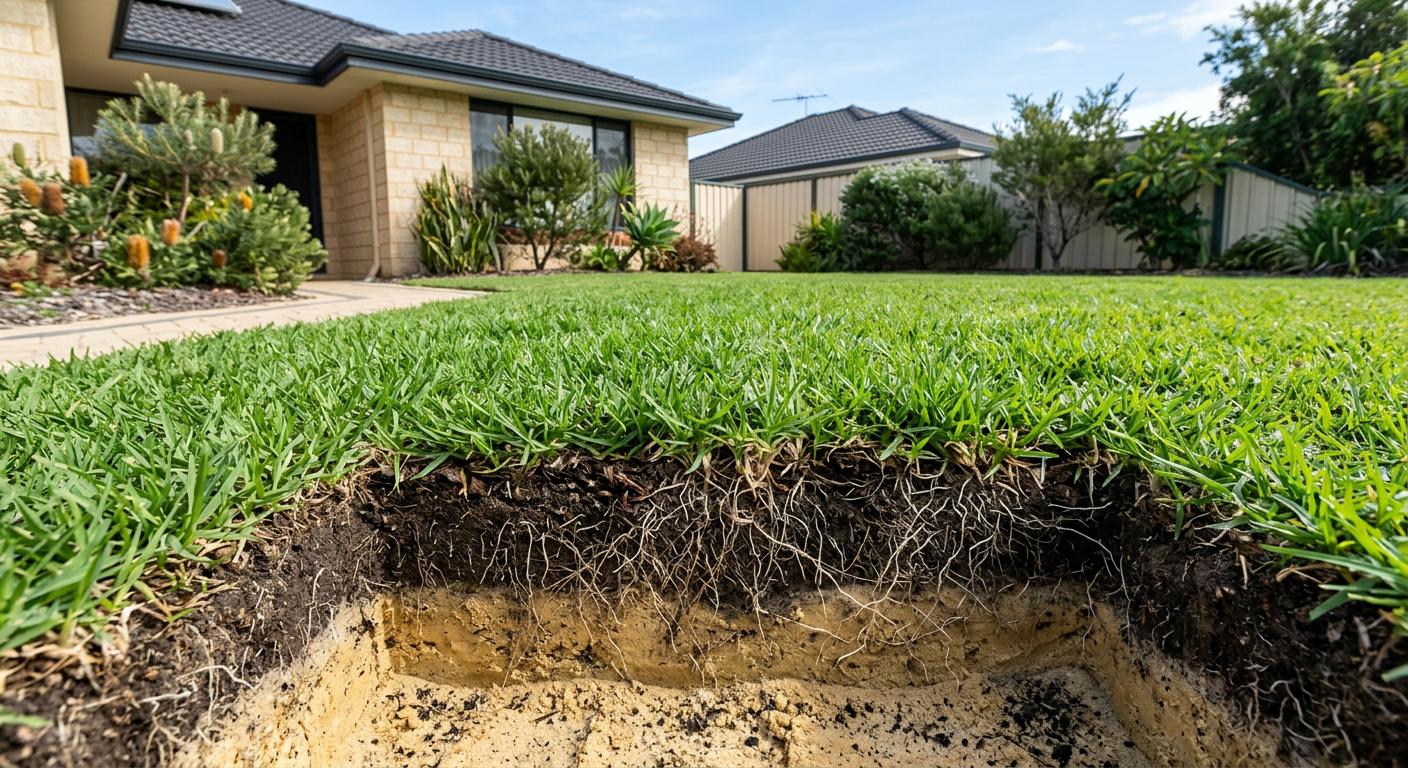
A sandy lawn can drain freely yet still struggle to maintain an even root-zone environment. Watering may wet the surface briefly without improving the condition of the soil around the grass roots.
When turf is thin or stressed, it is tempting to look for a product that promises recovery. A more accurate approach is to improve the conditions that support existing turf and its root system.
An organic top dress designed for established lawns can add carbon and nutrients at the surface while the grass remains in place. Match the material to the area you measured and to the soil it is growing in, because sand that looks briefly wet can still leave the root zone short of moisture and organic matter.
Sandy Perth lawns drain fast once water hits the profile. On sandy lawns Perth in summer, water leaves the profile quickly. Organic matter and even irrigation therefore matter more than a single wet afternoon.
Start With the Root Zone, Not Just the Leaf Colour
Sandy Soil Changes How Lawn Care Feels
On many Perth blocks the profile is coarse and short of organic matter. Water moves down quickly, soluble nutrients move with it, and the surface can look tired while the shortage sits around the roots.
That is why turf care should not rest only on how green the leaves look on one day. Check the soil with a trowel, watch irrigation coverage, and look at the actual grass before you decide what to apply.
Gardeners who want turf root development still have to deal with irrigation faults, shade, compaction, wear and unsuitable grass as separate jobs. A dressing on the surface does not correct those causes, so check them before you treat thin colour as a feeding problem.
Recovery Follows Growing Conditions
Homeowners often want turf recovery because thin, patchy grass is what they see from the path. The earlier question is whether the root zone still has moisture and enough organic matter to hold a dressing, and whether irrigation actually reaches that depth.
Lawn Maximizer is a fine organic top dress for existing lawns. Push a trowel to root depth after a watering cycle; if that soil is still dry, fix throw and run time before you spread.
How An Organic Top Dress Fits Existing Turf
What Lawn Maximizer Is Made For
We formulate Lawn Maximizer from lupin chaff, canola straw and chicken manure. The mix is shredded to a fine consistency so it can be spread evenly across existing grass, then pasteurised. Match Lawn Maximizer to establish turf using that formulation and coverage of 15 square metres per 35L bag, or about 380 to 400 square metres per 900L bag on existing lawns.
The mix is already shredded for even distribution, so plan the pass across the lawn rather than dumping bags in one corner and hoping the rest of the area catches up.
What The Nutrient Analysis Shows
Lawn Maximizer is rich in organic carbon and carries a balanced NPK profile. The mix contains nitrogen at 25 grams per kilogram, phosphorus at 6.2, potassium at 16 and carbon at 315, with calcium also present.
Those numbers help you compare the dressing with other organic materials. They do not tell you how a particular patch will respond. Irrigation, shade, wear and the organic matter already in the profile still change the result.
A Four-Part Check Before You Top Dress
Check The Existing Turf
First, confirm that there is an established lawn to work with. Walk the area and note where the cover is thin but still present, because quantity and even spreading depend on the grass that is actually there.
Check Watering Coverage
A top dressing cannot compensate for dry areas caused by poor irrigation distribution. Walk the lawn during a cycle and look for strips that stay dry.
If one area remains consistently dry, solve that coverage problem as part of the lawn-care plan. Turf root development still depends on water reaching the roots, especially where sand drains quickly.
Heads that only mist the leaf leave the same dry profile you started with. Fix overlap, throw and run time so water reaches the depth the grass is using before you judge the dressing.
Check The Surface Condition
Heavy thatch, debris or a dense surface layer can keep top-dressing material from settling where intended. Rake out loose build-up so the fine mix can reach the soil among the grass rather than sitting on a mat.
Frequent shallow watering can leave a tight surface even on sand. Put water to the depth the grass is using so the profile is moist enough for a fine dress to settle, rather than wetting only the leaf.
Check The Goal
Decide what you are trying to improve. Is the aim routine feeding, better soil condition, support for turf root development, or a response after ordinary wear?
Clear goals keep the dressing on feeding and soil condition around existing turf. If shade, wear or irrigation is the real limit, handle that before you treat colour as a dressing problem.
Match Bag Size To The Lawn You Have
Before you order by habit, check that you are still buying a lawn top dress and not a bed product with a similar organic look. Measure the living turf first, then use DSATCO to order Lawn Maximizer from the same product list as the bed materials. The list is useful only if you pick the line that matches the area you measured.
Small Established Areas
Order a 35L bag when the measured existing lawn is a small established area, not a bulk load. Walk the living turf you intend to treat, then pick that pack so you can finish an even pass without leftover mix sitting unused.
Larger Lawns And Bulk Format
Choose bulk bags if the lawn area is large enough to need that format. A 900L bulk bag is the Lawn Maximizer option for a bigger established area. Measure the lawn first. Ordering by guesswork either leaves you short in the last corner or stacks unused material in the sun.
Keep Garden Beds On A Separate Plan
Soil Improver Belongs In Beds
Use Piggypost in garden beds where soil carbon and structure need rebuilding. We compost raw manure and organic materials for 12 to 18 months into a soil improver that is around 70 percent humus. For a single application we recommend a mix of 2 parts soil to 1 part Piggypost. Blend that ratio into the bed soil so you are amending the planting ground, not dressing the lawn.
Mulch Covers Exposed Garden Soil
Spread Sugar Cane Mulch on beds beside the lawn, not as a turf top dress. Sugar cane mulch is a shredded straw cover for garden soil. Spread a first application 50 to 100 millimetres thick, or 30 to 40 millimetres when replenishing, leaving space at plant stems and watering thoroughly. Keep that layer on the open soil of the bed.
Beds beside a sandy lawn still lose moisture from open soil while the grass is being dressed. Cover that open soil at the depths above so the bed is not left uncovered beside the sward. Our mulch ground cover guide covers thickness, watering after spreading, and when to replenish, so you can keep the bed covered as the straw breaks down.
Managing Expectations In Sandy West Australian Soils
Root Support Still Needs Ordinary Lawn Care
Top dressing is one part of lawn management. Grass still needs suitable irrigation, sensible mowing and a site that is not being worn to dust.
Watering depth, mowing height and traffic still set the limit on turf root development as much as they set the limit on leaf colour. If you cut too low, water in short bursts that never reach root depth, or park on the same path every week, the material on the surface cannot carry the whole load.
A short surface sprinkle after dressing can leave the profile dry again before the roots have had a useful drink. Put water down to root depth on sandy lawns Perth after dressing, then judge the lawn over more than one hot afternoon.
When Top Dressing Is Not The First Step
If the grass is gone, the first question is why. Shade from a new fence, a broken sprinkler, compacted access or a grass type that never suited the aspect will still be there after you open a bag.
In those cases, fix the site condition first. A dressing cannot lift shade, repair a broken sprinkler or undo a compacted path, so those jobs sit ahead of opening the bag.
Frequently Asked Questions
Can Lawn Maximizer Help Turf Root Development?
Apply Lawn Maximizer to existing lawns as a top dress fertiliser. Turf root development still needs water at root depth and a surface the fine dress can settle through.
Is Lawn Maximizer Made For A Sandy Lawn In Perth?
We make Lawn Maximizer from Western Australian material as a top dress for existing turf. Individual suitability still depends on the lawn in front of you, including watering, shade and wear. Keep irrigation reaching root depth as ordinary lawn care on sandy lawns Perth in heat.
Will Top Dressing Repair Dead Turf?
If cover has already failed, identify shade, a broken sprinkler or compacted access before you treat the gap as a feeding job.
Is Lawn Maximizer The Same As Piggypost?
No. Lawn Maximizer is an organic top-dress fertiliser for existing lawns. Piggypost is a soil enhancer for mixing into garden soil. Keep the top dress on the sward and the soil improver in the bed, because they are different products with different application methods.
Put The Root Zone First
Choose Support Over A Repair Promise
Supporting turf recovery in sandy West Australian soils starts by improving the conditions around existing grass, not by promising a repair result. Lawn Maximizer fits as a top dress for living turf: organic carbon and a balanced nutrient profile spread on the sward you still have.
Measure the living lawn, fix watering gaps, and keep mulch and soil improver on the beds where they belong. Size the pack to the area you measured, and keep water reaching root depth as ordinary lawn care.
Speak with us if you need help matching bag size to the lawn you intend to treat.
Latest Posts
- How to Stage Bulk Bags For Soil Improvers Versus Lawn And Mulch
- How to Size Multi-Bed Garden Orders From Bulk Bag Coverage
- Coordinating Metro Stockists Sourcing and Bulk Transport for Large Projects
Reviews from
Happy Gardeners
 "Results have been spectacular. The grass has never looked healthier."
Rod


