

 Buy Online
 08 9671 1500
 office@dsatco.com
The Practical Advantages of Ordering Bulk Bags for Large Residential Gardens
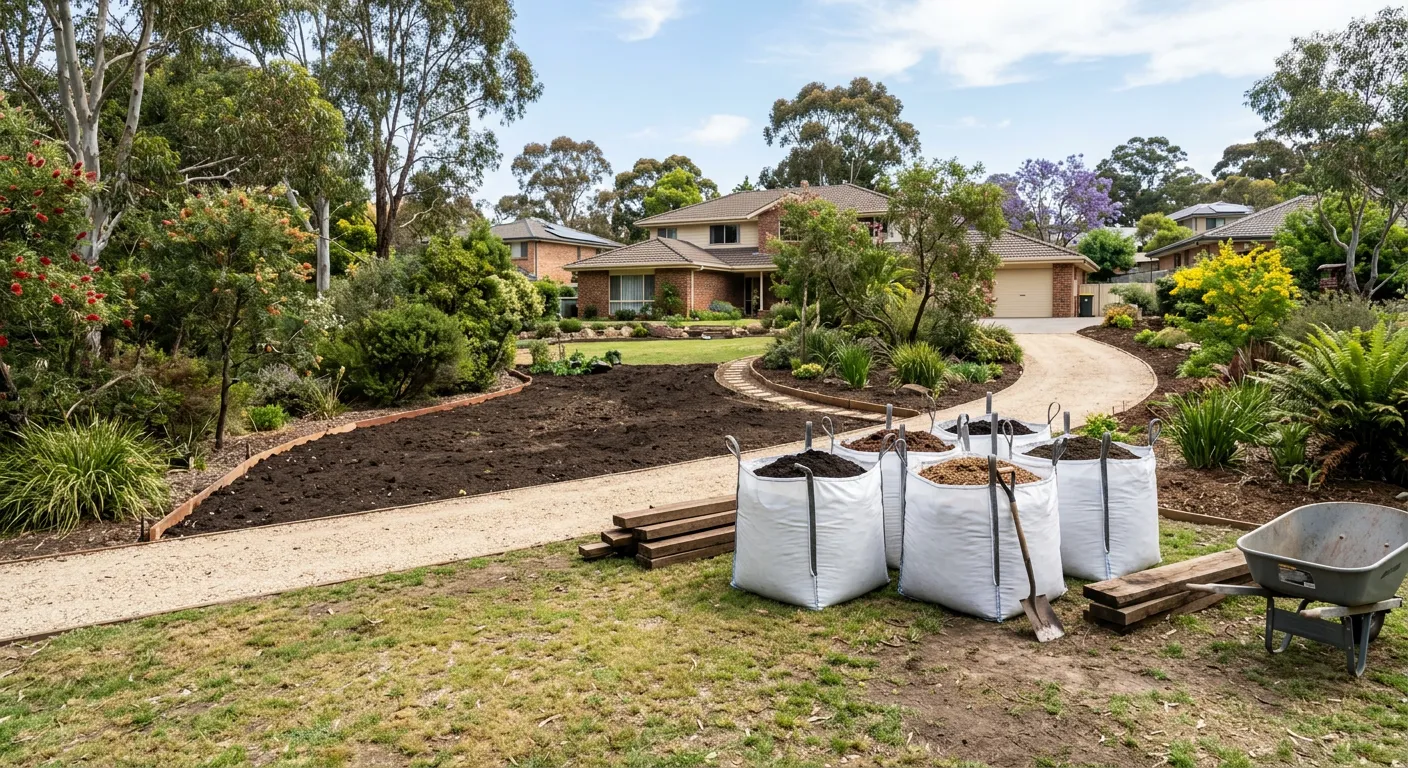
A big garden can involve several connected beds, long borders and wide planting areas. The challenge is keeping the project organised without confusing how much material you order with what that material is meant to do.
Bulk bag mulch is the format when one coherent load covers the beds without a trolley run of small bales. That distinction matters in large residential gardens. A larger supply format can simplify the work when one chosen product has to cover a broad, connected area. It helps far less if lawns, garden beds and soil work still need different treatments.
We supply organic mulches, a soil improver and a lawn top dress from Wongan Hills, and several of those lines can be ordered as a bulk bag. The current bulk choice is Lawn Maximizer, Lupin Mulch, Piggypost or Triple-C. Those four names describe four different jobs, not four bag sizes of the same mix.
Bulk bag mulch, in the sense that matters for beds and borders, means a mulch product supplied in that larger format. For us that currently includes Lupin Mulch and Triple-C. Lawn Maximizer stays a top dress for existing lawns. Piggypost stays a soil enhancer. Match the material to the zone first, then size the bag to the area you have measured.
Start With the Garden Job, Not the Bag Size
What Can You Order in a Bulk Bag?
When the beds are the job, Bulk bags are the larger format we list for Lawn Maximizer, Lupin Mulch, Piggypost and Triple-C. You select the product first, then the quantity. The bag is how the load arrives. It does not turn a lawn top dress into garden-bed cover, and it does not turn compost into a surface mulch.
Match the product to the zone before you think about how the load arrives. A lawn top dress is still the wrong buy if you need a bed mulch, even when both products can be ordered in the same bulk format. The format only helps once the material already belongs on that part of the garden.
Which Bulk Options Are Garden Mulches?
For this kind of project, Bulk bag mulch means Lupin Mulch or Triple-C, because those are the mulch lines in the bulk choice. Lupin Mulch is its own product in that bulk choice. Triple-C is a different formulation: a blend of cereal crops, chicken manure and canola, made as a nitrogen-rich, water-retaining mulch for WA gardens.
That split is the first planning decision on a large block. If the same weekend also includes lawn feeding or soil mixing, those tasks still need their own products.
Why Bulk Format Can Suit Large Residential Gardens
It Can Keep One Material Consistent Across Larger Areas
Large residential gardens often contain several beds that need the same surface treatment. Ordering one suitable product in a larger format can make that project easier to organise, because you are spreading one material rather than opening a string of small packs and hoping each pack matches the last.
This is a planning advantage rather than a promise of lower cost or faster work. Those outcomes depend on the property, access, labour and current purchasing conditions. The useful question is simpler: does one selected mulch suit several connected garden areas? If those beds can share one surface, you avoid managing many separate packs during the same job.
Coverage figures show why the format matters once the area grows. A 1000L Triple-C bulk bag covers 40-50m2 at 40-50mm thick. The 100L Eco-bale of the same mulch covers 4-5m2 at the same depth. On a property with long beds, tree zones and open planted ground, that is the difference between one coherent load and a trolley run of small bales. That difference is why the format belongs in residential planning when the planted area is genuinely large.
It Helps You Plan a Property by Garden Zone
A property should be divided by function before quantities are considered. Lawns, garden beds and soil-improvement areas may need different materials, even when they sit on the same block and will be worked in the same week.
Piggypost is a soil enhancer rather than a surface mulch. It may be relevant where the soil itself needs organic matter, carbon and a better structure before another surface treatment is applied. Lawn Maximizer is a top dress for existing grass, not a bed cover. Keeping those jobs distinct stops a bulk order being spread in the wrong place simply because the bag looked large enough to finish everything.
Plan Placement and Handling Before the Order Arrives
Why Access Still Matters
Before ordering, check gates, paths, paved areas and the space available near the work zone. Measure the route from the street to the first bed you intend to treat, including turning space and any slope or step that will make moving material awkward.
How Should the Work Sequence Be Organised?
If a project includes soil improvement and surface mulching, plan those as separate steps. Prepare the soil first where needed, then apply the selected mulch according to its own guidance. Mixing compost through a bed and then covering the surface is a sequence. Order the bulk bag from DSATCO once that sequence is set, so one load covers the beds you actually have.
A simple order of work helps. Identify the garden zone, choose the product, confirm access, prepare the area and follow the application directions for that product. Water thoroughly after a mulch is spread, so moisture and microbial life move into the soil rather than sitting on a dry surface.
Where the aim is a protective layer over open soil, follow the thickness we give for that mulch, leave space at the base of plants, and replenish later if weather or time has worn the layer thin. Spread that ground cover to the depth we give for the mulch you chose, then water thoroughly so the layer sits as an even cover.
Compare the Product Roles Before Choosing a Format
When Does Triple-C Fit the Project?
Triple-C Mulch covers 40-50m2 at 40-50mm from a 1000L bag, which is 1m3, so it is the bulk mulch we reach for on big planted areas. Tip it out and spread it to that depth, leave 100mm around the base of plants, then water thoroughly so the micro bacteria flush into the soil. Wear a mask and gloves, and keep the mix damp while you apply it so you are not breathing the dust.
The formulation is slightly acidic, which is useful on alkaline WA soils, and the mulch is composted so it is weed, seed and disease free. Organic matter breaks down slowly, nutrients are available to plants, and the layer can keep soil 5-10 degrees cooler while reducing evaporation. Those are reasons to choose Triple-C as the material. The bulk bag is how you get enough of it onto a wide bed without assembling the same depth from many Eco-bales.
When Does Lupin Mulch Fit the Project?
Bulk bag mulch can also mean Lupin Mulch when that is the surface you want across connected beds. It is one of the four products in our bulk choice, so the format is available. Use it when you have chosen that mulch for the beds, not because a bulk bag happened to be on the selector.
If you are comparing the two mulches for large residential gardens, read the notes for each product rather than ordering on name familiarity. Product selection should come before bag-size selection. The fact that both can arrive in a bulk bag is a supply detail, not a sign they will behave the same on the soil.
What About Lawns and Soil Improvement?
Lawn Maximizer is a top dress fertilizer for existing lawns, shredded to a fine consistency from lupin chaff, canola straw and chicken manure, then pasteurised. The 35L bag covers 15m2. The 900L bulk bag covers around 380-400m2 on existing lawns, which is the figure that matters if the grass area is the large part of the property. Apply it as a top dress, with best results in warmer weather on grass-type lawns, and use morning irrigation. That bulk bag belongs on the lawn plan. It does not belong in the same heap as bed mulch.
Piggypost is the soil amendment in the bulk choice. It is composted from raw manure and organic materials over 12-18 months, around 70% humus, with living microbes, and it is used to raise soil carbon toward a useful working level. For a single strong application we give a mix of 2 parts soil to 1 part Piggypost. For ongoing results, a weaker ratio once a year is the better habit. We recommend 15-20 kg per mature tree annually, 2 kg per mature rose or shrub, and 20 kg per square metre in vegetable gardens. The 20L bag covers just over 1m2 at the recommended rate. The 800L bulk bag covers 25-30m2. On a large block that still needs soil work under trees or in food beds, that 800L format is the practical way to put the improver where the soil is, then follow with mulch only on the zones that need a surface layer.
Practical Checks Before Ordering
What Should Be Confirmed Before Purchase?
Confirm the exact product first. Then check whether that product is currently offered in the format the area needs. A lawn of several hundred square metres and a set of beds totalling 40-50m2 are two different orders, even if both can arrive as bulk bags.
Next, review access around the property. Consider where material can be received and how it will move from that point to each garden area. Finally, check the application instructions for depth, plant clearance, watering and, for Triple-C, dust control. A bulk format does not rewrite those directions.
Bulk bag mulch is most useful when the product, format and work area all match. The planning benefit comes from that fit, not from the bag size alone.
Frequently Asked Questions
Is Every Bulk Bag Product a Mulch?
Our current bulk choice includes Lawn Maximizer, Lupin Mulch, Piggypost and Triple-C. Lawn Maximizer is a lawn top dress. Piggypost is a soil enhancer. Lupin Mulch and Triple-C are the mulches in that set.
Is a Bulk Bag Only for Commercial Sites?
The bulk formats of Triple-C are a fit for big gardens as well as commercial use. A 1000L bag covers 40-50m2 at 40-50mm, so a large residential bed can take that load when Triple-C is the mulch you have already chosen.
Can Different Garden Jobs Use the Same Bulk Product?
Not automatically. A lawn, a mulched garden bed and a soil-improvement area can require different products. Match the product to the job first, then choose bulk only where that same job covers enough ground to need it.
Which Details Should Be Checked Before Ordering?
Match the product to the garden zone, then confirm bag size, coverage and how it should be applied.
Conclusion
The practical advantage of bulk bags is clearer project planning when one suitable product is needed across a larger area. That is useful in large residential gardens with broad or connected work zones, whether the job is Triple-C or Lupin Mulch on beds, Lawn Maximizer on existing grass, or Piggypost mixed into soil that still needs organic matter.
Choose the product before choosing the format. Keep lawn care, soil improvement and surface mulching as separate jobs when their roles differ. Then size the bag to the zone you have measured, not to the size of the block as a whole.
Speak with us to check bag size and delivery options.
Latest Posts
- How to Stage Bulk Bags For Soil Improvers Versus Lawn And Mulch
- How to Size Multi-Bed Garden Orders From Bulk Bag Coverage
- Coordinating Metro Stockists Sourcing and Bulk Transport for Large Projects
Reviews from
Happy Gardeners
 "Results have been spectacular. The grass has never looked healthier."
Rod


