


 Buy Online
 08 9671 1500
 office@dsatco.com
How to Minimize Product Waste on Site When Ordering Bulk Bags
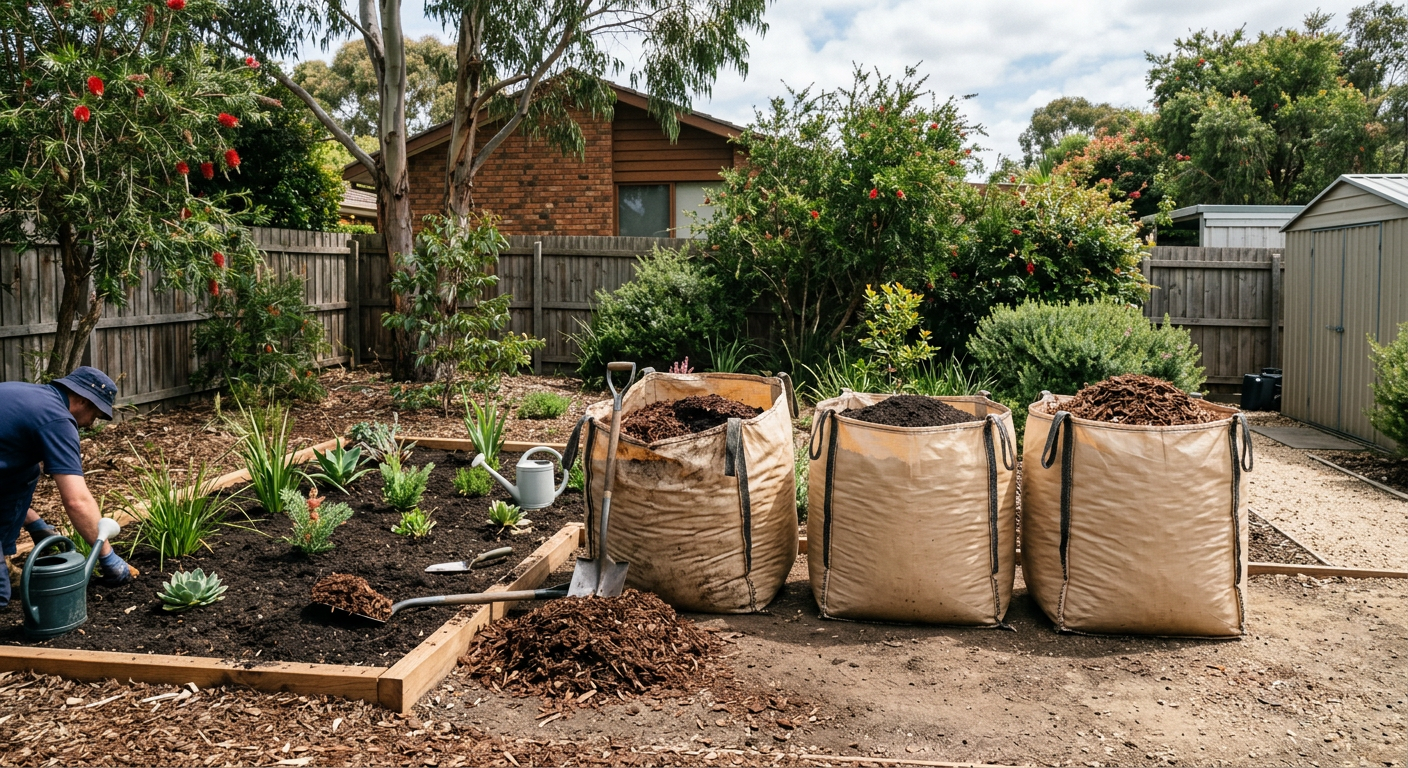
Garden material can be wasted before it ever reaches the soil. Spillage, poor product selection, unnecessary moving and spreading material in the wrong area can all leave a project with less usable product.
For a large garden, the best waste-control strategy starts before the bag is opened. Decide what each product is for, where it will be used and how it will move through the site.
The volume in bulk bags only pays off when you already know which beds need a surface layer, which soil needs blending, and which turf needs a top dress. Opening the bag first and deciding later is how leftover piles get walked through, mixed with grit, or spread where they do not belong.
Book landscape product delivery once the zone map exists, not before. If the bag arrives before zones are marked, work tends to start at the nearest bed and continue until the heap looks smaller. The waste is not only what blows away. It is also a product used on the wrong job, then bought again when the right area is finally prepared.
Product Choice Comes Before Packaging Choice
A bulk bag is a format. The contents still determine where the product belongs: lawn top dress stays on turf, soil improver is mixed in, and mulch stays on the bed surface.
Lawn Maximizer belongs on existing turf as a top dress. Piggypost belongs in the soil as an enhancer. Using the wrong material in the wrong zone can create more waste than a torn corner or a spilled barrow. Start by mapping the job.
When you select Bulk bags, match the blend to the work you have marked rather than ordering one mix for the whole block. A soil improver emptied over turf, or a lawn top dress raked into shrub beds, is material you will not recover. One blend per task also makes leftover volume easier to judge, because you can see what remains for that job instead of guessing which pile is which.
Waste-Control Step One: Divide the Site by Product Function
Mark Lawn, Soil-Improvement and Mulch Areas Separately
Divide the property into work zones before you book landscape product delivery. Keep existing turf separate from garden beds. Identify soil areas that need an amendment before surface mulching, then identify beds that simply need a mulch layer.
Mark the lawn edge, the beds that need digging, and the beds that only need a surface layer, then keep each product with its own job. If lawn dressing, compost and mulch sit in the same corner, barrows cross and the first spill can contaminate everything beside it.
Avoid Opening Several Products at Once
If a project needs two bulk bags on the same day, finish one zone before you open the next blend. Opening both in the same work zone increases the chance of mixing them or taking the wrong material to the wrong bed.
A simple sequence also makes it easier to see how much material remains before starting the next area. Finish the lawn top dress, close that bag, then open the soil improver. The leftover in each bag still belongs to a named job, so you are less likely to “use it up” on the nearest empty patch.
Waste-Control Step Two: Keep the Handling Route Simple
Reduce Unnecessary Moves
Choose an accessible work area, then schedule landscape product delivery to that spot. Think about the path between the stored material and the garden bed, including gates, steps and narrow passages. Gravel, sand and path fines that enter a barrow on a long run are not garden blend any more, and you cannot sieve them out once they are in the bed.
Move Only What the Current Area Needs
Take only what the active bed or lawn patch needs, then go back for more. Unused material stays contained, so you can still change depth or stop early if the coverage looks heavy. Order the bulk sizes from DSATCO against that zone map, so the load matches lawn, beds or soil rather than one mixed pile. That habit also keeps surface mulch out of soil-improvement work, and soil improver out of turf that only needed a top dress.
Waste-Control Step Three: Apply the Correct Product to the Correct Job
Mulch Products Belong on the Surface
Triple-C should be spread 40-50 mm thick, leaving about 100 mm around the base of plants, then watered in so the fine material can move into the soil. A 1000 L bag covers about 40-50 m2 at that depth. If you empty the whole bag onto a smaller bed and then rake it thinner later, you will have already contaminated paths, lawn edges and the extra you cannot pick up cleanly.
Soil Enhancer and Lawn Top Dress Need Different Treatment
Piggypost is not the same type of surface layer as Lupin Mulch or Triple-C. Lawn Maximizer is not garden-bed mulch.
That check is central to waste control. Misapplication can mean moving material again or applying more than the area needs. Once a soil improver has been raked across turf, or a lawn dressing has been forked into a shrub bed, you are no longer handling a clean remainder. You are trying to undo a mix.
Piggypost is mixed into soil, not laid as a decorative blanket. For a single strong application we work to a ratio of two parts existing soil to one part Piggypost. An 800 L bag covers about 25-30 m2 at the recommended rate. Around established plants the quantities are smaller still: about 15-20 kg per mature tree each year, about 2 kg per mature rose or shrub, and about 20 kg per square metre in vegetable beds.
Lawn Maximizer is a fine top dress for existing grass, not a bed mulch. A 900 L bag covers around 380-400 m2, which is a lawn-scale quantity, while a 35 L bag covers about 15 m2. Best results come in warmer weather with morning irrigation.
Plan Quantity Against the Area You Have Marked
Measure beds and lawn before you order bulk bags, so the quantity matches the square metres, not a guess made on the day. Walk the zones you marked, multiply length by width, and compare that area with the coverage of the blend you intend to use. Ordering from memory of a previous job, or from the look of an empty bed, is how a remainder ends up against a fence for a season.
If the bed is only a few square metres, bulk bags can leave a remainder that sits for weeks, dries out, or picks up weed seed from the path. Triple-C is packed as a 1000L bulk bag and as a 100 L Eco-bale that covers about 4-5 m2 at 40-50 mm. Piggypost is available in a 20 L bag that covers just over 1 m2. Use the small pack when the zone is small. Keep the bulk bag for the large, continuous area you have already measured.
Confirm that the blend and the bag size are available for your location, and that the drop point you have in mind can actually be used. Stock at a local outlet is not the same as the bag you planned for a Saturday start. The useful planning question is whether this product, in this format, can reach the zone you marked without a long secondary carry.
Frequently Asked Questions
Which Products Can Be Selected as Bulk Bags?
We offer Lawn Maximizer, Lupin Mulch, Piggypost and Triple-C as bulk bag options. Choose by the work in each zone, not by which bag happens to be easiest to see in the driveway.
How Can Bulk-Product Waste Be Reduced on a Garden Site?
Plan product zones, minimise unnecessary transfers, keep different materials separate, and follow the application depth and coverage for each blend. Open bulk bags one product at a time, and move only what the active area needs.
Where Should the Bag Sit After Delivery?
Confirm access and where the bag can sit before you order. A bag left far from the work zone means more transfers, and more transfers mean more spillage. Placement is a site question, not a standard drop for every property.
Is Every Bulk Bag Product a Mulch?
No. Piggypost is a soil enhancer, and Lawn Maximizer is an organic top dress fertiliser for existing lawns. Treating either as bed mulch uses them up on work they are not meant to do.
Conclusion
Reducing product waste is mainly a planning and handling task. Keep each material matched to lawn, soil or surface work, minimise unnecessary movement, and confirm access before the order is finalised.
Speak with us to check bag size and delivery options.
Latest Posts
- How to Stage Bulk Bags For Soil Improvers Versus Lawn And Mulch
- How to Size Multi-Bed Garden Orders From Bulk Bag Coverage
- Coordinating Metro Stockists Sourcing and Bulk Transport for Large Projects
Reviews from
Happy Gardeners
 "Results have been spectacular. The grass has never looked healthier."
Rod


