

 Buy Online
 08 9671 1500
 office@dsatco.com
What Type of Mulch Works Best for Native Plants in Perth
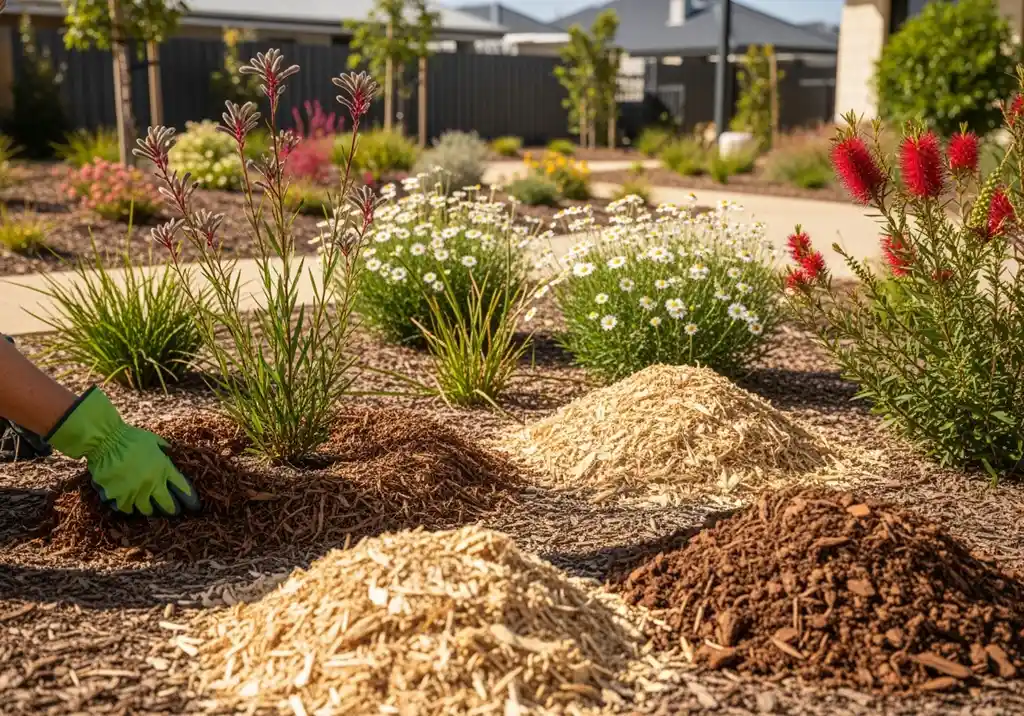
Native plants built for Western Australia’s tough conditions still need the right mulch to truly thrive in a Perth garden. WA’s sandy soils, fierce summer heat, and months without rain create challenges even for banksia, kangaroo paw, and bottlebrush, which evolved here over thousands of years.
The wrong mulch can do more harm than good for native plants. High-phosphorus products burn sensitive native roots. Heavy, moisture-trapping layers encourage fungal rot. Lightweight materials blow away in Perth’s easterly winds before they have done any useful work. Understanding what mulch for native plants WA conditions require is what separates a native garden that looks healthy year-round from one that struggles from season to season.
This guide covers which mulch types protect WA native roots without nutrient overload, how to apply them correctly, and where soil conditioning fits into establishing new native gardens in Perth’s sandy soil. By the end you will know exactly which products to use, which to avoid, and why choosing the right mulch for native plants WA wide makes the difference between plants that establish quickly and plants that decline despite regular care.
Why Native Plants Need Different Mulch Than Exotics
WA native plants evolved in some of the oldest, most nutrient-poor soils on Earth. Their root systems are designed to extract tiny amounts of phosphorus and nitrogen from sand and gravel. They are efficient and well-adapted to scarcity, but that adaptation also means they cannot handle the nutrient levels that roses, vegetables, and exotic flowering plants thrive on.
When you mulch native plants with the same products you would use on a productive vegetable bed, you flood their root zone with nutrients they cannot process. High phosphorus levels, common in manure-based mulches and composted products with chicken manure, cause iron and manganese lockup in phosphorus-sensitive native plants. The result is yellowing leaves, stunted growth, and in severe cases, plant death.
The native garden mulch Perth conditions call for is fundamentally different from what suits exotic garden plants. Understanding why helps you choose correctly from the start.
How Nutrient-Rich Mulches Harm Native Plants
Proteaceous plants, which include banksias, grevilleas, hakeas, and dryandras, have highly specialised root systems called proteoid roots. These cluster roots are designed to extract nutrients from very poor soil. When exposed to high nutrient levels, they malfunction. The plant cannot regulate intake, leading to toxic accumulation in plant tissue.
This is why a product like DSATCO Lupin Mulch, which is an excellent choice for vegetable beds, rose gardens, and citrus trees, is not suitable for phosphorus-sensitive WA natives. It contains chicken manure that delivers nitrogen and phosphorus as it breaks down. That is precisely what it is designed to do, and precisely what native proteoid root systems cannot handle.
If a manure-based mulch has been applied to natives by mistake, water deeply to help leach excess nutrients below the active root zone, then top-dress with a low-nutrient mulch like eucalyptus or pine bark.
What Native Plant Roots Are Adapted To
WA natives are built for low-nutrient conditions. Their biological systems work best in the same nutrient-poor environment they evolved in. This is not a weakness. It is a highly refined efficiency that allows them to thrive where most other plants cannot.
The right approach is to provide mulch that mirrors those conditions: low in nutrients, slow to decompose, and physically protective without chemically overwhelming. Native garden mulch Perth gardeners use successfully is almost always wood-based, locally sourced, and free from added fertilisers or manures.
The Best Mulch Types for Perth Native Gardens
Low-nutrient, wood-based mulches that decompose slowly suit WA natives best. They provide weed suppression, moisture retention, and a gradual addition of organic matter without the nutrient spike that sensitive native species cannot handle. These are the mulch for native plants WA gardeners who grow banksias, grevilleas, and kangaroo paws rely on.
When it comes to native plant mulch WA gardens need, the selection criteria are simpler than for exotic garden plants: choose wood-based, low nutrient, and locally sourced wherever possible.
A low phosphorus mulch Perth native gardeners can confidently apply around Proteaceae species is one of the most important products to identify before planting any banksia, grevillea, or hakea bed. Getting this right from the start prevents the most common and costly mistakes in WA native gardening.
Eucalyptus Mulch for WA Natives
Eucalyptus mulch is widely regarded as the best choice for WA native gardens. It is made from local eucalypt timber, breaks down slowly, and releases minimal nutrients as it decomposes. This closely matches the low-nutrient conditions that WA natives prefer.
As a genuinely low phosphorus mulch Perth gardeners can use confidently around their most sensitive plants, eucalyptus mulch causes no iron and manganese lockup in proteoid root systems. It suppresses weeds effectively, holds moisture without becoming waterlogged, and does not compact significantly over time. The natural oils in eucalyptus also deter some garden pests, including termites, which is a genuine advantage in Perth’s suburban gardens where termite activity is common.
Apply at 50-75mm depth for established native gardens. Keep mulch at least 50mm clear of plant stems to prevent collar rot, particularly in banksias and grevilleas.
Pine Bark Mulch for Native Gardens
Pine bark is widely available across Perth and works well for most native plants. It is slightly acidic as it breaks down, which suits many WA natives that prefer a lower soil pH compared to exotic garden plants. It is also practical to source and easy to spread.
The main consideration is that lighter pine bark can float during heavy winter rain on flat sites. If your native garden has good drainage, as most should, this is generally not a problem. On sloped sites, use a heavier mulch or install edging to hold it in position.
Apply at 60-80mm depth for effective weed suppression and moisture retention. Check depth and top up every 18-24 months as it gradually breaks down.
Jarrah and Karri Mulch for Premium Native Gardens
Jarrah and karri mulches are premium WA-grown options that suit native gardens particularly well. They are dense, break down very slowly, and do not spike soil nutrient levels even after years of use. Both are termite-resistant and hold up well in full sun exposure.
Jarrah mulch has a rich reddish-brown colour that suits the aesthetic of many native garden designs. Karri mulch is slightly lighter in colour but performs similarly. Both are suited to high-visibility garden beds and formal native plantings where a long-lasting, low-maintenance mulch layer is the priority.
Composted Bark for Native Gardens
Composted bark is heavier than eucalyptus mulch and better suited to sloped sites or gardens exposed to Perth’s summer easterly winds. It is low in phosphorus and safe for even the most nutrient-sensitive native species when properly composted.
It works particularly well for sloped gardens, windy coastal sites, and any area where lighter mulches would slide or blow away before doing their job. Choose composted bark for situations where staying power matters as much as nutrient compatibility.
Mulches to Avoid for Native Plants in Perth
Understanding which mulches to avoid is just as important as knowing which ones work. Several popular garden mulches that perform well for exotic plants create real problems when used around WA native species.
Why Manure-Based Mulches Are Not Suitable for Natives
Products that contain chicken manure, pig manure, or other composted manures are generally not suitable for phosphorus-sensitive WA natives. The nutrients these products deliver as they break down are the same nutrients that cause toxicity problems in proteoid root systems.
DSATCO Lupin Mulch and similar organic fertiliser mulches are designed for heavy-feeding plants like citrus, roses, and vegetables. They are excellent products in those applications. Used around banksias, grevilleas, and hakeas, they deliver more phosphorus than those plants can safely process. The right mulch for banksias Perth gardens need is one with minimal phosphorus and slow, stable decomposition. Keep manure-based products away from Proteaceae family plants in your garden.
Why Sugar Cane Mulch Is Not Ideal for Native Gardens
DSATCO Sugar Cane Mulch breaks down faster than wood-based options in WA’s heat and UV conditions. In a vegetable bed where you are digging and replanting regularly, that faster breakdown is fine. In a native garden where you want a stable, long-lasting mulch layer, it means more frequent reapplication.
Sugar cane also tends to be lightweight when dry, which means it can blow around in exposed garden positions. Many Perth native gardens are planted in windward aspects or on hillsides where easterly winds are strong. In those situations, a heavier, denser mulch type performs more reliably. Reserve sugar cane mulch for your vegetable beds and annual beds where its lighter, fast-decomposing nature is an advantage.
Similarly, DSATCO Triple-C Mulch is an excellent choice for vegetable gardens, rose beds, and citrus trees where balanced nutrient delivery is the goal. It is not recommended for phosphorus-sensitive native plants for the same reasons as other manure-based products. Use it in the productive sections of your garden rather than around native species.
Dyed and Treated Mulches
Coloured mulches, often dyed black, red, or brown for visual effect, may introduce chemical dyes into the soil. This is unnecessary and potentially harmful to the sensitive soil biology that many WA native plants depend on, including the mycorrhizal fungi that help banksia and grevillea roots take up what little nutrition the soil provides.
Stick with natural, untreated wood-based mulches. Read product labels carefully to confirm the mulch is free from added fertilisers, dyes, or treatments before applying it in a native garden.
How to Apply Mulch Around Native Plants in Perth
Preparation, depth, and technique all affect how well mulch performs around WA native species. The application process for a native garden is slightly different to a vegetable or rose bed because the tolerance margins are narrower. Most native plants are more sensitive to both mulch-against-stem contact and to waterlogged conditions than exotic plants are.
Preparing the Soil and Plant Area Before Mulching
Remove all weeds before applying mulch. Do this by hand or with a hoe. Avoid herbicides near native plants, especially glyphosate-based products, as many WA natives are highly sensitive to chemical residues in the soil.
Water the soil thoroughly before spreading mulch. This locks moisture into the root zone from the start, giving your native plants a buffer before the next dry period. Dry soil mulched without prior watering can stay dry even with good rainfall, because the mulch layer sheds light rain before it penetrates.
Mulch Depth and Stem Clearance for Natives
Apply mulch at 50-75mm depth across the native garden bed. This depth is sufficient to suppress weeds and retain moisture without restricting airflow or trapping water against plant crowns. For kangaroo paws and other ground cover natives that prefer excellent drainage around their crowns, use a 40-50mm layer and keep it particularly well clear of the base.
The non-negotiable rule in native gardens is stem clearance. Keep mulch at least 50mm away from the base of every native plant. For banksias, grevilleas, and hakeas, push that clearance to 75mm. Collar rot in these plants can develop quickly when mulch stays in contact with stems, and it is often fatal before visible symptoms appear.
Mulching on Slopes in Perth Native Gardens
Sloped native gardens on the Perth hills or coastal ridge need a heavier mulch type to stay in place through winter rains. Lighter eucalyptus mulch or pine bark can slide or wash downhill during heavy rainfall, leaving bare patches that invite weeds and soil erosion.
Use jarrah, karri, or composted bark on sloped sections. Consider low timber or rock edging along the lower edge of each garden bed to hold mulch in position on steeper slopes. This is practical rather than purely decorative and can save significant reapplication effort over time.
When to Mulch Native Gardens in Perth
Timing mulch applications to Perth’s seasons makes a real difference to how well native gardens perform through WA’s temperature extremes. The native garden mulch Perth gardeners apply most successfully is timed to work with the seasonal rhythm of WA’s wet and dry cycle. The best general timing is late autumn or early winter, just before the winter rains arrive. This allows mulch to settle and begin working through the wet season, which positions your natives well for the heat and dryness that follows.
Best Timing for Mulching Established Native Gardens
Apply fresh mulch to established native plantings in May or early June. The winter rains that follow help settle the mulch and flush its surface into contact with the soil. This timing also suppresses the winter weed flush before seeds have a chance to germinate in the softened, moist soil.
Avoid heavy mulching in peak summer if possible. Dry mulch applied in extreme heat can insulate the soil too effectively and prevent light summer rain from penetrating. If summer mulching is necessary, water the area heavily first, apply mulch in the cool of the morning, and water again after spreading.
Mulching Newly Planted Natives
Newly planted natives need mulch applied immediately after planting, regardless of the time of year. The establishment phase is when plants are most vulnerable to heat, moisture loss, and competition from weeds. Mulch reduces all three stresses from day one.
For summer plantings, water heavily before mulching, apply in the morning to avoid the hottest part of the day, and water again after spreading. Create a shallow basin around each plant and mulch up to the basin edge rather than against the stem, directing water toward the root zone during the critical first weeks.
Mulch Depth and Lifespan in WA Conditions
Mulch breaks down faster in Perth than in cooler, wetter Australian climates. The combination of UV exposure, summer heat, and active microbial decomposition accelerates breakdown, particularly in full-sun native gardens. This is something to plan for when calculating how often to top up coverage.
Expected Mulch Performance in Perth Conditions
Eucalyptus and pine bark mulch in Perth native gardens typically needs checking and topping up every 18-24 months, depending on sun exposure and foot traffic. Jarrah and karri mulch tends to last longer before needing significant top-up due to its greater density and resistance to breakdown.
You do not need to remove old mulch before adding new layers. The base layer will have partially broken down and begun integrating into the soil beneath, which adds organic matter and gradually improves water-holding capacity in sandy WA soil. This is the process working as intended.
Maintaining Coverage Through Perth’s Climate
Check mulch depth every 12 months and top up as needed to maintain 50-75mm coverage. In shaded or sheltered positions, mulch lasts longer between applications. In full sun positions exposed to Perth’s summer heat and UV, more frequent checks are worthwhile.
Maintaining consistent coverage is more important than any single heavy application. A well-maintained 50mm layer that is checked and topped up annually gives far better results than a thick initial application that is left until it has almost entirely disappeared.
Using DSATCO Piggypost to Establish New Native Gardens in Sandy Soil
New native gardens planted in Perth’s sand often need more than surface mulch alone. The soil profile itself needs organic matter added deeper down to hold water and support root development. This is where DSATCO Piggypost has a useful role in native garden establishment.
Piggypost is a mature compost produced from pig manure through a 12-18 month composting process. It is approximately 70% humus and contains living microbes. It builds soil structure, increases water-holding capacity, and supports the beneficial soil biology that many WA natives rely on for nutrient uptake. Its nutrient profile, while it does contain nitrogen and some phosphorus, is in a more stable, humus-bound form compared to fresh manure-based products or high-phosphorus mulches.
For establishing native gardens, use Piggypost as a soil improver before planting, then cover with a low-nutrient wood-based mulch on the surface. Do not use Piggypost as a top dressing around established phosphorus-sensitive natives. Its role here is soil preparation, not surface mulching.
How to Use Piggypost Before Planting Natives
Work Piggypost into the top 150-200mm of soil before planting to improve water-holding capacity and introduce beneficial microbes into what is often nearly inert sandy soil. Plant natives into the improved soil, ensuring the root ball sits at or slightly above the surrounding soil level for good drainage.
Water in thoroughly after planting, then apply 50-75mm of eucalyptus or pine bark mulch on the surface, keeping it clear of stems.
Why Piggypost Works for Native Garden Establishment
DSATCO produces Piggypost through a controlled 12-18 month composting process that transforms raw pig manure into a stable, humus-rich soil improver. The long composting process stabilises nutrients in a form that feeds soil biology gradually rather than delivering a sudden, high-concentration nutrient hit. This makes it more appropriate for use in native garden soil preparation than fresh or lightly composted manure products.
Improving native garden soil WA sandy conditions create challenges for is the goal of this preparation step. Once the native garden is established, maintaining surface mulch is enough to continue that improvement. The mulch for banksias Perth gardeners apply on the surface after Piggypost soil preparation should always be a low-nutrient, wood-based option.
Common Mulching Mistakes in Perth Native Gardens
A small number of consistent errors account for most mulching problems and plant losses in WA native gardens. These mistakes are all avoidable with the right information.
Errors That Cause Plant Loss in Native Gardens
Mulching too close to plant stems is the most common cause of plant death in mulched native gardens. It is responsible for more collar rot losses in banksias and grevilleas than any other single factor. The fix is straightforward: maintain at least 50mm of clear space between mulch and every plant stem.
Applying mulch too thinly is the second most common error. A 20-30mm layer provides almost no weed suppression, dries out within days under Perth’s UV exposure, and requires reapplication far more frequently than a properly applied 50-75mm layer would. The additional product used to apply correctly is significantly less than the cost of repeated thin applications.
Getting the Foundation Right for Native Gardens
Using mulch to fix drainage problems does not work. Mulch helps retain moisture in free-draining sandy soil. In a waterlogged site, it makes things worse by holding excess moisture longer around roots that are already too wet. Address drainage first through mounding, ag pipe installation, or plant selection, then mulch to stabilise the improved conditions.
If your garden includes both a native planting and a lawn area, note that DSATCO Lawn Maximizer is designed specifically for existing grass lawns as a top-dress fertiliser. Keep it well away from native garden beds, as the nutrient profile it delivers for lawn health is the same high-nitrogen, high-phosphorus profile that harms phosphorus-sensitive natives.
Forgetting to water before mulching is another avoidable error that affects native gardens disproportionately. Dry soil mulched without prior watering stays dry, because mulch sheds light rainfall and prevents it from reaching the soil beneath. Always water deeply before any mulch application in a native garden, particularly in the lead-up to WA’s dry summer months.
Conclusion
Choosing the right mulch for native plants in WA means matching what you apply to what native species evolved to handle. The best native plant mulch WA gardens use is low-nutrient, wood-based, and applied at a depth that protects roots without trapping moisture against stems. Eucalyptus, pine bark, and jarrah provide the weed suppression, moisture retention, and native garden soil WA gardeners need to improve, without the nutrient overload that damages sensitive native root systems.
Apply at 50-75mm depth, keep mulch well clear of all plant stems, and refresh coverage every 18-24 months to maintain healthy soil conditions year-round. For new native gardens in Perth’s sandy native garden soil WA planting conditions demand improving, prepare with DSATCO Piggypost before planting, then protect the surface with a low-nutrient wood-based mulch once plants are established.
Browse the full range of DSATCO organic products online or speak with the DSATCO team on 08 9671 1500 for advice on which product suits your specific native garden, soil type, and growing conditions. If you are also managing productive garden beds alongside your native planting, the Vivantes range available at Bunnings is a convenient option for those sections of your garden where nutrient-rich mulch is appropriate.
Latest Posts
- How to Stage Bulk Bags For Soil Improvers Versus Lawn And Mulch
- How to Size Multi-Bed Garden Orders From Bulk Bag Coverage
- Coordinating Metro Stockists Sourcing and Bulk Transport for Large Projects
Reviews from
Happy Gardeners
 "Results have been spectacular. The grass has never looked healthier."
Rod


