

 Buy Online
 08 9671 1500
 office@dsatco.com
Why Pasteurised Lupin Mulch Is Safer and More Effective for Home Gardens
Not all mulch is created equal. If you are buying lupin mulch for your Perth garden, one detail matters more than most gardeners realise: pasteurisation.
Raw organic material carries hidden risks. Weed seeds, fungal spores, and harmful bacteria can travel from the paddock straight into your garden beds. For WA home gardeners who grow vegetables, maintain rose beds, or share garden spaces with children and pets, the quality of what goes on your soil matters enormously.
Perth’s warm growing season amplifies these risks significantly. Once weed seeds establish in WA’s sandy soil, they are extremely difficult to eradicate. A single application of unpasteurised organic mulch Perth gardeners source carelessly can mean months of extra weeding through a hot summer. This article explains what pasteurisation does, why it matters, and how to choose the right lupin mulch product for your WA garden.
What Pasteurisation Does to Lupin Mulch
Pasteurisation heats organic material to a controlled temperature high enough to kill weed seeds, plant diseases, and harmful microorganisms. Critically, it does not destroy the beneficial nutrients and living microbes that make lupin mulch so valuable to WA soils.
Think of it as a quality reset. Raw lupin mulch can carry dormant weed seeds from the farm. It can harbour fungal spores or plant pathogens picked up during harvesting and storage. Pasteurisation eliminates those risks before the product leaves the production facility.
How the Pasteurisation Process Works
DSATCO Lupin Mulch is pasteurised using steam or controlled heat that raises the internal temperature of the mulch to around 70–80°C for a sustained period. That temperature kills most weed seeds and pathogens without burning off the nitrogen, organic carbon, or living microbes that feed your soil.
After pasteurisation, the mulch cools naturally and stabilises. The result is a weed-free lupin mulch that delivers clean, consistent performance from the first application.
Why This Matters for WA Home Gardeners
Perth’s growing season is long and warm. Once weed seeds establish in WA’s sandy soil, they are extremely difficult to eradicate. A single application of unpasteurised mulch can mean months of extra weeding through a hot Perth summer.
Pasteurised lupin mulch Perth gardeners choose removes that risk entirely. It is the safe organic mulch WA home growers, vegetable gardeners, and families can apply with complete confidence. Pair it with DSATCO Piggypost soil conditioner for an even stronger foundation – Piggypost’s mature compost and living microbes accelerate the biological activation that makes pasteurised lupin mulch so effective in WA’s depleted sandy soils.
The Risks of Using Raw, Unpasteurised Mulch
Raw, unpasteurised lupin mulch is essentially chopped plant material straight from the field. It may look similar to pasteurised mulch, but it carries hidden risks that can seriously undermine your gardening effort.
Lupins are often grown in paddocks that also contain annual weeds like wild radish, capeweed, and ryegrass. When the crop is harvested and processed into mulch, those weed seeds get mixed through the material. Spread that across your vegetable patch and you have planted a weed nursery rather than improved a productive bed.
Weed Seeds and Pathogen Risks
Raw organic material can carry fungal spores or bacterial diseases. If the lupin crop was affected by root rot, leaf spot, or other diseases during its growth cycle, those pathogens survive in the mulch. They can then transfer to your garden plants on the first application.
This is the pasteurised vs raw mulch difference that matters most to WA gardeners with established ornamental beds, food gardens, and disease-prone plantings like roses and tomatoes. For gardeners who have invested in quality rose beds or productive vegetable plots, the pasteurised vs raw mulch decision is straightforward.
Inconsistent Decomposition in Unpasteurised Mulch
Unpasteurised mulch can contain uneven moisture levels and inconsistent microbial populations. This produces anaerobic hot spots during decomposition, where harmful bacteria generate ammonia and other compounds that damage plant roots.
Pasteurisation stabilises the microbial population so breakdown happens aerobically and consistently. Pasteurised lupin mulch Perth gardeners apply decomposes predictably through the season, releasing nitrogen at a steady pace your plants can actually use.
DSATCO is a Western Australian company that produces premium organic mulch and garden products – grown and sourced 100% from WA farms. Every batch of its lupin mulch is pasteurised to the same consistent standard, whether you are buying a single bagged product or a bulk load for a larger landscaping project.
How Lupin-Based Garden Mulch Compares to Other Mulch Types
Not all organic mulches offer the same safety level or soil improvement performance. Here is how pasteurised lupin mulch compares to the most common alternatives available to Perth gardeners.
Pasteurised Lupin Mulch vs Pine Bark
Pine bark mulch is affordable and widely available, but it is almost entirely carbon with very little nitrogen. It suppresses weeds and retains some moisture, but it does not feed your soil the way lupin mulch does. Pine bark also takes years to break down, contributing very little to soil structure in the short term.
Lupin-based garden mulch breaks down within 12–18 months and actively improves soil fertility as it decomposes. For WA’s nutrient-poor sandy soils, that makes a visible difference within a single growing season. When comparing garden mulch Perth WA options for soil-building performance, pasteurised lupin mulch consistently delivers more than wood-based alternatives.
Pasteurised Lupin Mulch vs Sugar Cane Mulch and Composted Blends
DSATCO Sugar Cane Mulch is an excellent option for vegetable gardens where fast decomposition and easy planting-through are priorities. But sugar cane is lightweight and prone to blowing away in Perth’s summer winds. It also breaks down faster than lupin mulch, so you reapply more often.
Lupin mulch is heavier, stays in place better, and provides more sustained nitrogen release. For exposed garden areas, sloped beds, and situations where you want a longer-lasting mulch layer, pasteurised lupin mulch is the more reliable choice.
Products like DSATCO Triple-C Mulch blend cereal crops, chicken manure, and canola into a balanced, nutrient-rich mulch that works well across general ornamental beds. Triple-C offers a finer texture and broader microbial diversity. If you specifically need a targeted nitrogen boost – for example to feed hungry roses or recover a neglected bed – pasteurised lupin mulch delivers more concentrated results.
Best Uses for Pasteurised Lupin Mulch in WA Gardens
Pasteurised lupin mulch suits a wide range of garden applications. It excels particularly where soil fertility, weed suppression, and safety are the top priorities.
Rose Gardens and Flowering Beds
Roses are heavy feeders that thrive on nitrogen-rich, well-mulched soil. Pasteurised lupin mulch feeds roses as it breaks down, suppresses weeds, and keeps roots cool through Perth’s summer heat. Because it is pathogen-free garden mulch, you will not risk introducing black spot or other fungal diseases through the mulch material itself.
Apply at 50mm depth around established roses. Leave a 50–100mm gap at each stem base to prevent collar rot. Top up in spring and autumn to maintain consistent nutrition and root zone protection through the year. For WA rose growers comparing garden mulch Perth WA options, the pathogen-free guarantee that pasteurisation provides is a significant practical advantage.
Vegetable Gardens and Family Spaces
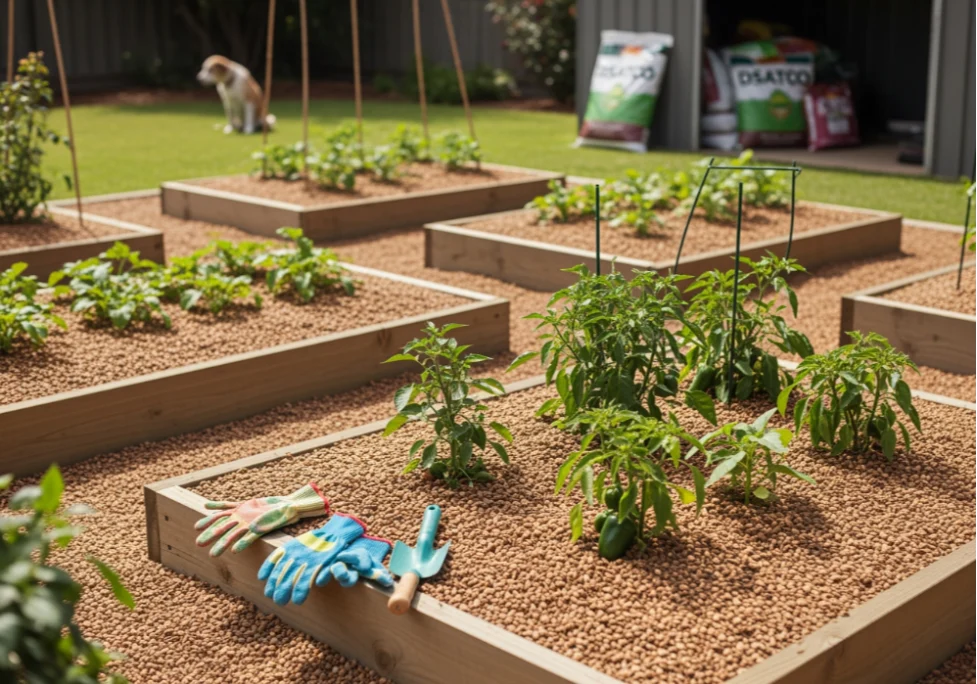
Apply pasteurised lupin mulch around tomatoes, capsicums, leafy greens, and brassicas for steady nitrogen release through the growing season. The weed-free lupin mulch layer saves hours of maintenance through Perth’s productive summer growing period.
For families with children and pets, safe organic mulch WA parents choose is an important consideration alongside soil performance. Pasteurisation means no harmful bacteria or pathogens in the surface layer where children play and dig. Piggypost soil conditioner worked into the bed before mulching gives these high-activity spaces the strongest possible biological foundation.
For gardeners who prefer retail bagged formats, Vivantes Lupin Mulch delivers the same premium pasteurised lupin formula in a convenient size available at Bunnings stores across WA.
How to Apply Pasteurised Lupin Mulch for Best Results
Application depth and timing make a real difference to how long the benefits last and how effectively the mulch performs in WA conditions.
Depth, Spacing, and Timing
Apply pasteurised lupin mulch at 40–50mm depth across garden beds. That depth suppresses weeds and insulates the soil without impeding water penetration to the roots below.
Pull mulch back 50–100mm from plant stems and tree trunks. Direct contact with organic mulch encourages collar rot, particularly in WA’s humid winter months when fungal activity increases.
Top up annually. Lupin mulch breaks down faster than wood-based mulches, which is precisely what you want for soil improvement. Plan to refresh your layer in late autumn before winter rains arrive, or in early spring before summer heat peaks. For lawn areas, DSATCO Lawn Maximizer is the right organic top-dress product for WA turf grasses – delivering nitrogen where turf roots need it without a surface mulch layer.
Reading Product Quality Before You Buy
Not all lupin mulch products are pasteurised. Not all suppliers make this clear upfront. If the product label or website does not mention pasteurisation, ask the supplier directly.
Pasteurised lupin mulch should have a consistent texture and an earthy smell. A sharp, sour, or strong ammonia odour signals poor processing or extended storage. Avoid products with visible clumping, mould, or inconsistent colour throughout the bag. Buy from WA-based suppliers where possible. The full DSATCO range is available to browse online – compare bag sizes, bulk bags, and pricing across all mulch and soil conditioner products.
Conclusion
Pasteurised lupin mulch Perth gardeners choose delivers what raw alternatives cannot: consistent, clean, weed-free lupin mulch performance from the first application. It protects your garden from weed seeds and pathogens, feeds your soil with nitrogen-rich organic matter, and builds long-term soil health season after season.
The pasteurised vs raw mulch choice is straightforward when you consider what each product actually delivers to your soil. Safe organic mulch WA families rely on should be heat-treated, locally sourced, and consistently produced. For Perth home gardens dealing with sandy soils, limited water, and long hot summers, that reliability matters.
Every garden is different. Reach out to the DSATCO team for a product recommendation on 08 9671 1500.
Latest Posts
- How to Stage Bulk Bags For Soil Improvers Versus Lawn And Mulch
- How to Size Multi-Bed Garden Orders From Bulk Bag Coverage
- Coordinating Metro Stockists Sourcing and Bulk Transport for Large Projects
Reviews from
Happy Gardeners
 "Results have been spectacular. The grass has never looked healthier."
Rod


