

 Buy Online
 08 9671 1500
 office@dsatco.com
The Soil Benefits of Nitrogen-Rich Lupin Mulch in Western Australia
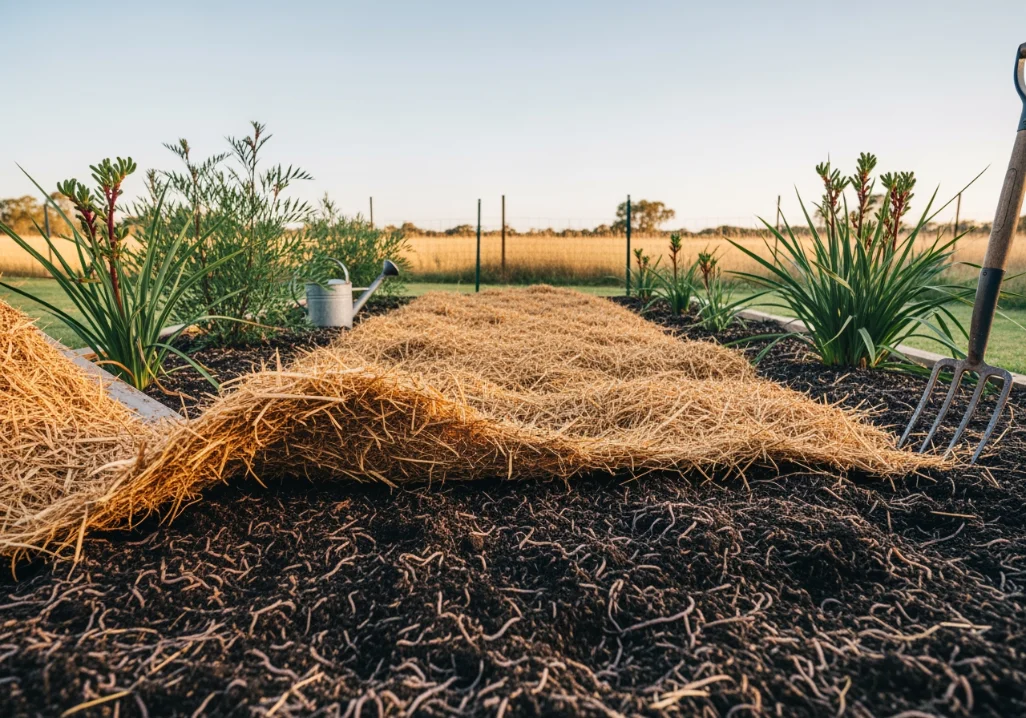
WA gardens face a soil challenge most gardeners in other states never encounter. The sands that cover most of Perth’s suburban blocks drain so freely that nutrients disappear before plant roots ever reach them. You water, you fertilise, and within days the soil is nutrient-poor again. The cycle is exhausting and expensive.
Understanding why this happens begins with the soil itself. Perth’s Swan Coastal Plain is built on ancient dune sands with almost no clay content and virtually no capacity to hold nutrients or water. These soils are easy to dig, but they need consistent organic matter input to perform as productive garden beds.
This article covers exactly how nitrogen-rich lupin mulch WA gardeners apply changes that equation – improving soil structure, boosting organic nitrogen levels, supporting beneficial microbes, and building the long-term fertility WA gardens need.
Why WA Soils Struggle with Nitrogen Retention
Western Australia’s Swan Coastal Plain is dominated by deep, free-draining sands. These soils formed from ancient dune systems over thousands of years. They are easy to dig and work with, but extremely low in organic matter and with almost no capacity to hold nutrients.
Nitrogen exists in soil primarily as nitrate, which dissolves readily in water. When you irrigate or when winter rains arrive, nitrates leach straight through sandy soil and out of the root zone within days. Your plants never get the chance to absorb what you have applied.
The Impact of Poor Nutrient Retention
The result is visible in gardens across Perth: weak growth, pale leaves, and disappointing vegetable yields. The problem is not the plants. It is the soil’s inability to hold onto what you are giving it.
The sandy soil organic matter Perth gardens need to hold nutrients is almost entirely absent from most suburban blocks. This organic matter deficit is the root cause of the constant fertiliser cycle many WA gardeners find themselves trapped in. Nitrogen-rich lupin mulch WA gardeners apply directly addresses this deficit. It does not just add nutrients temporarily. It builds the organic matter that holds nutrients in place long enough for roots to absorb them.
Why Standard Fertilisers Fall Short in WA
Synthetic fertilisers provide nutrients immediately, but they cannot fix the underlying problem. Sandy soil cannot hold what you add, no matter how quality the fertiliser product is. Even slow-release synthetic granules lose most of their nitrogen through leaching in WA conditions.
DSATCO Lupin Mulch changes the soil itself. It builds the structure that keeps nutrition in place, addresses the cause rather than the symptom, and delivers improvement that compounds over multiple seasons. When sourcing organic mulch Perth gardeners can rely on for sandy soils, the nitrogen-to-carbon ratio and source material matter enormously.
How Premium Lupin Mulch Releases Nitrogen into the Soil
Lupin mulch is made from the stems, leaves, and pods of sweet narrow-leaf lupins grown across WA’s wheatbelt. These plants are legumes. They naturally fix atmospheric nitrogen in their root nodules while growing. When the crop is harvested and processed into mulch, that stored nitrogen remains in the plant tissue.
As the mulch breaks down on your garden bed, soil microbes decompose the organic material and release nitrogen slowly into the surrounding soil. Your plants receive a steady, consistent supply rather than a single hit that washes away with the next watering.
How the Breakdown Cycle Works
Microbes colonise the mulch layer and begin breaking down cellulose and lignin. The lupin hull nitrogen release process converts nitrogen locked in plant proteins to ammonium, then to nitrate. These nutrients release into the topsoil where plant roots actively absorb them. The mulch layer shrinks as it decomposes, so you top it up seasonally to maintain the cycle.
Because lupin mulch contains both carbon and nitrogen in a balanced ratio, it feeds your soil from day one rather than robbing it of nitrogen the way some woody mulches can. This balanced ratio is one of the most important advantages of lupin mulch over other organic materials.
Lupin Mulch Soil Improvement Compared to Synthetic Feeds
Synthetic feeds deliver nutrients fast but do nothing to improve soil structure or biology. Lupin mulch soil improvement happens across multiple dimensions simultaneously. It adds nutrition, builds humus, supports microbes, and creates the biological conditions that make nutrients available continuously. That is the fundamental difference between a product that solves a problem temporarily and one that improves the system permanently.
DSATCO is a Western Australian company that produces premium organic mulch and garden products – grown and sourced 100% from WA farms. Its lupin mulch is produced from WA-grown lupin plant material composted with WA chicken manure – designed for local soil conditions, not adapted from an eastern states formula.
The Role of Organic Matter in Sandy WA Soils
When you apply lupin mulch to your garden beds, you are adding a concentrated source of organic carbon. As it decomposes, that carbon becomes humus – the dark, stable form of organic matter that persists in soil for years.
How Humus Transforms Sandy Soil
Perth soils typically contain less than 1% organic matter, while healthy garden soil sits at 3–5%. Applying a 50mm layer of lupin mulch twice a year can increase topsoil organic matter meaningfully within a single growing season.
The sandy soil organic matter Perth gardens build through regular lupin mulch application shows up in stronger root growth, deeper green foliage, and much better drought tolerance. Nutrients stay available. Water stays in the root zone. Plants grow more reliably without constant intervention.
Pairing lupin mulch with DSATCO Piggypost accelerates this transformation even further. Piggypost is a mature compost soil enhancer containing 70% humus and living microbes. Worked into the top 10–15cm of soil before mulching, it gives your soil’s biology a significant head start.
Mulch Water Conservation Perth Gardens Need
Mulch water conservation Perth gardeners benefit from is one of the most immediate effects of applying lupin mulch consistently. Humus holds water in the root zone like a sponge. A well-mulched bed retains moisture for days longer than bare soil in Perth summer heat.
Water restrictions mean every litre counts. The mulch water conservation Perth gardens achieve through regular lupin mulch application can reduce irrigation frequency considerably over a full summer. That translates to real savings on water bills alongside healthier plants.
Nitrogen-Fixing Microbes and Soil Biology Under Lupin Mulch
Lupin mulch feeds an entire underground ecosystem of beneficial organisms that make nutrients more available and protect plants from disease. This biological activation is where lupin mulch delivers benefits that no synthetic fertiliser can match.
Fresh organic material on the soil surface attracts decomposer microbes: bacteria, fungi, actinomycetes, and protozoa. These organisms break down the mulch and release enzymes, organic acids, and other compounds that improve soil health continuously.
Free-Living Nitrogen-Fixing Bacteria
While lupins fix nitrogen while growing, the mulch itself supports free-living nitrogen-fixing bacteria in the soil. These bacteria convert atmospheric nitrogen into plant-available forms continuously. They thrive in organic-rich environments. The more nitrogen-rich lupin mulch WA conditions support, the more nitrogen gets fixed naturally without any additional input from you.
A well-mulched garden soil can contain extraordinary numbers of beneficial microbes per gram. When you mulch consistently, you are building that population season by season.
Mycorrhizal Fungi and Root Extension
Piggypost paired with lupin mulch creates ideal conditions for mycorrhizal fungi. These fungi form partnerships with plant roots, extending their reach and helping them access phosphorus, zinc, and other nutrients often locked up in WA’s soils.
Work Piggypost into the soil first to add humus and living microbes, then apply lupin mulch on top. That layered combination fast-tracks the biological activation that makes lupin mulch soil improvement so effective in poor WA sandy soils. For ornamental beds where a finer texture is preferred, DSATCO Triple-C Mulch provides a complementary blend of cereal crops, chicken manure, and canola.
Application Rates and Seasonal Timing for WA Gardens
Getting the most from lupin mulch comes down to depth, timing, and consistency across seasons.
Seasonal Application Timing in Perth
Spring application, around September and October, protects soil from the coming summer heat. It locks in moisture from winter rains and gives the mulch time to begin breaking down before the peak growing season.
Autumn application, around March and April, prepares your garden for winter. The mulch layer insulates soil, moderates temperature swings, and continues releasing nitrogen through the cooler months. Autumn is also the ideal time to establish new garden beds. For gardeners looking for the best mulch for vegetable garden Australia conditions, autumn establishment gives six months of decomposition before spring planting – delivering a noticeably improved growing medium.
Coverage and Depth Recommendations
For new garden beds or poor soils, apply a 75–100mm layer of lupin mulch onto prepared soil. Water thoroughly to settle the mulch and initiate decomposition.
For established gardens, top up with a 40–50mm layer twice a year. Pull mulch back slightly from plant stems to prevent collar rot. Water in well after each application. Vivantes Lupin Mulch is available at Bunnings stores across WA for gardeners who prefer a retail bagged format for smaller seasonal top-ups.
For vegetable gardens, apply a fresh 50mm layer at the start of each growing season. Combine with Triple-C Mulch for beds where a broader range of composted organic material is preferred or where a finer, darker texture suits the planting style.
For vegetable gardens, apply a fresh 50mm layer at the start of each growing season. If a faster-decomposing companion product is needed between crop rotations, DSATCO Sugar Cane Mulch breaks down quickly and works well in active food garden beds.
For lawns and turf areas, DSATCO Lawn Maximizer is the right product for WA grasses like couch, kikuyu, and buffalo – delivering organic nitrogen directly to turf roots without a surface mulch layer.
Conclusion
Nitrogen-rich lupin mulch WA gardeners apply builds what synthetic products cannot: a living soil system that continues improving year after year. The lupin hull nitrogen release cycle delivers steady nutrition over months. Beneficial microbes feed on the organic matter and cycle nutrients continuously. Humus builds, water retention improves, and sandy soil that once drained everything it received starts holding nutrients long enough for roots to use them.
Lupin mulch soil improvement compounds over time in ways that no fertiliser programme can replicate. Whether you are growing roses, natives, or vegetables, consistent application is one of the best investments you can make in your WA garden.
Browse the full DSATCO range online to find the right mulch format, bag size, and product combination. Or reach out to the DSATCO team for a product recommendation on 08 9671 1500.
Latest Posts
- How to Stage Bulk Bags For Soil Improvers Versus Lawn And Mulch
- How to Size Multi-Bed Garden Orders From Bulk Bag Coverage
- Coordinating Metro Stockists Sourcing and Bulk Transport for Large Projects
Reviews from
Happy Gardeners
 "Results have been spectacular. The grass has never looked healthier."
Rod


