

 Buy Online
 08 9671 1500
 office@dsatco.com
How Lupin Mulch Reduces the Need for Synthetic Fertilisers in Your Garden
Perth gardeners spend hundreds of dollars each year on synthetic fertilisers. Many do not realise they are treating the symptom rather than the cause. WA’s sandy soils cannot hold nutrients long enough for plant roots to absorb them. You feed your garden, rain comes, and most of what you applied has already washed through to the groundwater.
The real solution is not a better fertiliser. It is a different approach entirely. Rebuilding your soil’s ability to hold and cycle nutrients changes everything about how your garden performs. Perth’s Mediterranean climate makes this even more urgent – hot summers and winter rainfall create ideal conditions for nutrient leaching throughout the year.
This article explains how organic mulch perth gardeners are using to achieve real soil improvement, why WA’s soils respond so well to it, and what you can realistically expect in time, money, and garden results.
Why Perth’s Sandy Soils Burn Through Synthetic Fertilisers
Synthetic nitrogen fertilisers deliver nutrients fast. That sounds useful until you understand WA’s soil type. The Swan Coastal Plain sits on some of the poorest soils in Australia. These ancient sands have almost no organic matter, minimal clay, and virtually no ability to hold nutrients.
When you apply synthetic fertiliser to Perth sand, most of it washes straight through. Irrigation water drains too quickly for plant roots to absorb what you have just paid for. What does not leach away often builds up as salt. That damages soil microbes and burns plant roots over time.
Why Synthetic Nitrogen Fails in Sandy Soil
Synthetic nitrogen moves through sandy soil within days, not weeks. Phosphorus binds to sand particles but stays chemically unavailable to plant roots. Potassium leaches rapidly with every watering or winter rain. Soil pH shifts as salts accumulate, locking out essential trace minerals.
Beneficial soil bacteria die off in high-salt conditions. The result is a cycle where more fertiliser is needed to get the same results, while the soil becomes less capable of supporting plant life independently. To reduce synthetic fertiliser dependency, the approach needs to change fundamentally. DSATCO Lupin Mulch provides the slow-release organic nutrition WA sandy soils respond to.
What the Soil Actually Needs
Healthy soil holds nutrients through its organic matter content. Humus, the stable dark material formed from decomposed organic matter, binds nutrients and holds them until plant roots are ready to absorb them. WA sandy soils are almost completely lacking in humus. That is why synthetic fertilisers fail here while organic approaches succeed.
Building organic mulch soil health rather than chasing short-term nutrient spikes is the shift that transforms how Perth gardens perform long-term. Lupin mulch can replace fertiliser dependency in most established garden beds within two to three seasons of consistent application.
How Organic Lupin Mulch Builds Soil Health
Lupin mulch does not just add nutrients. It rebuilds the entire soil system that makes nutrients available to plants continuously. That is what makes it fundamentally different from swapping one fertiliser product for another.
Building the Soil System from the Surface Down
Lupin hulls break down slowly, releasing nitrogen, phosphorus, and potassium at the pace plant roots can actually absorb them. The composted chicken manure blended through the mulch adds immediate fertility and billions of living microorganisms that colonise your soil.
Think of it as a three-stage process. The mulch layer shields soil from Perth’s summer heat, preventing the top layer from baking into a hydrophobic crust. As lupin hulls decompose, they release nitrogen continuously over 6–12 months. Below the surface, decomposing organic matter feeds soil fungi, bacteria, and earthworms. This is where genuine organic mulch soil health transformation happens.
Pairing lupin mulch with DSATCO Piggypost accelerates this process significantly. Work Piggypost soil conditioner into the top 10–15cm of soil before applying your mulch layer. The humus and living microbes it delivers fast-track the biological activation that makes lupin mulch so effective in WA’s depleted sandy soils.
Why Mulch Soil Microbe Activity Matters
When soil microbe activity is low, nutrients become locked up and unavailable to plants. Synthetic fertilisers bypass this process by delivering nutrients in a soluble form. But in WA’s sandy soils, those soluble nutrients wash away before roots can absorb them.
Organic mulch perth gardeners apply directly supports mulch soil microbe activity. Decomposing material provides carbon energy for bacterial growth. Fungal hyphae colonise mulch layers and extend into root zones. Earthworms multiply in mulched beds. Protozoa graze on bacteria, releasing nitrogen in plant-available forms. This living system works continuously and improves with every application.
Why Lupin Mulch Outperforms Chemical Nitrogen
Every bag of lupin mulch is produced from 100% WA-grown and sourced lupin plant material, composted with WA chicken manure. Every application supports local agriculture and delivers a product calibrated for WA’s unique soils, not a generic eastern states formula.
Synthetic nitrogen fertilisers deliver ammonia or nitrate in concentrated doses. Plants absorb what they can immediately, but the rest either volatilises into the air or leaches into groundwater. Within three weeks, deficiency symptoms return and the cycle repeats.
The Slow-Release Advantage for WA Soils
Lupin hulls contain 2–3% nitrogen by weight, released steadily over months rather than days. As soil microbes break down the organic matter, they release nitrogen gradually while building soil structure at the same time. This directly helps reduce synthetic fertiliser reliance Perth gardeners would otherwise carry through the season.
A 50mm layer of lupin mulch across a 10 square metre vegetable bed delivers comparable total nitrogen to a single synthetic fertiliser application. But it releases that nitrogen steadily across an entire growing season. Your plants never experience the feast-or-famine stress that reduces fruit quality and invites pest pressure.
DSATCO is a Western Australian company that produces premium organic mulch and garden products – grown and sourced 100% from WA farms.
Phosphorus and Potassium Retention Under Organic Mulch
Phosphorus is the limiting nutrient in most WA gardens. Perth sands contain almost none naturally, and synthetic superphosphate binds tightly to sand particles in forms plant roots cannot access.
Lupin mulch improves this through biological chelation. As organic matter decomposes, it releases organic acids that bind phosphorus and hold it in solution near the root zone. Mycorrhizal fungi, which colonise healthy mulched soil, extend root reach considerably. The result is better phosphorus access without the runoff that synthetic phosphates cause in WA waterways. Potassium retention also improves as mulch builds the soil’s cation exchange capacity, reducing leaching through winter rains.
How to Use Lupin Mulch as a Fertiliser Replacement
Piggypost is the ideal companion when you are transitioning away from synthetic feeding. Work Piggypost soil conditioner into the top 10–15cm of soil before planting. This adds humus and living microbes to jump-start mulch soil microbe activity. Then apply lupin mulch at 40–50mm depth on top. Many WA gardeners report eliminating synthetic feeds entirely within 12 months of combined use.
Application for Established Garden Beds
For established beds, apply lupin mulch directly at 50mm depth over existing soil. Water thoroughly after application. The mulch begins releasing nutrients within two weeks as microbes colonise the layer.
Top up annually each autumn, around April in Perth. As the previous year’s mulch converts to humus, the fresh layer continues the nutrient cycle. After two to three seasons of consistent application, most WA garden beds require minimal or no additional synthetic input to maintain healthy plant growth.
Lupin Mulch Vegetable Garden Application
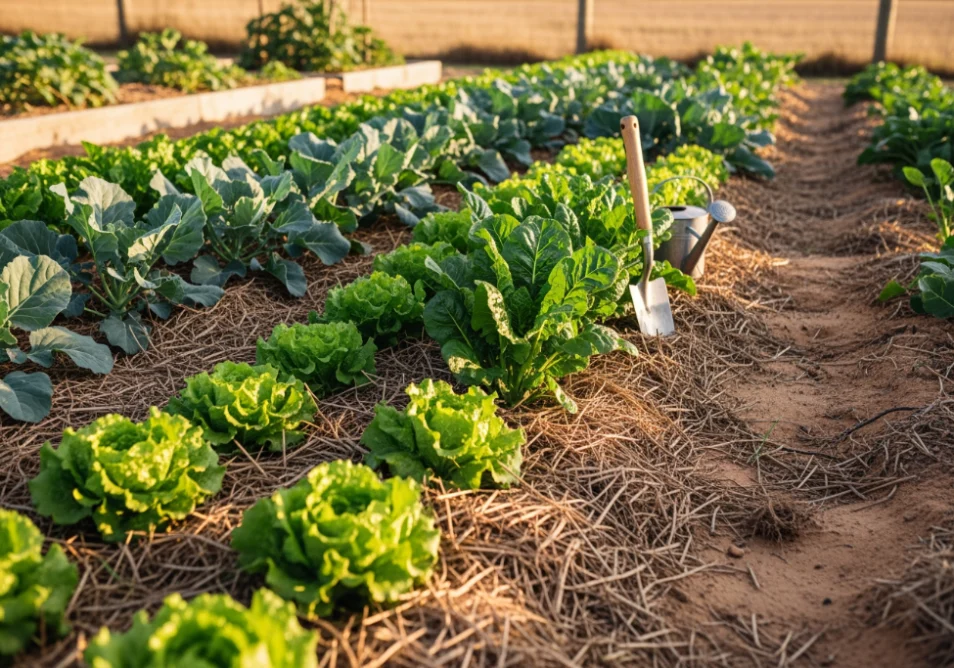
The lupin mulch vegetable garden approach is straightforward. Apply fresh mulch between rows and around established plants at 40mm depth at the start of each growing season. For heavy feeders like tomatoes, capsicums, and brassicas, add a second 20mm top-up midway through the season.
This provides a steady nutrient boost without the salt shock of synthetic feeds. Soil biology stays active. Plants grow consistently rather than experiencing the flush-and-crash pattern that synthetic fertilisers cause. The lupin mulch vegetable garden method delivers better fruit quality and more consistent yields over successive seasons. For vegetable gardeners comparing options, this approach also outperforms what most bulk mulch suppliers perth stock for productive food gardens.
For gardeners who prefer a retail bagged format, Vivantes Lupin Mulch delivers the same premium pasteurised lupin formula in a convenient size available at Bunnings stores across WA.
The Organic Mulch Cost Savings Over Time
Using lupin mulch as a fertiliser replacement delivers measurable organic mulch cost savings over one to three seasons. A typical synthetic fertiliser programme for a Perth garden bed might cost $150–250 per year. A cubic metre of lupin mulch covers 15–20 square metres at proper depth and delivers 12 months of steady soil nutrition.
The cost per application is comparable in year one. But the soil improvement compounds over time rather than degrading. That is the fundamental difference between renting short-term results and building long-term capacity.
Year-on-Year Soil Improvement
Year one delivers measurable improvement in soil structure alongside reduced fertiliser costs. By year two, healthier soil stretches mulch coverage further and reduces application frequency for ornamental beds. By year three, established biological activity means many beds need mulching every 18 months rather than annually.
DSATCO Triple-C Mulch is another excellent option for ornamental garden beds where a darker, finer-textured mulch is preferred. Triple-C Mulch blends cereal crops, chicken manure, and canola into a nitrogen-rich product that works alongside lupin mulch to reduce synthetic fertiliser reliance across different bed types.
When You Still Need Targeted Nutrition
Lupin mulch significantly reduces synthetic fertiliser dependency, but it does not eliminate the need for targeted nutrition in every situation.
Severely depleted soils benefit from an initial humus injection before mulching begins. Acid-loving plants like azaleas, camellias, and blueberries may still need supplemental sulphur or iron chelates if your soil pH sits above 6.5. Lupin mulch moderates pH over time but does not acidify soil quickly enough for sensitive species.
Trace mineral deficiencies, particularly iron, zinc, and manganese in alkaline WA soils, sometimes need direct treatment through foliar sprays. Lupin mulch improves trace mineral availability gradually, but extreme deficiencies need targeted correction first.
The hidden savings from organic mulch cost savings compound here too. Fewer pest interventions, less plant replacement, and reduced irrigation all follow from improved soil biology and consistent plant health. For lawns, DSATCO Lawn Maximizer is purpose-built for WA turf grasses like couch, kikuyu, and buffalo. Apply it as a top-dress fertiliser for existing lawns rather than applying garden mulch over turf.
Conclusion
Synthetic fertilisers deliver short-term results that degrade soil health over time. Every application leaches nutrients, suppresses beneficial soil biology, and leaves your garden less capable of supporting plant growth naturally.
Organic mulch soil health rebuilds the system that makes plants thrive without chemical intervention. Lupin mulch releases nutrients steadily, feeds the living biology that cycles nutrition continuously, and improves soil structure so water and minerals stay where roots need them. The lupin mulch vegetable garden approach alone can dramatically reduce your supplemental feeding programme within one season.
Organic mulch cost savings grow year-on-year as your soil becomes more capable, more resilient, and more productive on less input. For lighter applications in vegetable beds, DSATCO Sugar Cane Mulch is a useful companion product that decomposes quickly and works well between crop rotations. Start this autumn with lupin mulch. Apply a generous layer, water it in, and let the soil do what healthy soil does naturally.
Give your soil the foundation it needs. Shop online or contact the team on 08 9671 1500 to find the right product for your beds.
Latest Posts
- How to Stage Bulk Bags For Soil Improvers Versus Lawn And Mulch
- How to Size Multi-Bed Garden Orders From Bulk Bag Coverage
- Coordinating Metro Stockists Sourcing and Bulk Transport for Large Projects
Reviews from
Happy Gardeners
 "Results have been spectacular. The grass has never looked healthier."
Rod


