

 Buy Online
 08 9671 1500
 office@dsatco.com
Why Lupin Mulch Is the Premium All-in-One Mulch and Fertiliser for WA Gardens
Perth gardens face a challenge most other Australian cities do not. Sandy soil drains nutrients faster than plants can absorb them. Add 40°C summer days, water restrictions, and relentless dry easterly winds, and you have growing conditions that demand far more from your mulch than basic weed suppression.
Getting this right does not have to mean buying multiple products and applying them separately. The right mulch can cover your soil, feed your plants, and build long-term soil health all at once. For gardeners looking for the best mulch for Perth gardens, this guide explains what makes lupin mulch stand out from other options and how to use it for the best results across different garden types.
Choosing the right organic mulch Perth gardeners rely on comes down to understanding what your soil actually needs. If you garden on Perth’s sandy coastal soils, the standard bark and woodchip products widely available at hardware stores simply do not deliver the same outcome. This guide walks through the differences and helps you get it right.
What Makes Lupin Mulch Different from Standard Garden Mulch
Most garden mulches do one thing: cover the soil. DSATCO Lupin Mulch does three. It suppresses weeds, retains moisture, and feeds your soil as it breaks down. For WA gardeners dealing with nutrient-poor sand, that combination makes a significant difference to long-term garden performance.
Three Jobs in One Application
Weed suppression happens because lupin mulch blocks sunlight from reaching the soil surface. Apply it at 40–50mm depth and you cut weed germination significantly through summer. Annual weeds like capeweed and oxalis need light to germinate. A thick mulch layer denies them that opportunity. Less time weeding means more time enjoying your garden.
Moisture retention comes from the physical barrier the mulch creates between the soil and the air. In Perth, bare soil can lose several litres of water per square metre on a hot summer day through evaporation alone. A proper lupin mulch layer slows that process considerably, keeping moisture in the root zone where your plants actually need it.
Soil feeding is where lupin mulch separates itself from bark, straw, and woodchip products. It is a slow-release nitrogen mulch that works continuously through the growing season. As it breaks down, it releases nitrogen, phosphorus, and trace elements slowly into the topsoil. Your plants get a steady feed without the boom-and-bust cycle of synthetic fertilisers. You are not choosing between mulch and fertiliser. You are applying both in one product.
The Problem with Bark and Inert Mulches
Many Perth gardeners default to bark mulch because it is affordable and widely available. But when it comes to lupin mulch vs bark mulch, the difference in soil outcome is significant. Bark is almost entirely carbon with very little nitrogen. It covers the soil without feeding it. As it decomposes, it can draw nitrogen out of the topsoil. Unless you compensate with additional fertiliser, your plants end up worse off.
Garden mulch Perth WA gardeners choose for genuine soil improvement needs to add organic matter with every application – not just provide surface coverage. Premium lupin mulch builds organic matter and feeds beneficial soil microbes with every application. It does not just cover your soil. It actively improves it from the surface down.
Why WA Sandy Soils Respond So Well to Lupin Mulch
The Swan Coastal Plain covers most of metropolitan Perth and sits on some of the poorest soils in Australia. Many suburbs rest on almost pure sand. If you garden in Joondalup, Baldivis, Scarborough, or Cottesloe, your soil drains like a sieve.
Lupin mulch sandy soils respond to so well because it directly addresses both of their major weaknesses: poor nutrient retention and low water-holding capacity. Every application adds organic matter that improves both over time. As a result, organic mulch Perth gardeners get the most value from tends to be the kind that actively rebuilds depleted sandy soils – not just covers them.
Building Organic Matter in Perth Soils
As lupin mulch breaks down over 6–12 months, it adds humus to the surface layer of soil. Humus is the dark, spongy material that holds nutrients and water like a reservoir. It is precisely what WA sandy soils lack most, and what transforms a struggling garden into a productive one.
Perth soils typically contain very little organic matter. Healthy garden soil sits at 3–5%. Regular lupin mulch applications can increase topsoil organic matter meaningfully within a single growing season. You will notice the improvement in stronger root growth, deeper green foliage, and better drought tolerance across your garden beds.
Preparing Depleted Soils Before Mulching
For garden beds that are severely depleted or compacted, consider improving the soil before applying mulch. DSATCO Piggypost is a composted pig manure product that adds humus and beneficial microbes directly into the root zone. Work it into the top 10cm of soil, then apply lupin mulch on top. That layered combination transforms lupin mulch sandy soils faster than mulch alone and jump-starts the biological activity your plants need.
How Lupin Mulch Works as a Slow-Release Fertiliser
Synthetic fertilisers release nutrients immediately. That sounds like a benefit until you realise that WA sandy soils cannot hold those nutrients. Within days of applying a granular NPK product, most of the nitrogen has already leached below the root zone. You have fed the groundwater, not your plants.
DSATCO produces its lupin mulch from 100% WA-grown and sourced lupin plant material, composted with WA chicken manure. It is a genuine farm-to-consumer product designed for WA soil conditions, not generic mulch imported from the eastern states. That local production means fresher product and higher nutrient value when it reaches your garden.
The Slow-Release Nitrogen Advantage
As a slow-release nitrogen mulch, lupin mulch works because the nutrients are locked inside organic matter. Soil microbes must break down the lupin straw and composted manure before nutrients become available to plant roots. That biological process takes weeks and months, not hours.
The result is a consistent feed that matches how plants actually grow. Instead of a large nitrogen surge followed by nothing, your plants receive a regular supply of nutrition through the growing season. Roses stay greener. Vegetable patches produce for longer. Natives grow steadily without the soft, sappy growth that attracts pest pressure.
What This Means for Fertiliser Use
For most established WA garden beds, a 40–50mm layer of lupin mulch applied twice a year covers all the supplementary feeding your plants need. That is once before summer and once before winter. Heavy feeders like citrus and roses may still benefit from targeted nutrition during peak growth. But for general garden beds, lupin mulch fertiliser Perth gardeners apply replaces the need for separate synthetic feeding programmes.
DSATCO is a Western Australian company that produces premium organic mulch and garden products – grown and sourced 100% from WA farms. Every product in the range is designed specifically for WA soils and growing conditions.
Best Uses for Premium Lupin Mulch in WA Gardens
Lupin mulch suits almost every garden type, but it excels in the areas where WA gardeners struggle most. Whether you’re searching for the best mulch for Perth gardens for roses, vegetables, or natives, lupin mulch delivers consistent results across all three.
Lupin Mulch for Rose Gardens
Roses are heavy feeders that perform best in rich, moisture-retentive soil. That is largely the opposite of what most Perth gardens offer naturally. Lupin mulch rose gardens consistently outperform those using bark or straw alternatives. The slow-release nitrogen supports strong vegetative growth and repeat flowering throughout the season.
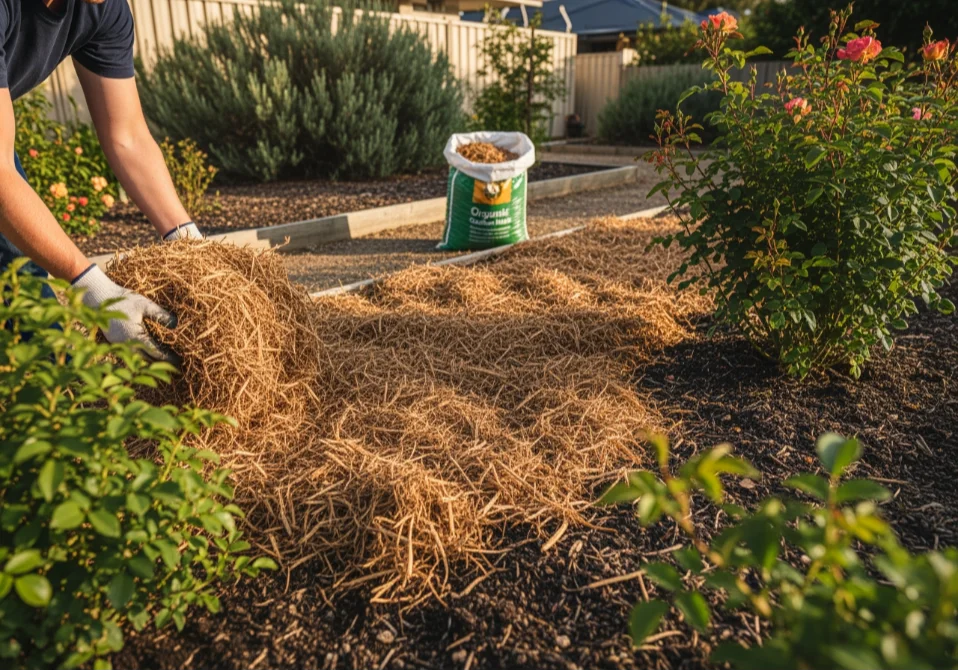
Apply lupin mulch around established roses at 50mm depth in early spring as new growth begins. Top up in autumn after the first flush of flowering. Leave a 50mm gap around each stem to prevent collar rot. The mulch layer keeps roots cool through summer and reduces susceptibility to black spot and aphid infestations.
Vegetable Gardens and Food Growing
For those looking for the best mulch for vegetable garden Australia conditions, lupin mulch consistently ticks all the boxes. Vegetable gardens need steady moisture and consistent nutrients through the full growing season. Apply lupin mulch between rows and around established plants at 40mm depth. Wait until seedlings reach at least 100mm tall before mulching around them.
When the growing season ends, dig the remaining decomposed mulch into the soil as you prepare for the next planting. It adds humus and improves soil structure with every crop rotation. Leafy crops like lettuce, spinach, and brassicas particularly benefit from the nitrogen-rich breakdown lupin mulch provides.
Native Gardens and Lawn Edges
WA natives evolved in low-nutrient soils, but they still benefit from gentle, slow organic feeding. Lupin mulch is ideal because the nutrient release is gradual. Apply it at 30–40mm depth for natives. Most WA species prefer drier soil conditions. A slightly thinner layer suppresses weeds and adds organic matter without holding excessive moisture.
For lawn areas, DSATCO Lawn Maximizer is the purpose-built product for WA turf grasses like couch, kikuyu, and buffalo. It is formulated as a top-dress fertiliser for existing lawns rather than garden beds.
How to Apply Lupin Mulch for Best Results
Getting the depth and preparation right makes a noticeable difference to how long the benefits last and how effectively the mulch performs.
Preparation and Depth
Start by removing existing weeds from the garden bed. Water the soil thoroughly before applying mulch. Lupin mulch locks in whatever moisture is present below it, so applying it over dry soil limits effectiveness. Once the soil is moist, spread the mulch evenly to a consistent depth of 40–50mm.
For general ornamental beds where a finer-textured mulch is preferred, DSATCO Triple-C Mulch is another excellent WA-grown option. It blends cereal crops, chicken manure, and canola to create a nitrogen-rich, weed-suppressing mulch with a pH of 6.5, which suits many WA garden soils well.
Watering In and Seasonal Top-Ups
After applying lupin mulch, water it thoroughly. This settles the material into place, starts the decomposition process, and reduces the chance of it blowing around in strong winds. Lupin mulch is heavier than sugar cane or straw alternatives, but a good soak helps it bed down properly.
Plan to top up your mulch layer every 6–8 months. In Perth’s hot, dry climate, organic mulches break down faster than in cooler parts of Australia. That is a feature, not a problem. As the mulch decomposes, it actively builds your soil. Dig the remaining material lightly into the topsoil and apply a fresh layer on top.
Choosing the Right Lupin Mulch Format for WA Gardeners
There are several format options depending on your garden size and how you prefer to purchase. When sourcing bulk mulch Perth gardeners can choose between bagged retail formats and bulk bag delivery, depending on the scale of the project.
Bulk Bags and Bagged Options
For vegetable beds requiring a lightweight, fine-textured mulch, DSATCO Sugar Cane Mulch is a useful companion product. It breaks down faster and is easier to plant through in tight vegetable bed layouts. For heavier mulching and soil-building needs, premium lupin mulch WA gardeners choose remains the more substantial option.
If you prefer a retail bagged format, Vivantes Lupin Mulch is available at Bunnings stores across WA. It uses the same locally sourced, pasteurised lupin formula in a convenient size for suburban garden projects. The formula is identical to the DSATCO range.
Finding the Right Product for Your Garden
For larger properties and commercial landscaping projects, bulk bags offer the most economical coverage per square metre. As one of WA’s leading bulk mulch suppliers Perth gardeners and landscapers rely on, DSATCO offers a range of bag sizes and bulk delivery options to suit every project. Browse the full DSATCO product range online to compare bag sizes, bulk bag options, and pricing across all DSATCO and Vivantes products.
When sourcing garden mulch Perth WA gardeners trust, it pays to choose products grown and processed in WA rather than imported alternatives. Local production means the product reaches your garden fresher, with higher nutrient value and genuine compatibility with WA soil conditions.
Conclusion
Premium lupin mulch WA gardeners rely on delivers what most single-purpose mulches cannot: genuine soil improvement with every application. It suppresses weeds, holds moisture, and feeds plants through slow-release nitrogen, all from one product grown and processed right here in Western Australia.
Whether you are mulching lupin mulch rose gardens, vegetable patches, or native beds, the results build over time as your soil accumulates organic matter and biological activity. As a leading organic mulch Perth supplier, DSATCO sources and produces every product from 100% WA farms – giving your garden the most relevant, climate-matched nutrition available.
For those looking for the best mulch for vegetable garden Australia gardeners grow in, or simply the best garden mulch Perth WA has to offer year-round, lupin mulch consistently outperforms bark and synthetic alternatives across all garden types and seasons.
Ask the DSATCO team about bag sizes, bulk options, and stockist locations on 08 9671 1500.
Latest Posts
- How to Stage Bulk Bags For Soil Improvers Versus Lawn And Mulch
- How to Size Multi-Bed Garden Orders From Bulk Bag Coverage
- Coordinating Metro Stockists Sourcing and Bulk Transport for Large Projects
Reviews from
Happy Gardeners
 "Results have been spectacular. The grass has never looked healthier."
Rod


