

 Buy Online
 08 9671 1500
 office@dsatco.com
Sugar Cane Mulch vs Other Raw Straw Mulches: Which Performs Better in Perth Gardens?
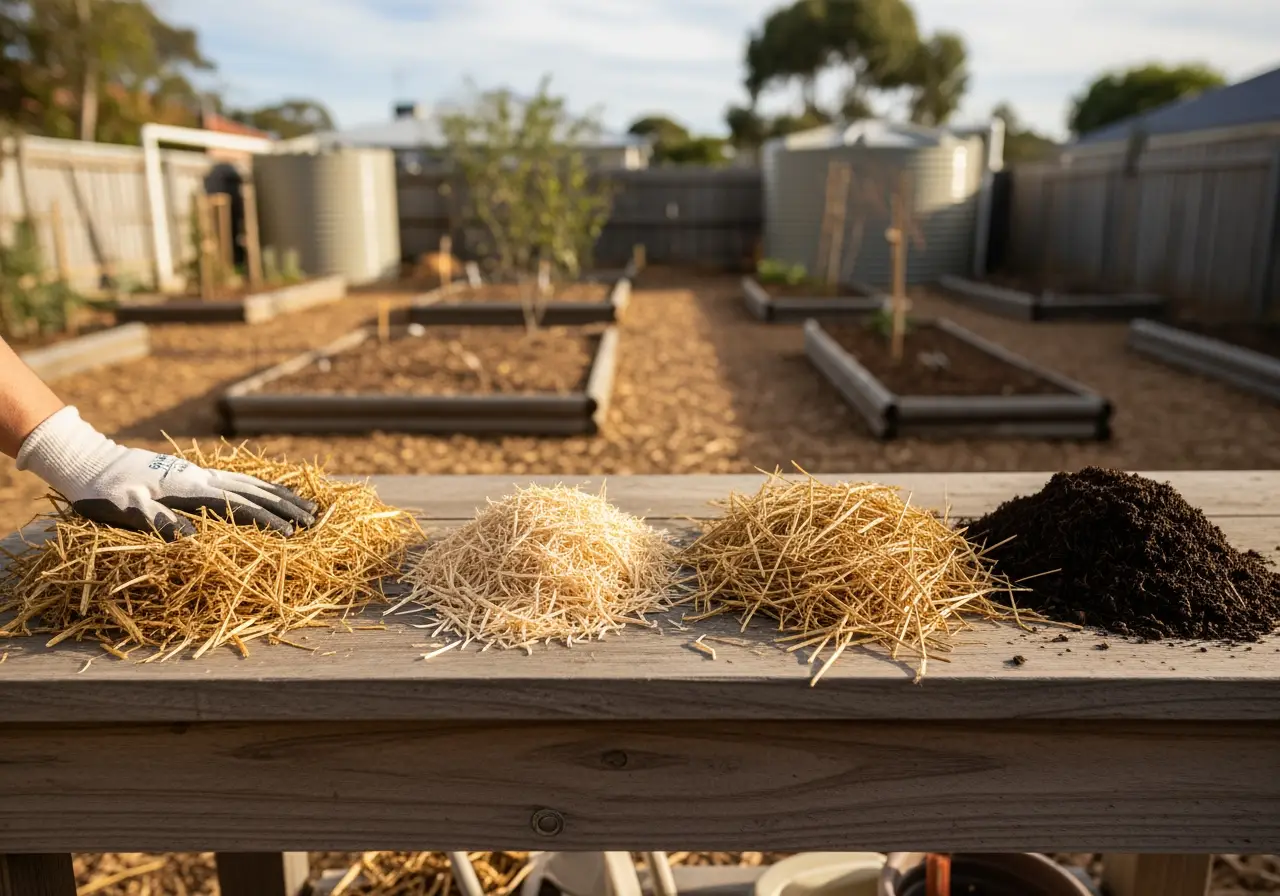
Perth gardeners have more mulch choices than ever. Sugar cane mulch, pea straw, barley straw, and wheaten straw are all available across the Perth metro area, and they all look similar when you pick up a bag. But the way they behave in WA’s sandy soils and hot, dry summers is very different.
The wrong choice shows up quickly. Straw that mats down after rain. Weeds germinating through under-applied mulch. Irrigation water running off the surface instead of soaking through to the root zone. Choosing the best mulch for Perth gardens means understanding how each product behaves in real WA conditions, not just what it looks like in the bag.
Perth’s sandy soils are naturally low in organic matter. Summer heat is relentless. Water restrictions mean every irrigation session counts. The mulch you choose either works with those conditions or fights against them. This article compares the four main raw straw mulch options available to WA gardeners and shows clearly which performs better and where.
What Makes Raw Straw Mulches Different From Composted Products
Understanding the Two Main Mulch Categories in WA Gardens
Raw straw mulches are plant materials applied to the soil surface without composting or nutrient enrichment. They include sugar cane bagasse, pea straw, barley straw, and wheaten straw. These products break down faster than composted wood mulches. That gives them a significant advantage in Perth’s sandy soils, where adding organic matter is an ongoing priority.
The faster breakdown also means more frequent reapplication. Most raw straw mulches last 3-6 months in active Perth garden beds before they decompose enough to need topping up. That is a normal part of using raw straw mulch, and each top-up adds more organic matter to soil that needs it.
Composted mulches work differently. They are processed to add nutrients and microbial activity alongside the mulch benefits. Raw straw mulches provide surface protection. Composted mulches protect and feed. Understanding this difference helps you choose the best mulch for Perth gardens in each planting zone.
Why the Choice Between Raw Straw Types Matters in Perth
When weighing up sugar cane mulch vs straw alternatives, three performance factors matter most. The first is mulch water penetration. The second is weed seed contamination. The third is how effectively the mulch breaks down into stable humus over the season.
In Perth’s conditions, each of these factors has a direct impact on how well your garden mulch Perth WA performs. A mulch that sheds water instead of absorbing it defeats the purpose entirely. A mulch packed with weed seeds creates more work than bare soil. And a mulch that breaks down too quickly needs replacing so often that the cost and effort outweigh the benefits.
The best straw mulch Perth gardens rely on handles all three consistently well through a full WA growing season.
How Sugar Cane Mulch Performs in Perth Conditions
Why Sugar Cane Mulch Holds Its Structure Through WA’s Summer
Sugar cane mulch is made from the fibrous bagasse left after sugar extraction. Those long, coarse fibres create an open, interlocking structure that allows water and air to move through freely. Unlike finer straw types, sugar cane does not compact easily. It maintains its open texture through rain, heat, and repeated irrigation.
Mulch water penetration is the most practical test of any mulch product across mulch Perth conditions. Sugar cane mulch passes that test consistently. Irrigate over a 50-75mm layer and water passes straight through to the soil beneath. The fibres absorb moisture gradually and release it slowly into the root zone as the soil dries out.
This reliable performance is one of the main reasons experienced WA growers return to sugar cane mulch season after season.
Sugar Cane Mulch as a Weed-Free Option for Vegetable Beds
Industrial processing of sugar cane removes most viable plant material from the bagasse. The result is a mulch that is virtually weed-free. In carefully managed vegetable beds, introducing weed seeds through your mulch is a serious problem. Weed-free mulch means less competition for nutrients and moisture throughout the growing season.
DSATCO Sugar Cane Mulch delivers consistent, clean product suited to Perth vegetable gardens and ornamental beds. The processing ensures you are spreading mulch, not an accidental weed seed bank, across beds you have spent time preparing.
Having weed-free conditions in vegetable beds means plants establish faster and produce better. They are not competing with a constant influx of germinating weeds from the mulch layer above.
Pea Straw vs Sugar Cane Mulch in WA Gardens
Where Pea Straw Performs Well in Perth Conditions
Pea straw has genuine advantages in specific WA garden applications. Its nitrogen content is higher than sugar cane mulch, which benefits heavy-feeding crops like brassicas and tomatoes. It also breaks down faster, often within 2-3 months in an active Perth vegetable garden, which delivers a quick organic matter boost to the soil.
In the pea straw vs sugar cane comparison for WA, pea straw makes sense when you specifically want fast nitrogen release. It also suits situations where you plan to turn the mulch into the soil as a green manure crop within a few months. For those applications, its rapid breakdown is a feature rather than a drawback.
DSATCO is a Western Australian producer of premium organic mulch and garden products, grown and sourced 100% from WA farms. The range is available in bags and bulk bags across Perth and regional WA for home gardeners and commercial growers.
Where Pea Straw Falls Short for Perth Gardeners
The biggest problem with pea straw is weed seed contamination. Even commercially harvested pea straw regularly contains wild oats, ryegrass, brome grass, and various broadleaf weeds. Unless you are buying certified weed-free pea straw at a premium price, you are likely spreading hundreds of viable weed seeds across every bed you mulch.
The pea straw vs sugar cane comparison also reveals a significant water penetration difference in mulch Perth conditions. Pea straw’s finer texture mats down when wet, particularly during Perth’s winter rains. Once matted, it forms a semi-impermeable layer that sheds water instead of absorbing it. That directly wastes expensive irrigation water.
The faster breakdown also means higher ongoing costs. Replacing pea straw every 2-3 months adds up quickly across a season compared to sugar cane mulch that lasts 4-6 months at the correct application depth.
Barley and Wheaten Straw in Perth’s Sandy Soils
Why Fine-Grain Straws Struggle in WA’s Summer Conditions
Barley and wheaten straw are widely available from bulk mulch suppliers Perth gardeners can access through rural suppliers and produce stores. They are typically cheaper per bag, which makes them appealing for large-scale projects. But that lower upfront cost comes with significant trade-offs.
Fine-grain cereal straws compact and mat down quickly once applied. Wind displacement is a particular problem in Perth. Lightweight barley straw applied to a garden bed can be scattered across the lawn within a day by the afternoon sea breeze unless thoroughly watered in immediately. Weed seed contamination in cereal straws is among the highest of any common mulch type.
For nutrient-rich mulching of heavy-feeding plants, DSATCO Lupin Mulch is a far more controlled and effective alternative. It delivers consistent nutrients alongside mulch benefits without the weed seed risk that cereal straws carry.
Where Barley and Wheaten Straw Do Have a Role in WA Gardens
Despite their limitations, barley and wheaten straw do have appropriate uses in WA gardens. Orchard undergrowth, large-scale pathway mulching, and temporary weed suppression in areas where appearance does not matter are all reasonable applications. In these settings, the lower cost per square metre and the relatively quick breakdown work in their favour.
However, for vegetable gardens and ornamental beds where weed control and reliable water penetration are both critical, cereal straws consistently underperform. The weed management burden they create typically outweighs the cost saving within a single growing season. This is especially true in garden mulch Perth WA conditions where summer heat accelerates decomposition and reduces the effective life of cheaper products.
When comparing best mulch landscaping choices for low-maintenance areas like pathways and orchard undergrowth, cereal straws do offer a cost-effective option. For everything else, the trade-offs are rarely worth it.
Side-by-Side Performance Comparison
Water Penetration and Moisture Retention Compared
In a direct sugar cane mulch vs straw comparison across Perth garden conditions, water penetration is where the differences become most obvious.
Sugar cane mulch allows consistent water penetration throughout its lifespan. The coarse fibres maintain air space even as the material settles. Irrigate over a 50-75mm layer and water reaches the soil reliably every time.
Pea straw, barley straw, and wheaten straw all form a denser mat as they settle and partially decompose. That mat can shed water, particularly during heavy rain or sprinkler irrigation. Water pools on the surface or runs to the edges of the bed rather than soaking through to the root zone.
DSATCO Triple-C Mulch is a composted option that combines strong mulch performance with nitrogen-rich nutrients. It suits garden beds where you need more than raw straw mulch can provide on its own, and is available from bulk mulch suppliers Perth gardeners can order from online or through local stockists.
Weed Suppression, Decomposition, and Straw Mulch Humus Formation
The processing of sugar cane bagasse removes most viable seeds. Occasional grass seedlings appear but they are rare and easy to pull. That makes it the most reliable raw option for weed suppression across the best mulch for Perth gardens applications most home gardeners face.
For long-term humus formation through decomposition, sugar cane mulch builds more stable soil carbon than finer straw types. Its lignin-rich fibres break down into a coarser, more persistent form of organic carbon. Pea straw and cereal straws decompose into finer particles that integrate quickly but contribute less to lasting soil structure improvement.
Stable humus that persists through multiple seasons delivers more value than fast-decomposing fine straw that disappears before the next planting cycle. This long-term soil building is why sugar cane mulch is consistently chosen as the best mulch landscaping professionals and experienced WA home gardeners reach for across high-traffic garden zones.
Choosing the Best Raw Straw Mulch for Your Perth Garden
Matching Mulch Type to Garden Type and Management Goals
For most Perth home gardeners, sugar cane mulch is the best straw mulch Perth gardens can rely on across the widest range of applications. It is virtually weed-free. It maintains reliable water penetration. It breaks down at a moderate rate that builds stable organic mulch Perth soils need. And it suits everything from vegetable beds to rose gardens to native plantings across WA.
Pea straw makes sense for specific applications, such as fast nitrogen release for brassicas or green manure rotations where the straw is turned into the soil within a few months. Use it with that purpose in mind and budget for active weed management throughout the application period.
Barley and wheaten straw are appropriate for low-maintenance, large-scale applications like orchard undergrowth or pathway suppression. They are not suitable for vegetable beds or ornamental gardens where weed-free conditions and reliable water penetration are a priority.
When comparing sugar cane mulch vs straw alternatives on a cost-per-performance basis, sugar cane mulch consistently delivers better value over a full growing season. It lasts longer, requires less weed management, and builds better soil structure. Any bulk mulch suppliers Perth offer should be evaluated on these criteria, not just price per bag.
Pairing Raw Mulch With Soil Improvers for Better Results
Any raw straw mulch performs better when combined with a good soil conditioner. DSATCO Piggypost is a mature, humus-rich compost that introduces living microbes and organic mulch Perth soils lack in their natural state. Applied before mulching, it accelerates the breakdown of the straw mulch above and converts organic material into plant-available nutrients faster.
For Perth gardeners managing lawns alongside mulched garden beds, DSATCO Lawn Maximizer provides the organic top-dress nutrition that lawn grasses need through the growing season. It complements the mulch programme in adjacent beds and supports a whole-of-garden approach to soil improvement across every planted surface.
For gardeners who prefer the convenience of Bunnings, Vivantes Lupin Mulch is the same premium WA-grown organic formula available in Bunnings stores. It offers identical quality in a format accessible to more mulch Perth gardeners across the metro area. Browse the full DSATCO product range to find the right combination for your garden zone and planting goals.
Conclusion
Sugar cane mulch consistently outperforms pea straw, barley straw, and wheaten straw in Perth gardens. It maintains reliable water penetration, resists compaction and matting, arrives virtually weed-free, and builds stable humus through steady decomposition. For Perth’s sandy soils and Mediterranean climate, those qualities make it the best mulch for Perth gardens across the widest range of applications.
Match mulch type to your garden zone and pair it with a living soil conditioner for best results. For most WA home gardeners, sugar cane mulch is the raw straw option that performs better across the full growing season.
Ask the DSATCO team about bag sizes, bulk options, and stockist locations on 08 9671 1500.
Latest Posts
- How to Stage Bulk Bags For Soil Improvers Versus Lawn And Mulch
- How to Size Multi-Bed Garden Orders From Bulk Bag Coverage
- Coordinating Metro Stockists Sourcing and Bulk Transport for Large Projects
Reviews from
Happy Gardeners
 "Results have been spectacular. The grass has never looked healthier."
Rod


