

 Buy Online
 08 9671 1500
 office@dsatco.com
What Is Piggypost and Why It Is One of WA’s Most Effective Soil Improvers
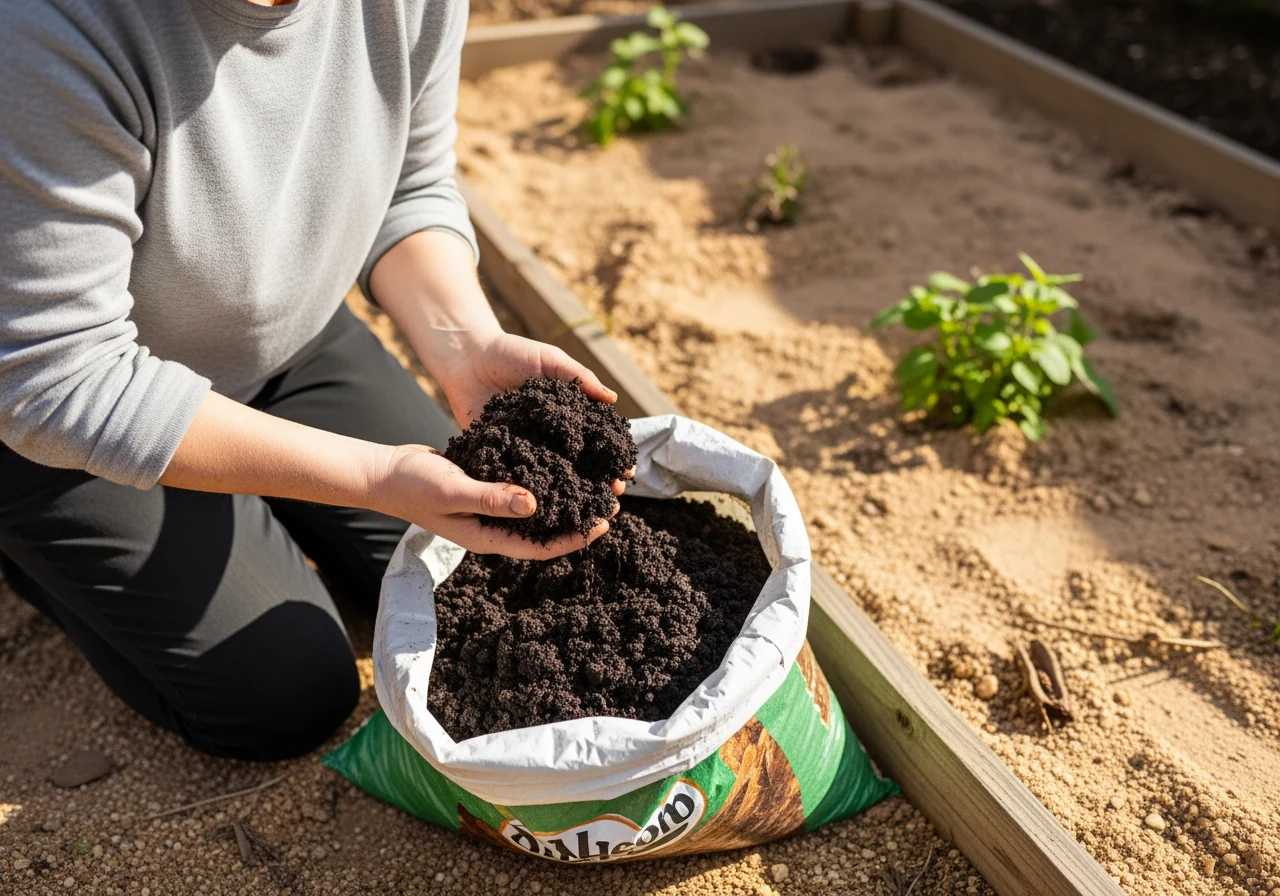
Perth’s sandy soils are notoriously difficult to work with. They drain too fast, hold almost no nutrients, and turn bone-dry within days of watering. If you have ever watched fertiliser disappear into the ground without any visible improvement in your plants, you are not alone. This is one of the most common frustrations WA gardeners face.
Sandy soils across the Swan Coastal Plain and the broader Perth metro area share the same core problem. They contain almost no organic matter. Organic matter is what gives soil the ability to hold water, retain nutrients, and support the biology that feeds your plants. Without it, even regular watering and fertilising deliver disappointing results.
This article answers the question WA gardeners ask when they are ready to do something about their soil: what exactly is Piggypost, and why does it work? We will look at how it is made, what it does to sandy soil, and how to apply it for real results.
By the end, you will know exactly how to use Piggypost as a soil conditioner, which garden types benefit most, and how to combine it with the right mulch layer for lasting improvement.
What Is Piggypost and Why WA Soils Need It
The Problem with Perth’s Sandy Soils
Sandy soils look easy to work with. They are light, loose, and simple to dig. But that loose structure is the problem.
Sand holds almost no organic matter, which means it holds almost no water or nutrients either. You add fertiliser and it leaches straight through. You water and the moisture is gone within hours. In Perth’s dry summers, unimproved sand can turn to dust in 48 hours. Your plants are left stressed, shallow-rooted, and struggling.
WA soils are also naturally low in nitrogen, phosphorus, and trace elements. Even when you try to correct this with fertiliser, the sand cannot hold onto what you add. The result is an ongoing cycle of inputs with limited payoff.
Why Composted Pig Manure Works
Piggypost is a premium organic soil conditioner made from composted pig manure. It is processed over 12 to 18 months to create a stable product with around 70% humus content. Unlike raw manure, which can burn plant roots and introduce weed seeds, Piggypost is fully composted and safe to apply directly to any garden bed.
Pig manure is one of the most nutrient-dense animal manures available. It contains strong levels of nitrogen, phosphorus, and potassium. When composted properly, those nutrients become slow-release. Your plants get a steady supply of food over weeks and months rather than a quick flush that washes away.
The finished product is dark, crumbly, and earthy. It looks and feels like rich forest soil. When you dig it in, you are not just adding nutrients. You are rebuilding the soil structure your WA garden needs.
How Piggypost Improves Soil Structure
Improved Water Retention and Moisture Holding
The composted organic matter in Piggypost acts like a sponge. It holds many times its own weight in water. In a sandy garden bed, this changes everything.
Instead of water rushing straight through the profile, moisture is held in the root zone where your plants can actually reach it. In Perth’s summer heat, this makes a real difference. Your plants experience less stress and you spend less time at the tap.
This is one of the reasons Piggypost is consistently ranked among the most effective soil improvers WA gardeners return to season after season. The improvement in water retention is visible within weeks of the first application.
Better Nutrient Holding and Soil Biology
Organic matter carries a slight negative charge. This attracts positively charged mineral nutrients like calcium, magnesium, and potassium. Instead of leaching away, those nutrients are held in the soil and stay available to plant roots.
Piggypost also carries living soil biology. The bacteria and beneficial fungi in the product begin colonising your soil as soon as you dig it in. They break down organic matter slowly and continuously, releasing nutrients over time. This is the difference between a soil that feeds itself and one that relies entirely on you.
In sandy WA soils that are often biologically inactive, introducing this living biology is one of the most valuable things you can do for long-term garden health.
How to Apply Piggypost in Your Garden
Pre-Planting Application for New Beds
For new garden beds, dig Piggypost into the top 15 to 20cm of soil. Do this at least two weeks before planting. This gives the organic matter time to integrate with the sand before your plants go in.
Spread a generous 5 to 10cm layer across the bed before digging in. If your soil is pure sand, you can use a little more. Water the bed well and let it settle. When you come back to plant, the soil will feel noticeably softer and more moisture-retentive.
Top-Dressing and Combining with Mulch
For established garden beds, spread a 2 to 3cm layer of Piggypost around your plants. Keep it a few centimetres clear of stems and trunks to prevent rot. Water it in well so the nutrients begin moving toward the roots.
Top-dressing twice a year is ideal for most WA gardens. Aim for early spring and again in autumn. These are the seasons when your soil needs support most.
For the best results, apply Piggypost first and then add a mulch layer on top. DSATCO Lupin Mulch is an excellent companion product. It locks in moisture, moderates soil temperature, and adds nitrogen as it breaks down. DSATCO Triple-C Mulch is another strong option, particularly for garden beds that need nitrogen support and weed suppression.
This two-layer approach is one of the most effective ways to build lasting soil health. Piggypost improves the soil itself. The mulch layer above it protects that improvement and amplifies it.
Piggypost for Different Garden Types
Piggypost is a versatile product. It works across vegetable gardens, native beds, and lawns. The way you apply it changes slightly depending on what you are growing, but the soil-building benefits are consistent.
DSATCO is a Western Australian company that produces premium organic mulch and garden products, grown and sourced 100% from WA farms. Piggypost is one of their flagship products and is available in 20L bags and 800L bulk bags for larger projects.
Vegetable Gardens, Native Gardens, and Lawns
Vegetable gardens are heavy feeders. Before each new crop season, dig Piggypost through the bed to restore the organic matter that the previous crop used up. For raised beds, mix it through the full depth. You can also browse the full product range to find companion amendments that support healthy edibles.
Native plants are adapted to low-nutrient soils. They do not need heavy feeding. But they do benefit from better soil structure and improved moisture retention. A light annual top-dress of Piggypost is enough. It improves biology without overloading the plants with phosphorus.
Lawn grasses like couch, kikuyu, and buffalo also respond well. During lawn renovation or overseeding, rake a 1 to 2cm layer of Piggypost into the surface. The organic matter works its way down to the root zone over time, gradually improving soil structure beneath your turf.
Garden mulch Perth WA gardeners use across these different settings works best when the soil underneath is already conditioned. Piggypost gives you that foundation to build on.
When to Use a Specialist Product Instead
For targeted lawn maintenance rather than full soil renovation, DSATCO Lawn Maximizer is a more focused option. It is an organic top-dress fertiliser formulated specifically for WA turf, using lupin chaff, canola straw, and chicken manure in a weed-free blend.
For gardeners who shop at Bunnings, Vivantes Lupin Mulch delivers compatible organic benefits as part of the same WA-grown product family. It is a straightforward option for improving soil biology in garden beds between Piggypost applications.
If you are looking for organic mulch Perth nurseries and garden centres stock year-round, checking the DSATCO stockist network is the quickest way to find the product format that suits your project.
Common Questions About Piggypost
Is Piggypost Safe, and Does It Smell?
Yes, Piggypost is safe for all garden types. Because it is fully composted through a 12 to 18 month process, it will not burn roots. It is gentle enough for sensitive WA natives, young seedlings, and edible vegetable gardens.
The smell is mild and earthy, similar to rich forest soil. It does not smell like raw manure. Once watered in, you will not notice any scent at all.
For pot plants, mix Piggypost at around 20 to 30 percent into a quality potting mix. This is an effective blend for herbs, flowering annuals, and potted vegetables.
How Long Does It Take to Work?
Improved water holding is usually noticeable within a few weeks of the first application. The soil feels more moisture-retentive and your plants need watering less often.
The full biological benefits take a little longer. Soil life builds up gradually over several months as the microbes establish and begin working through the organic matter. Consistent twice-yearly applications deliver the strongest long-term results.
This is what sets Piggypost apart from synthetic fertilisers. A synthetic feed delivers a quick result that washes away fast. Sandy WA soils struggle to hold those inputs. Piggypost builds the soil itself, so each season your garden becomes more productive and more water-efficient.
If you are sourcing garden mulch Perth WA wide or looking at pig manure delivery Perth services, Piggypost offers a fully composted, ready-to-use alternative that is safer, more stable, and better suited to WA garden conditions than raw manure products.
Conclusion
WA’s sandy soils are a real challenge, but they are not beyond fixing. Piggypost is one of the most effective soil improvers WA gardeners can use because it addresses the core problem. It adds organic matter, introduces living biology, delivers slow-release nutrients, and improves moisture retention.
Whether you are preparing a new vegetable bed, renovating a lawn, or giving your native garden a long-term boost, Piggypost gives you the foundation to build on. Pair it with DSATCO Lupin Mulch or DSATCO Sugar Cane Mulch for a complete soil health system that works with Perth’s climate, not against it.
Give your soil the foundation it needs. Shop online or contact the team on 08 9671 1500 to find the right product for your beds.
Latest Posts
- How to Stage Bulk Bags For Soil Improvers Versus Lawn And Mulch
- How to Size Multi-Bed Garden Orders From Bulk Bag Coverage
- Coordinating Metro Stockists Sourcing and Bulk Transport for Large Projects
Reviews from
Happy Gardeners
 "Results have been spectacular. The grass has never looked healthier."
Rod


