


 Buy Online
 08 9671 1500
 office@dsatco.com
How Lawn Maximizer Reduces Water Use and Mowing Frequency Over Time
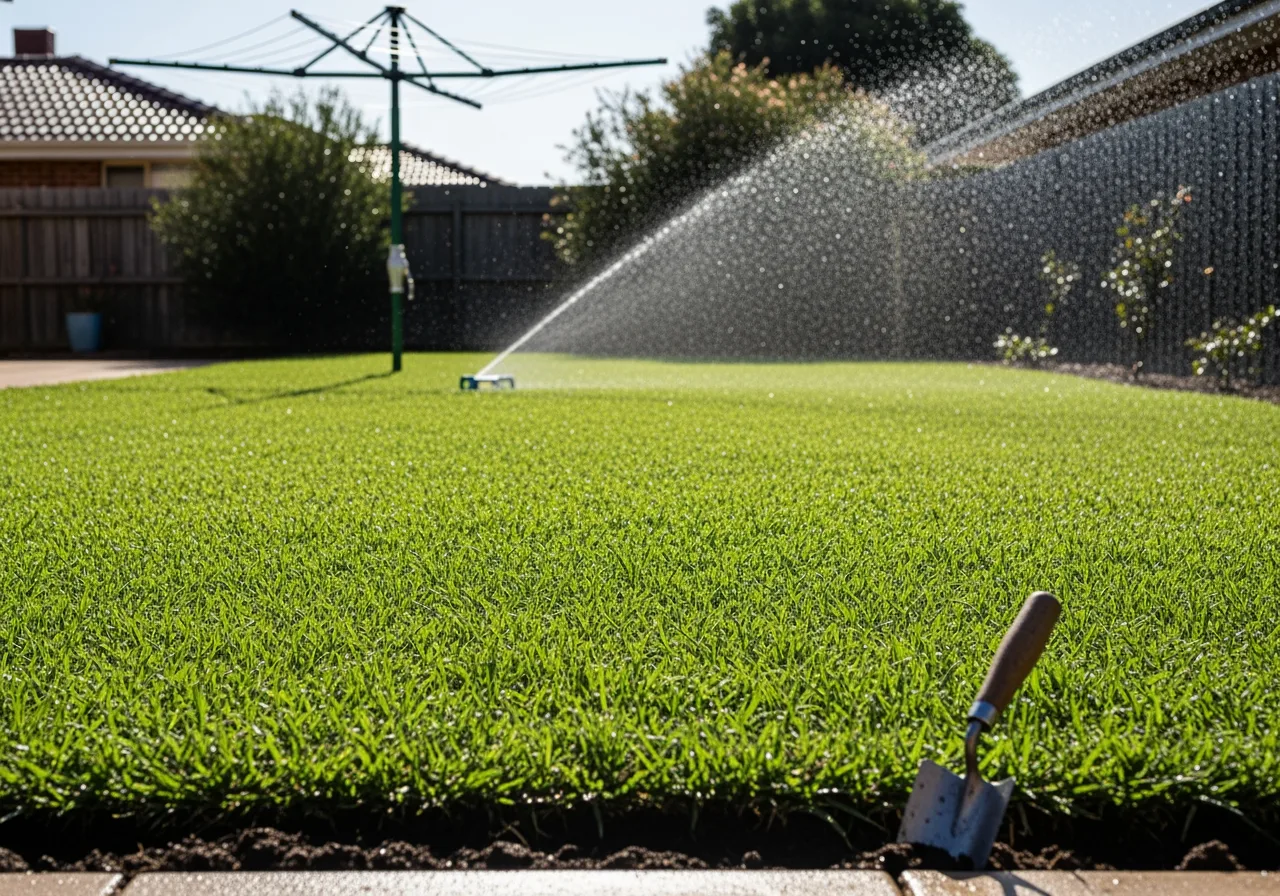
Perth lawns burn water like nothing else in the garden. A typical suburban lawn here can drink enormous amounts every week through summer, and that’s before you factor in our sandy soils, which drain faster than you can refill the sprinkler. Most gardeners accept this as the price of green grass. They shouldn’t.
The Swan Coastal Plain is built on sand. This sand drains so fast that nutrients and moisture disappear within hours of watering. Perth’s Mediterranean climate compounds the problem. Hot, dry summers push lawns hard while water restrictions limit how often you can irrigate. The result is a cycle most WA gardeners know well: water more, watch it drain away, and repeat.
The real question isn’t how to water more. It’s how to make your soil hold what you’re already giving it. That’s what this article covers: how rebuilding the biology of sandy Perth soil changes the way your lawn uses water, and why the results keep improving over time.
By the end, you’ll understand why organic soil treatment works differently from synthetic feeds, when to top dress your lawn in Perth for the best results, and how to apply Lawn Maximizer to progressively reduce your water use and mowing frequency through WA’s toughest conditions.
Why Perth Lawns Waste So Much Water
The Sand Drainage Problem
Perth lawns burn through water faster than almost anything else in the garden. A typical suburban lawn here can consume significant amounts every week through summer. That’s before you factor in our sandy soils, which drain faster than you can refill the sprinkler.
Most gardeners accept this as the price of green grass. They shouldn’t. There’s a better way that doesn’t involve constantly throwing more water at a problem caused by poor soil, not inadequate irrigation.
The Shallow Root Cycle
The Swan Coastal Plain is built on sand, not loam or clay. This sand drains so fast that nutrients and moisture disappear within hours of watering. Your lawn isn’t lazy or demanding. It’s starving and dehydrated in soil that literally can’t hold what it needs for more than a few hours.
Most WA gardeners respond by watering more often. This creates shallow root systems that sit near the surface chasing every drop. Shallow roots mean the grass depends entirely on surface moisture, which evaporates the moment the sun hits it. You’re stuck in a destructive cycle: more water leads to weaker roots, which demand even more water.
Couch, kikuyu, and buffalo are all capable of deep root growth that accesses moisture reserves Perth’s sand can hold at depth. But only if the soil gives them a reason to go deep. Sandy soil without organic matter doesn’t. It offers no moisture retention, no nutrient storage, and almost no microbial life to convert organic matter into forms grass can use.
This is where rebuilding your soil changes everything.
How Lawn Maximizer Rebuilds Soil from the Root Zone Up
Organic Matter and Moisture Retention
DSATCO Lawn Maximizer is a certified organic soil treatment made from composted chicken manure, composted pig manure, and aged organic matter. It’s designed specifically to address the biological poverty of Perth’s sandy soils.
When you apply it to your lawn, three fundamental changes happen that directly impact water use and mowing needs.
The composted material acts like a sponge in the root zone. It holds water where grass roots can access it over days instead of hours. This is the key shift in how treated lawns manage moisture: the water stays in the root zone where it’s useful, rather than draining straight through to the clay layer below.
Your grass stays hydrated longer between sessions, which means less frequent watering without seeing stress. That’s genuine lawn water use reduction Perth gardeners start to notice within weeks of first application.
Living Microbes and Nutrient Cycling
The composted manure in Lawn Maximizer is packed with beneficial bacteria and fungi. These organisms break down organic matter and convert locked-up nutrients, especially nitrogen and phosphorus, into forms your grass can absorb immediately.
That means less fertiliser washing away unused, less runoff into stormwater, and healthier balanced lawn growth without synthetics pushing excessive top growth. The microbes create a self-sustaining cycle once established.
Root Systems Grow Deeper and Stronger
As the soil improves through added organic matter and active biology, grass roots follow the moisture and nutrients down into previously inaccessible soil layers. Deeper roots mean the lawn can access water from lower in the soil profile, which stays cooler and wetter even during hot spells.
A lawn with roots reaching deep into improved soil uses water far more efficiently than one with roots sitting in the top few centimetres of bone-dry sand. This is drought-tolerant lawn development WA gardeners achieve through soil improvement, not through picking supposedly drought-resistant grass varieties.
The Timeline: What Happens After You Start Using Lawn Maximizer
Weeks 1 to 4: Soil Activation Begins
The first application introduces billions of microbes into the root zone. You won’t see dramatic visual changes immediately, but the soil is transforming beneath the surface. Organic matter starts breaking down. Nutrient availability improves gradually. If you dig down 10cm, the soil feels slightly darker and less dusty than before treatment.
Watering needs stay roughly the same during this initial phase. The lawn is still adjusting to improved conditions and hasn’t yet developed the deeper root system that allows reduced irrigation.
Weeks 5 to 8: Root Growth Accelerates
This is when most WA gardeners notice the first real shift in their lawn’s behaviour. The grass looks denser and more vibrant. It bounces back faster after foot traffic. If you pull a small section of turf to inspect roots, they’re visibly longer and whiter, indicating active, healthy growth.
You might also notice the lawn staying greener for an extra day or two between watering cycles. That’s the organic matter starting to hold moisture in the root zone where it’s accessible to grass rather than draining straight through to clay.
Weeks 9 to 12 and Beyond: Water Use Drops Noticeably
By the third month, treated lawns need noticeably less water to maintain the same level of green coverage compared to untreated sandy-soil lawns. The soil now holds enough organic matter to buffer against rapid moisture loss. The grass has developed a deeper root system that taps into moisture below the rapidly drying surface layer.
Mowing frequency often drops during this period too. Lawn Maximizer doesn’t force rapid top growth the way synthetic nitrogen fertilisers do. Instead, it promotes balanced development with more energy going to roots and density rather than vertical shoot growth that needs constant cutting. You’re mowing every 10-12 days instead of every 7.
A lawn treated consistently over four months or more behaves fundamentally differently than it did before treatment. It greens up faster after winter dormancy. It holds colour longer into summer stress periods. It recovers from heat damage without the patchy die-back that untreated sandy-soil lawns suffer.
Why Organic Soil Treatment Outperforms Synthetic Fertilisers
Synthetic Fertilisers and the Watering Trap
Synthetic lawn fertilisers deliver a concentrated hit of nitrogen that forces fast green growth. That looks impressive for two weeks, then it fades. You’re back to square one, or worse, because the grass has grown soft, shallow roots that demand even more water to stay alive.
Synthetic feeds don’t improve soil structure at all. They add nutrients in salt form, but they do nothing for the sand itself. Water still drains straight through at the same rate. Organic matter stays low or absent. The lawn remains completely dependent on constant inputs because you’re not building the soil foundation it needs.
How Organic Products Build Self-Sustaining Soil
Lawn Maximizer adds humus and living biology with every application. Humus is the stable, decomposed organic matter that gives soil its water-holding capacity. Every application increases the soil’s ability to hold moisture and nutrients without requiring additional interventions.
The composted chicken and pig manure in Lawn Maximizer is humus-rich by design. It integrates into your sand and stays there, building structure application after application. You’re not just feeding the grass temporarily. You’re permanently improving the soil that feeds your grass.
Once your soil has active microbial life, even rainwater becomes more effective. Microbes break down thatch naturally, reducing the spongy surface layer that repels water. They cycle nutrients continuously, making existing soil minerals available to grass without additional feeding. They improve soil structure by producing sticky compounds that bind sand particles together.
DSATCO is a Western Australian company that produces premium organic mulch and garden products, grown and sourced 100% from WA farms. Every product in the range is designed specifically for WA soils and the demands of Perth’s climate.
When and How to Top Dress Your Lawn in Perth
When to Top Dress Lawn Perth: Timing for WA Gardens
Knowing when to top dress lawn Perth conditions are right is just as important as choosing the right product. Timing your application well gives the microbes in Lawn Maximizer the warmth they need to activate quickly while avoiding the extremes of peak summer heat.
Late February through to April is the optimal window for lawn top dressing Perth gardens. Soil temperatures are still warm enough to support strong microbial activity, but the worst of summer stress has passed. Grass in this window is actively recovering and growing, which means it responds faster to the improved nutrient and moisture conditions Lawn Maximizer creates.
A spring application from September through November is the second-best window for lawn top dressing Perth lawns. Grass is coming out of winter dormancy and building new root growth, making it ideal timing for an organic soil boost before the dry season begins.
Avoid applying Lawn Maximizer during peak summer heat in December and January if possible. High soil temperatures can reduce microbial survival in the product before it has time to establish. If summer is your only option, water in the application thoroughly and early in the morning.
For WA gardeners who haven’t started yet, understanding when to top dress lawn Perth soils is the first step toward reducing water dependency before the next dry season. The earlier you start building organic matter, the more resilient your lawn becomes by the time water restrictions tighten.
How to Apply Lawn Maximizer for Best Results
Step 1: Mow the Lawn Short Before Application
Cut your lawn down to 20-30mm before spreading Lawn Maximizer. This lets the product reach the soil surface instead of getting caught in long grass blades.
Step 2: Apply Evenly Across the Entire Lawn Area
Use a broadcast spreader for even coverage on large lawns. Don’t apply more than recommended thinking it will work faster. Thick applications can smother grass and create problems in the root zone.
Step 3: Water In Thoroughly After Application
Apply a solid watering immediately after spreading. This moves the organic matter and microbes into the root zone where they can start working. Don’t skip this step. It activates the product and initiates the biological processes that improve your soil.
Step 4: Reapply Every 8-12 Weeks During Growing Season
Lawn Maximizer isn’t a one-off treatment. It’s a soil-building program that works cumulatively. Reapply every 8-12 weeks from September through to April. Each application adds more organic matter and refreshes the microbial population.
For even better results across your entire property, pair lawn treatment with DSATCO Lupin Mulch around garden beds and DSATCO Piggypost in vegetable patches. The same organic soil-building principles work everywhere.
Step 5: Reduce Watering Gradually as Soil Improves
Don’t cut watering back dramatically on day one. Let the lawn tell you when it needs less. After 6-8 weeks, try extending the interval between watering cycles by one day. If the grass stays green without stress, extend it again after two more weeks.
Most treated lawns stabilise at fewer watering cycles per week. This is lawn water use reduction Perth gardeners achieve without sacrificing appearance or health.
How Lawn Maximizer Fits WA Water Restrictions and Reduces Long-Term Costs
Making Water Restrictions Work for Your Lawn
Water restrictions are a permanent feature of Perth life. Twice-weekly watering is the norm from November through March for most suburbs. That’s not enough for most untreated sandy-soil lawns, which is why so many Perth lawns turn brown by January despite technically complying with restrictions.
Lawn Maximizer makes twice-weekly watering genuinely viable for maintaining green coverage through summer. By improving the soil’s moisture retention and encouraging deeper root growth, it allows the lawn to stretch those two watering cycles across the full week without experiencing stress.
Pair this with other organic products to extend the benefits across your property. DSATCO Triple-C Mulch is an excellent nitrogen-rich option for garden beds and lawn borders, helping build soil consistency across the whole yard. For lawns or garden beds accessible from Bunnings, the Vivantes Lupin Mulch offers the same organic principles in a format stocked at metro stores.
Long-Term Cost Benefits of Organic Lawn Care
Organic soil improvement compounds with every application. Each round of Lawn Maximizer builds on the previous one’s work. The organic matter doesn’t disappear. It becomes part of the soil structure. The microbial population establishes and sustains itself.
If you’re on bore water, the savings compound further. Bore water costs add up fast when you’re running sprinklers multiple times per week through Perth’s six-month dry season. Cut that to two or three cycles with the same or better results, and you’re saving significant amounts per week. That translates directly to reduced pump running time and lower electricity costs.
Over time, you need less product, less water, and less intervention to maintain better results than you achieved with synthetic feeds on dead sand. A lawn treated consistently with organic soil conditioners for 12-18 months often needs far less water, far less mowing, and a fraction of the fertiliser compared to where it started.
Establishing a New Lawn or Renovating a Tired One
If you’re starting fresh, pair Lawn Maximizer with organic mulch for maximum results from day one. Apply DSATCO Sugar Cane Mulch at 10-15mm depth across the lawn area before seeding or laying turf. The organic matter and microbes in the mulch and Lawn Maximizer work together to create an ideal root environment immediately.
For established lawns, a light top-dressing of Triple-C Mulch every 12 months adds extra organic matter without smothering grass. This is particularly useful for lawns on pure sand or over limestone where organic matter depletes quickly through rapid biological activity in Perth’s warm climate.
Where to Buy and How Much You’ll Need
If you’re looking for bulk mulch perth and organic lawn products, Lawn Maximizer is available through DSATCO’s network of stockists across Perth and WA. For most suburban lawns, a bulk delivery is the most cost-effective option for the first application.
After that initial treatment, regular top-ups every 8-12 weeks keep the soil improving progressively. If you’re treating a smaller lawn or want to trial the product first, bagged Lawn Maximizer is available at selected WA stockists. You can browse the full DSATCO product range online to check bag sizes and bulk bag options before ordering.
For those needing manure delivery perth wide, DSATCO can organise delivery of Lawn Maximizer and other organic products directly to your property. Whether you need a single bulk bag or a larger order for a bigger lawn or property, the team can help you work out quantities and arrange manure delivery perth gardeners can rely on.
If you’re comparing bulk mulch suppliers perth wide, DSATCO’s point of difference is that every product is grown and sourced 100% in Western Australia. You’re not getting imported material or generic blended products. You’re getting organic inputs sourced from WA farms, formulated for WA soils. For anyone looking for bulk mulch perth options that are genuinely local and organic, that matters.
Conclusion
Reducing lawn water use reduction perth gardeners struggle with isn’t about finding a magic product or switching to supposedly drought-resistant grass varieties. It’s about fixing the soil so your lawn can do what it’s naturally capable of: grow deep roots, hold moisture efficiently, and stay resilient through WA’s toughest conditions.
Lawn Maximizer rebuilds sandy WA soil from the root zone up. It adds organic matter that holds water where grass can access it. It activates soil biology that cycles nutrients naturally. It creates the conditions for deep, efficient root growth that reduces water dependency over 8-12 weeks of consistent treatment.
Understanding when to top dress lawn Perth gardens gives you a head start. Apply in late summer or spring, water in well, and let the soil biology do the work. Each application compounds on the last. Your lawn gets stronger. Your water bills drop. You spend less time maintaining what should have been low-maintenance in the first place.
The journey to a truly water-efficient, low-maintenance Perth lawn starts with the soil. Start with Lawn Maximizer.
Ask the DSATCO team about bag sizes, bulk options, and stockist locations on 08 9671 1500.
Latest Posts
- How to Stage Bulk Bags For Soil Improvers Versus Lawn And Mulch
- How to Size Multi-Bed Garden Orders From Bulk Bag Coverage
- Coordinating Metro Stockists Sourcing and Bulk Transport for Large Projects
Reviews from
Happy Gardeners
 "Results have been spectacular. The grass has never looked healthier."
Rod


