

 Buy Online
 08 9671 1500
 office@dsatco.com
Using Piggypost in Heavy Clay for Soil Structure and Moisture Balance
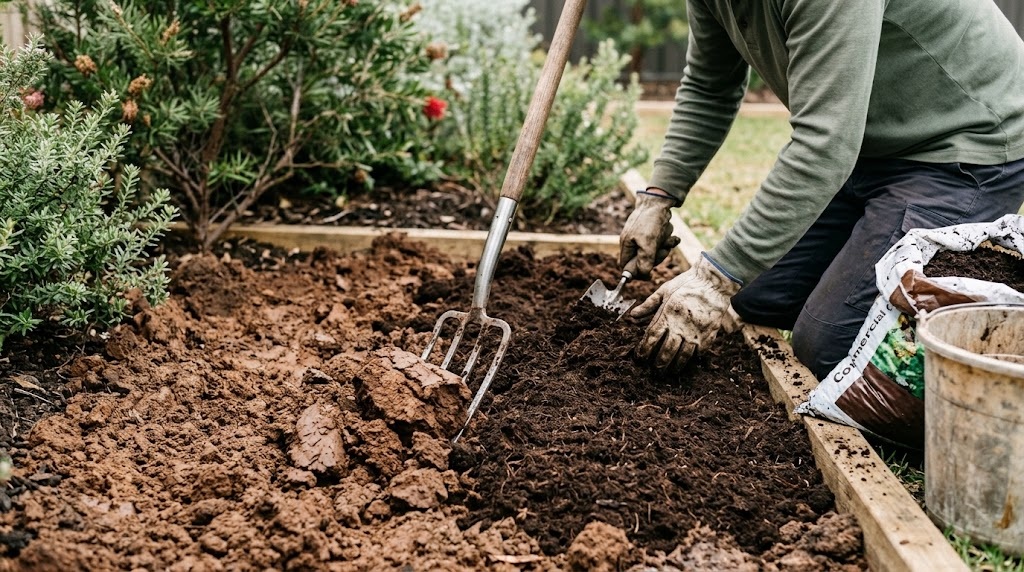
Heavy clay can create a very different gardening problem from Perth sand. Water may linger, the surface may seal, and digging can become difficult.
That means water holding capacity is not always the first thing to increase. Clay soil improvement often starts with structure, aeration, and workable moisture.
A soil improver can add organic material to the root zone. The useful question is whether it supports the clay’s structure without making unsupported drainage promises.
Understand the Clay Problem Before Adding Anything
Is More Water Holding Capacity Always the Goal?
Heavy clay already has fine particles that can retain moisture. In some beds, adding even more water retention is not the main objective.
Instead, look at how the soil behaves. Does it remain sticky after rain? Does it become hard when dry? Do roots struggle to move through it?
These observations should guide clay soil improvement.
The phrase water holding capacity still matters, but it needs context. Better moisture balance is more useful than simply trying to hold more water.
Where Can Organic Matter Help?
Organic material can support a more workable soil structure. It can also create a better environment for soil life.
DSATCO presents Piggypost soil amendment as a mature compost soil improver. The product page says it supports soil structure, fertility, nutrient retention, and moisture retention.
Those are broad soil-improvement claims. The page does not promise a specific heavy-clay outcome.
For that reason, Piggypost can be discussed as an organic amendment for clay soil improvement without claiming guaranteed drainage correction.
Work With Clay When Conditions Are Suitable
How Should Piggypost Be Added?
Clay is easiest to damage when it is saturated and compressed. Avoid digging when each movement smears and compacts the soil.
Wait until the bed is workable. Then loosen the area gradually rather than forcing wet clay into dense slabs.
Incorporate Piggypost through the root zone according to the current product directions.
The goal is an even mix of existing soil and organic material. Avoid placing a concentrated pocket beneath a plant.
What Should Happen After Incorporation?
Once amended, allow the bed to settle naturally.
Observe how water enters and leaves the soil after irrigation or rain. This tells you more than a generic claim about moisture retention.
If water still ponds for long periods, the site may have a drainage problem beyond what organic amendment can solve.
Improving heavy clay should therefore remain site-specific. Soil amendment is one tool, not a substitute for correcting serious drainage issues.
Pair the Amendment With the Right Surface Cover
Which Surface Mulch Suits the Bed?
A soil improver works below the surface. Mulch performs a different job above it.
WA lupin mulch is presented as an organic garden mulch that adds organic matter as it breaks down.
In clay, surface management should still respond to how wet the bed remains after irrigation.
A mulch layer can protect the surface, but it should not hide persistent waterlogging.
A composted Triple-C mulch is another surface option. Its listed ingredients include cereal crops, chicken manure, and canola.
Choose between mulches by looking at the planting and the surface conditions.
The product page should guide the choice, not the assumption that all organic mulches behave identically.
For gardeners preferring a shredded straw-based surface layer, straw-based surface mulch is also listed by DSATCO.
Choose one surface approach that fits the planting. Do not stack products simply because they appear in the same range.
What About Clay Under Existing Lawn?
Existing turf needs a different treatment plan from an open garden bed.
DSATCO’s WA garden range separates garden mulches, soil improver, and lawn products by intended use.
That separation is useful on properties where compacted lawn soil sits beside heavy garden beds.
Each area should be managed according to its own product category and soil condition.
For established lawns, DSATCO Lawn Maximizer is presented as an organic top-dress fertiliser.
That product definition is different from Piggypost. It is also different from clay soil improvement in an open planting bed.
Plant selection also affects how a clay bed should be managed. Some plants tolerate heavier ground better than others.
Before changing the soil repeatedly, check whether the planned species actually suits the site’s drainage and seasonal moisture pattern.
Raised planting positions can sometimes help where the surface stays wet. That is a site-design choice, not a Piggypost claim.
Do not present the amendment as a cure for waterlogging. The client describes soil structure and moisture-retention benefits, not engineered drainage correction.
After planting, avoid judging the bed after a single watering event. Clay can behave differently after prolonged rain, warm weather, or a dry spell.
Look for a pattern over time. The soil should remain workable enough for roots while avoiding long periods of saturation around sensitive plants.
If the site has persistent standing water, consider whether grading, drainage, or plant selection needs professional attention.
That keeps heavy-clay management realistic. It also prevents a garden product from being credited with an unintended job.
Texture can also vary within one property. A low section may stay wet while a nearby raised area becomes firm and cracked.
Treating both places as identical can hide the real cause of poor plant performance.
Before applying more amendment, compare how each zone responds to water and cultivation. Look for differences in compaction and root movement.
If one area drains acceptably and another does not, the problem may be local rather than a property-wide soil issue.
A careful approach is especially important when planting trees or shrubs. Long-term root health depends on the surrounding soil, not just the planting hole.
The amendment should therefore support a broader workable zone without creating a soft pocket inside dense clay.
After planting, avoid repeatedly loosening the same area unless the soil condition shows a clear need.
Surface management, careful watering, and appropriate plant choice may be more useful than continued digging.
A stable improvement plan should become simpler over time, not more intensive.
This keeps moisture retention in perspective. The goal is a balanced root environment, not the highest possible moisture retention.
FAQs About Clay Soil Improvement
Does Piggypost Guarantee Better Drainage in Clay?
No drainage guarantee appears on the current Piggypost product page.
DSATCO states that Piggypost improves soil structure and moisture retention. Actual clay behaviour will depend on the site and existing drainage.
Can Piggypost Increase Water Holding Capacity?
DSATCO says Piggypost improves moisture retention.
In heavy clay, the more useful goal may be moisture balance rather than maximum water holding capacity. Assess the existing soil before adding amendments.
Should I Dig Clay While It Is Wet?
Avoid working clay while it is saturated.
Wet clay can smear and compact easily. Wait until the soil is workable enough to break apart without forming dense, sticky slabs.
Is Mulch Still Useful Over Clay?
Yes. Mulch can protect the soil surface and contribute organic matter as it breaks down.
Gardeners can see the full garden range before choosing a surface mulch that fits the planting.
Conclusion
Heavy clay needs a different mindset from sandy soil. The aim is not always to increase water retention.
Piggypost can add mature organic material and support soil structure within the role DSATCO describes. The final result still depends on the clay, drainage, planting, and site management.
If your bed stays wet or compacted, discuss clay soil options on 08 9671 1500.
Latest Posts
- How to Stage Bulk Bags For Soil Improvers Versus Lawn And Mulch
- How to Size Multi-Bed Garden Orders From Bulk Bag Coverage
- Coordinating Metro Stockists Sourcing and Bulk Transport for Large Projects
Reviews from
Happy Gardeners
 "Results have been spectacular. The grass has never looked healthier."
Rod


