

 Buy Online
 08 9671 1500
 office@dsatco.com
The Role of Triple-C Mulch in Improving Hydrophobic Non-Wetting Soils
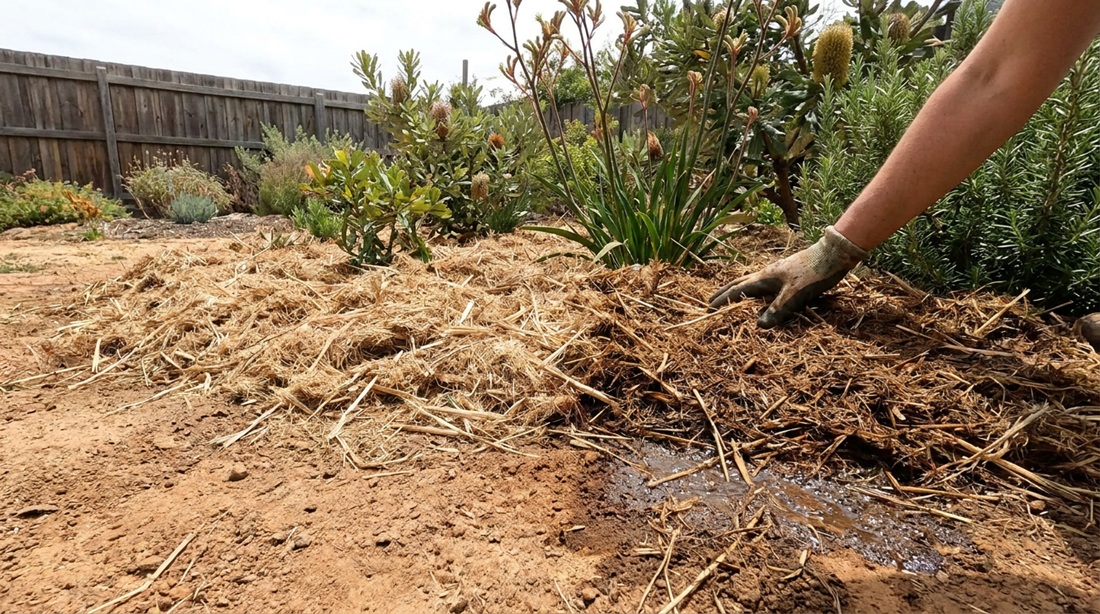
Water can behave strangely in dry garden beds. It may pool on the surface instead of soaking into the soil. In other areas, it can disappear through narrow channels and leave nearby soil dry.
This problem is especially relevant in sandy Western Australian soils. Sandy soil can become water repellent, also called hydrophobic or non-wetting. That makes even watering harder and can leave plant roots with uneven access to moisture.
For gardeners researching non-wetting soils WA conditions can make product choice confusing. This guide explains where Triple-C Mulch fits, its verified role, and when broader soil management may still be needed.
Understanding Hydrophobic Non-Wetting Soils
What Does Hydrophobic Soil Mean?
Hydrophobic soil resists water instead of absorbing it evenly. In a garden bed, water may bead, pool, or move sideways across the surface.
The term non-wetting soil describes the same practical problem. The soil does not wet evenly when rain or irrigation reaches it.
WA Department of Primary Industries and Regional Development research links water repellency with hydrophobic compounds coating soil particles. The issue is particularly associated with sandy surface soils.
For a home gardener, the important sign is uneven infiltration. If some patches stay dry after watering, the root zone may not receive moisture consistently.
Why Is Non-Wetting Soil Common in WA Gardens?
Many WA gardens contain sandy soils with limited water and nutrient holding capacity. Water Corporation also identifies sandy soils as commonly prone to water repellency.
That combination can make water management difficult. Irrigation may reach some parts of a bed whilst bypassing others.
Managing non-wetting soils WA gardeners encounter therefore starts with the soil itself. Mulch can support that work, but surface cover is only one part of soil management.
How Triple-C Fits the Problem
What Does DSATCO Say About Triple-C?
Triple-C Mulch is a composted blend of cereal crops, chicken manure, and canola. DSATCO describes it as organic, water-retaining, and designed for WA gardens.
The current product page also says Triple-C has the capacity to reverse non-wetting soils. That wording is important because it describes the product’s intended role without guaranteeing a result in every garden.
DSATCO also states that the mulch allows water to pass through while helping retain soil moisture. As the material breaks down, the company says it supports soil biology and adds organic material to the soil.
Those functions are relevant where the surface dries quickly. They can help create a more protected soil environment around established plants.
How Can Organic Mulch Support the Soil Surface?
Mulch forms a protective layer over exposed soil. This reduces direct exposure to sun and wind and helps the soil surface stay more stable between watering.
As an organic mulch breaks down, it also contributes organic material at the surface. This is different from a dedicated soil amendment that is mixed into the soil profile.
DSATCO positions Piggypost as a soil enhancer rather than a surface mulch. That distinction matters when poor soil structure needs attention below the mulch layer.
A gardener may therefore need to consider both surface protection and soil improvement. The right approach depends on how severely the soil repels water.
DSATCO focuses on organic mulch and garden products for Western Australian conditions. Its range includes products with different roles. Selection should follow the garden problem rather than a one-product approach.
Applying Triple-C Responsibly
What Should You Do Before Mulching Non-Wetting Soil?
Start by observing how water enters the bed. Water Corporation notes that hydrophobic sandy soils can pool water at the surface instead of absorbing it evenly.
If that behaviour is strong, mulch should not automatically be treated as the only correction. Water Corporation recommends wetting agents for sandy, water-repellent soils.
DSATCO focuses on organic mulch and garden products for Western Australian conditions. Its products have different stated roles in garden care.
Soil improvement may also be useful where the bed lacks organic matter or moisture-holding capacity. DSATCO Lupin Mulch has a different product profile. Choose it for its stated uses, not for the Triple-C non-wetting soil claim.
The key is to match the treatment to the problem. Surface mulch, soil improvement, and wetting support can play different roles.
How Should Triple-C Be Applied?
DSATCO’s instructions say to spread Triple-C over the desired garden area. The product guidance also says to leave clear space around the base of plants.
After application, DSATCO instructs gardeners to water the mulch thoroughly. Gardeners should follow the current product page for the recommended depth, coverage, and safety directions.
If your priority is general moisture retention, Sugar Cane Mulch is a separate raw straw-based option. Its product page focuses on moisture retention, weed reduction, and soil improvement as it breaks down.
For people comparing several garden products, the DSATCO range includes options for different garden tasks. Product selection should follow the soil condition, planting type, and intended use.
Frequently Asked Questions
Can Triple-C Help Hydrophobic Soil on Its Own?
DSATCO says Triple-C has the capacity to reverse non-wetting soils. That is a verified product statement, but it should not be read as a universal guarantee.
Severe water repellency may need additional management. Water Corporation advises wetting agents for hydrophobic sandy soils and also recommends improving sandy soil with organic matter.
Triple-C can therefore be considered part of a broader approach. The condition of the existing soil should guide what else is needed.
Is Triple-C a Wetting Agent?
No. DSATCO presents Triple-C as an organic mulch made from composted plant materials and chicken manure.
A wetting agent is a separate soil treatment designed to help water spread through water-repellent soil. Gardeners should not treat the two products as interchangeable.
This distinction is useful when dealing with non-wetting soils WA gardeners see after dry periods. Mulch protects the surface, whilst a wetting agent directly targets water infiltration.
Is Triple-C the Only DSATCO Option for Improving Garden Soil?
No. DSATCO has several products with different stated purposes.
Piggypost is presented as a soil enhancer. DSATCO Lupin Mulch is presented as an organic mulch supporting soil health and moisture retention.
The range also includes products for other garden tasks. Their stated purposes differ, so product choice should follow the problem you are addressing.
This distinction is especially useful with water-repellent soil. A mulch selected for another purpose should not inherit Triple-C’s non-wetting soil claim.
Where Can Gardeners Find Triple-C Products?
DSATCO lists Triple-C within its current product range. Checking the range page helps confirm the products currently presented online.
Availability can change over time. Check the relevant product page before travelling, ordering, or relying on older stock information.
Gardeners should also confirm that the product name matches the formulation they intend to use. This avoids confusing products with different stated roles.
For gardeners seeking the same named blend through the Vivantes range, Vivantes Triple-C Mulch is also listed by DSATCO. Its page describes the same core blend of cereal crops, chicken manure, and canola.
Conclusion
What Should WA Gardeners Remember?
Triple-C has a clear place in DSATCO’s range. The company specifically presents it as a water-retaining organic mulch with the capacity to address non-wetting soil.
That does not mean every hydrophobic bed will respond to mulch alone. Severe water repellency may require soil improvement, a wetting agent, or another targeted management step.
For non-wetting soils WA gardeners are trying to improve, the most useful approach is diagnostic. Check how water behaves first, then choose products that match the actual soil problem.
Where Can You Get Product Guidance?
Use the current DSATCO product instructions before applying Triple-C or any other garden product. This keeps application and safety decisions tied to the manufacturer’s latest guidance.
For product-specific questions or help choosing between options, contact DSATCO about product suitability on 08 9671 1500.
Latest Posts
- How to Stage Bulk Bags For Soil Improvers Versus Lawn And Mulch
- How to Size Multi-Bed Garden Orders From Bulk Bag Coverage
- Coordinating Metro Stockists Sourcing and Bulk Transport for Large Projects
Reviews from
Happy Gardeners
 "Results have been spectacular. The grass has never looked healthier."
Rod


