

 Buy Online
 08 9671 1500
 office@dsatco.com
Supporting Microscopic Soil Biota in Suburban Perth Gardens
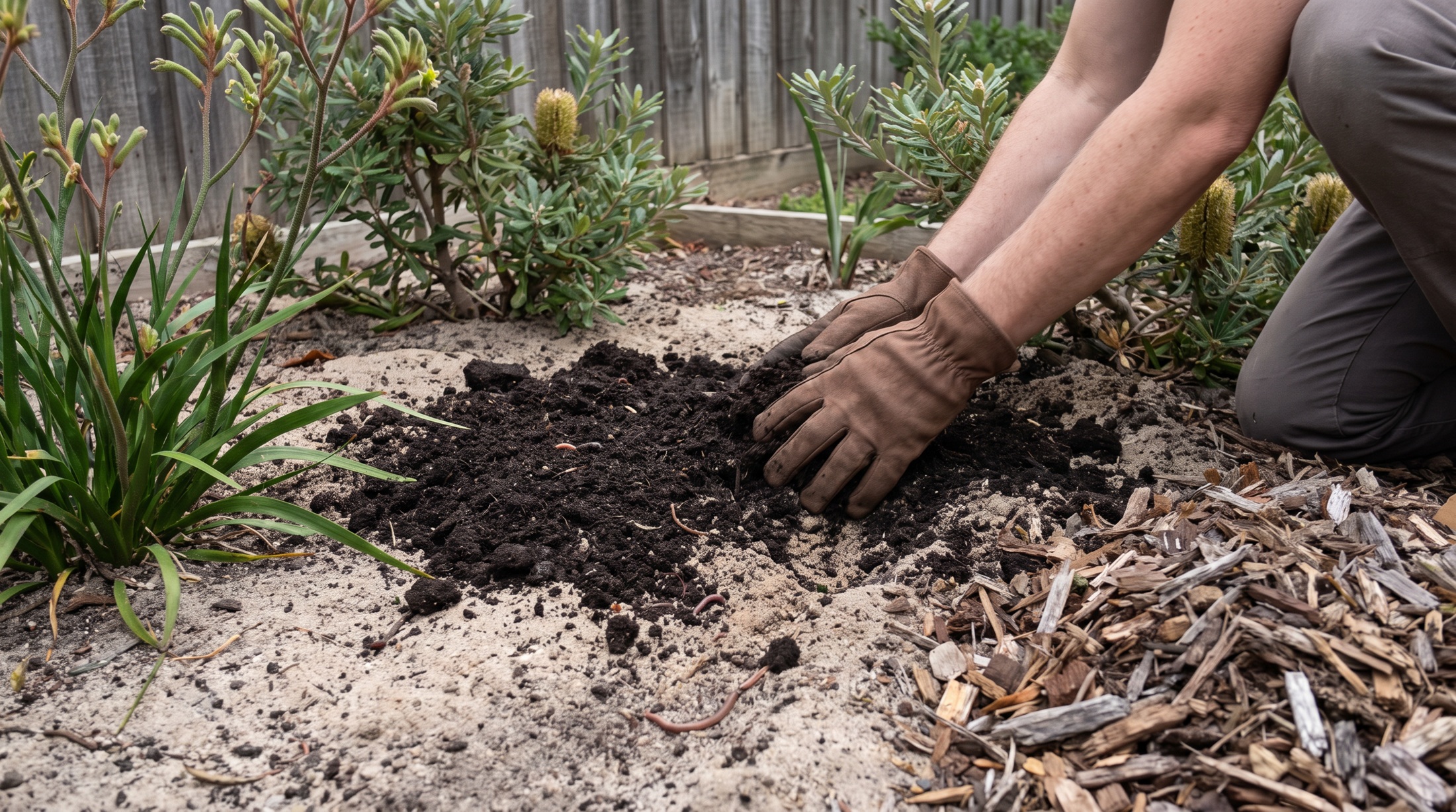
Healthy-looking plants depend on more than what is visible above ground. Beneath the surface, roots share soil with a living community. That community helps organic material break down around the root zone.
In suburban Perth gardens, sandy soil can make that environment harder to maintain. Fast drainage and low organic matter can weaken those conditions. Gardeners often need to keep rebuilding the soil environment.
Soil biota activity is best approached as a habitat question rather than a promise of a measurable increase. The practical goal is to provide organic material, moisture, roots, and surface protection. Each input should suit the site.
This guide is for gardeners searching for organic soil health WA guidance without relying on laboratory figures. It also shows where compost, mulch, and lawn products have different roles.
What Soil Biota Needs in a Perth Garden
What Does Soil Biota Mean
Soil biota is the community of living organisms in soil. It includes microscopic organisms as well as larger soil life that interacts with roots and decomposing organic material.
Much of that community cannot be judged by looking at the soil surface. A gardener can instead focus on the conditions that make a living root zone possible.
DSATCO Piggypost is described as a mature soil improver containing living microbes and humus-rich organic material. The current product page positions it as food for soil bacteria. It also describes support for soil structure and moisture retention.
That does not mean every garden will show the same soil biota activity. Soil type, moisture, roots, existing organic matter, and garden management all influence what happens below ground.
Why Sandy Soil Needs Ongoing Organic Inputs
Perth soils are often sandy and free draining. Water can move through the profile quickly, while organic material continues decomposing in the warm Western Australian climate.
Improving sandy WA soil therefore works better as an ongoing process than a one-off fix. Gardeners can add organic material, keep soil covered, and maintain planting that supports an active root zone.
Organic matter for soil life comes from materials that can decompose and become part of the soil system. Compost, plant-based mulch, roots, and other organic inputs each contribute in different ways.
This approach supports organic soil health in WA gardens without depending on a single product or biological claim.
Build a Better Habitat With Organic Matter
Start With the Soil Beneath the Mulch
When the soil itself is depleted, surface mulch alone may not address everything happening in the root zone. A mature soil improver can add organic material directly where plants are growing.
Piggypost is intended for that soil-improvement role. Its live page describes mature compost made from pig manure and other organic materials. Living microbes are present in the finished product.
Living soil microbes are part of the wider soil community, but their activity depends on the environment around them. Moisture, temperature, food sources, roots, and soil conditions all matter.
For soil biology in Perth gardens, avoid focusing on promised microbe counts. Focus instead on the habitat around them. It is whether the soil provides the organic matter and habitat needed for soil life to function.
Keep Organic Material Working at the Surface
Surface mulch has a different job. It covers exposed soil and becomes part of the organic cycle as it decomposes.
DSATCO Triple-C Mulch is a composted blend of cereal crops, chicken manure, and canola. Its product page describes the mulch as supporting soil biology while its organic material gradually breaks down.
A second option is DSATCO Lupin Mulch, which is made from Western Australian lupin plant material with chicken manure. The site describes it as breaking down into humus and contributing to soil structure and biology.
These materials can support soil biota activity by adding organic matter and helping create a covered surface environment. They should not be presented as producing a guaranteed microbial result in every garden.
At the broader business level, DSATCO focuses on organic garden products sourced from Western Australian agricultural materials. That local product context is relevant when choosing inputs for Perth and regional WA gardens.
Match the Product to the Garden Area
Garden Beds Need Surface Cover and Soil Support
A planted bed may need both improved soil beneath the surface and a protective organic layer above it. Those are related jobs, but they are not identical.
If the soil lacks organic material, begin by considering a soil improver. After that, choose a mulch that suits the bed and the type of organic material you want at the surface.
For a raw straw-based option, DSATCO Sugar Cane Mulch is made from Western Australian sugar cane. The site describes it as shredded for spreading. Its page says it contributes to soil structure and soil biology as the material breaks down.
This gives gardeners more than one pathway for organic matter for soil life. The best choice depends on whether the immediate need is soil amendment, surface cover, or both.
Existing Lawns Need a Different Approach
Established turf should not be treated as though it were an open garden bed. A thick garden-bed mulch can interfere with the way an existing lawn is managed.
DSATCO Lawn Maximizer is specifically presented as an organic top-dress fertiliser for existing lawns. Its formulation includes lupin chaff, canola straw, and chicken manure.
The product page also discusses soil biology as part of its lawn role. That makes it more relevant to organic soil health in WA lawns than applying garden-bed mulch over established turf.
Improving sandy WA soil under a lawn still depends on the whole system. Grass roots, irrigation, organic inputs, soil condition, and regular care all influence the root zone.
FAQs About Soil Biota in Perth Gardens
Can You See Soil Biota Working
Not directly in most cases. Many soil organisms are microscopic. A home gardener cannot reliably assess soil biota activity by appearance alone.
Instead, focus on practical soil conditions. Maintain organic matter and avoid leaving soil unnecessarily bare. Support healthy roots and manage moisture for your plants and soil type.
If a scientific measurement is required, that would need appropriate soil testing rather than a visual estimate.
Does Organic Mulch Feed Soil Life
Organic mulch provides material that can decompose over time. That decomposing material becomes part of the food and habitat system used by soil organisms.
DSATCO Lupin Mulch is a plant-based mulch that contributes humus as it breaks down. The current site also describes support for soil biology.
Living soil microbes are not a reason to expect instant visible changes. Soil biology develops within a larger environment that includes roots, moisture, organic matter, and the physical soil itself.
Soil biology in Perth gardens should be viewed within overall soil management. It is not a stand-alone product outcome.
Should Every Garden Area Use the Same Organic Product
No. A soil improver, garden-bed mulch, and lawn top dressing have different intended uses.
A gardener working on several areas can compare the current DSATCO product range by application. This helps keep product selection tied to the actual garden problem rather than assuming one material suits every surface.
Match each product to the area being improved. This practical approach supports organic soil health in WA gardens over time.
Conclusion
Focus on Habitat, Not Hype
Supporting microscopic soil life starts with the environment around it. Organic matter, moisture, roots, surface cover, and ongoing garden care all contribute to that habitat.
Soil biota activity should not be treated as a guaranteed number or instant result. A better approach is to improve the root zone gradually. Choose organic inputs for the role they are designed to perform.
Choose Products by Their Intended Role
Use a mature soil improver when the soil itself needs organic matter. Use an organic mulch when the surface needs cover and ongoing decomposable material. Use a lawn product for established turf.
For help matching Piggypost, mulch, or lawn top dressing, discuss suitable organic inputs. Call 08 9671 1500 to discuss your garden area.
Latest Posts
- How to Stage Bulk Bags For Soil Improvers Versus Lawn And Mulch
- How to Size Multi-Bed Garden Orders From Bulk Bag Coverage
- Coordinating Metro Stockists Sourcing and Bulk Transport for Large Projects
Reviews from
Happy Gardeners
 "Results have been spectacular. The grass has never looked healthier."
Rod


