

 Buy Online
 08 9671 1500
 office@dsatco.com
How Triple-C Mulch Helps Reverse Non-Wetting Soils Common Across WA
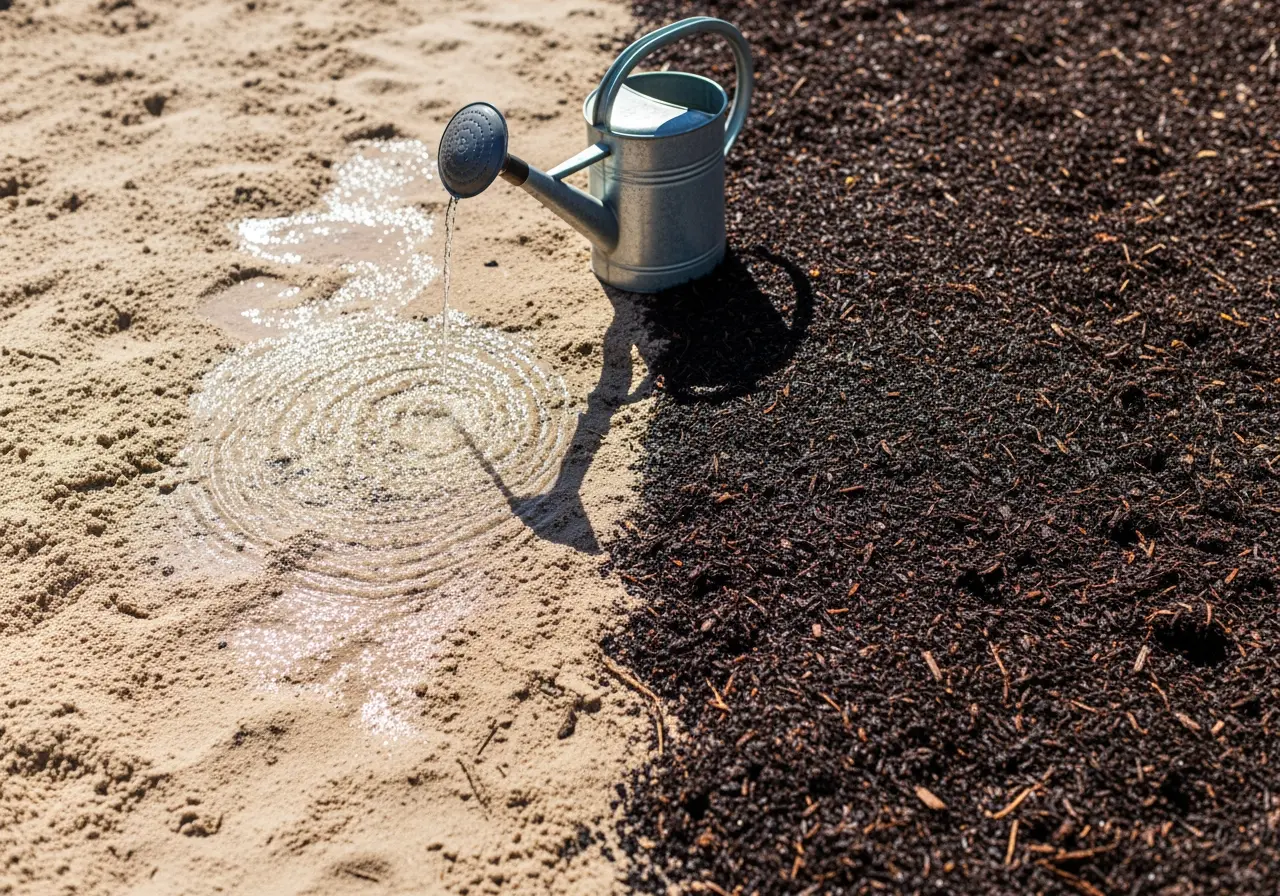
Non-wetting soil does not just frustrate gardeners. It can kill plants. Water beads up on the surface and runs off rather than soaking in, leaving roots dry even after heavy watering. In Perth and across the Swan Coastal Plain, this problem affects vast stretches of suburban and rural land, making it one of the most widespread gardening challenges in WA.
Fixing non-wetting soils WA gardeners battle does not require expensive soil replacement or complex chemical treatments. It starts with understanding why your soil repels water in the first place, and then choosing the right organic mulch to reverse the problem naturally.
This practical guide walks through the causes of water repellent soil Perth gardens commonly develop, why standard solutions fall short, and how to use Triple-C Mulch to correct the problem for good.
What Makes WA Soils Non-Wetting
Non-wetting is not random. It develops through a predictable process tied directly to WA’s native vegetation and dry climate.
How Hydrophobic Coatings Form on Sand
Non-wetting soil develops when waxy organic compounds coat individual sand particles. These compounds come from decomposing plant material, particularly WA native species like Banksia, Eucalyptus, and Tea Tree. When these plants break down in a dry climate, they release hydrophobic substances that bond to sand grains and repel water.
Swan Coastal Plain soil is especially vulnerable to this process. The region is dominated by coarse sand with almost no clay content. Without clay particles to absorb and hold water, even a thin coating of waxy residue can turn the entire topsoil layer water-repellent. Fixing non-wetting soils WA wide requires understanding that this is a structural problem, not just a surface one.
Recognising Water Repellent Soil in Your Garden
The signs of water repellent soil Perth gardeners notice first are usually subtle. Water pools on the surface or runs sideways rather than soaking in. Dig down 5 to 10cm and you often find bone-dry sand beneath a barely damp surface crust. Plants in affected areas show classic drought stress, including wilting, yellowing leaves, and stunted growth, regardless of how often you water.
Knowing you have a non-wetting problem is the first step. The second is choosing a soil wetting mulch Perth gardens can rely on for structural correction rather than temporary relief. DSATCO Triple-C Mulch is one of the best mulch for Perth gardens dealing with the hydrophobic conditions that develop in WA’s sandy soils.
Why Common Solutions Fall Short
Most gardeners try three approaches when they discover non-wetting soil: water more frequently, apply wetting agents, or dig in compost. Each helps temporarily. None fixes the underlying problem.
The Limits of Wetting Agents
Soil wetting agents work by reducing surface tension, forcing water past the hydrophobic layer. They help for a period of time, but you need to reapply regularly because the waxy coating on sand particles remains. You are managing the symptom rather than performing a true hydrophobic soil treatment Perth gardens need for long-term health. The cost and effort accumulate, and plants remain vulnerable the moment the chemical breaks down.
How the Wrong Mulch Can Make Things Worse
Applying raw organic mulch can actually intensify non-wetting if the product is not properly composted. Uncomposted organic matter adds more of the same waxy compounds as it decomposes. Some gardeners find their non-wetting problem gets worse months after applying standard wood chip mulch or fresh compost. This is why organic mulch water penetration properties matter enormously when selecting a product for non-wetting correction.
For temporary cover on vegetable beds or sensitive seasonal plantings, DSATCO Sugar Cane Mulch is a lightweight option that decomposes cleanly without contributing to hydrophobic coatings. For structural soil correction, however, a fully composted blend is what you need, and finding the right bulk mulch suppliers Perth gardeners can trust makes the difference between a quick fix and lasting results.
How Triple-C Mulch Reverses Non-Wetting Soil
Triple-C Mulch works through three distinct mechanisms to address water repellent soil Perth gardens commonly develop. Each mechanism reinforces the others, creating a comprehensive approach to hydrophobic soil treatment Perth gardeners can rely on year after year.
Physical and Biological Reversal
The weight and texture of Triple-C Mulch physically disrupts the waxy coating on sand particles when you work it lightly into the topsoil. This immediately improves organic mulch water penetration in the critical top 5 to 10cm where most feeder roots grow. At the same time, the composted chicken manure in the blend introduces beneficial bacteria and fungi that actively consume the hydrophobic compounds bonded to your sand grains.
DSATCO is a Western Australian company that produces premium organic mulch and garden products, grown and sourced 100% from WA farms. The Triple-C blend is composted until hydrophobic precursors have broken down before it leaves the facility. The finished product reaches your garden as stable humus, not raw organic matter that will create new water repellence as it decomposes.
Building Long-Term Soil Sponginess
As Triple-C continues breaking down, it adds humus to the topsoil. Humus acts like a sponge, creating pore spaces in sandy soil that give water a pathway to move downward rather than pooling on the surface. Soil that once shed water completely becomes one that absorbs it readily and retains it in the root zone. This is fixing non-wetting soils WA style. It does not mask the problem with temporary chemistry but rebuilds the soil’s physical and biological structure from the ground up.
This same composted blend also makes Triple-C one of the best mulch to stop weeds taking hold in newly corrected soil. As water penetration improves and your plants establish stronger root systems, the dense mulch layer simultaneously suppresses weed germination across each mulch for garden bed application.
How to Apply Triple-C Mulch for Non-Wetting Correction
Technique matters when using Triple-C to reverse non-wetting soil. Applied correctly, you will see improvement within weeks. Applied carelessly, results are minimal.
Preparing the Soil Before Mulching
Water the area thoroughly 24 hours before applying mulch. Use a wetting agent if necessary to get initial moisture into the dry sand. You want the soil damp, not dust-dry, before covering it. Remove old mulch if it is more than 12 months old. Aged mulch often contributes to non-wetting as it begins breaking down in the wrong way. Lightly cultivate the top 2 to 3cm with a garden fork to physically disrupt the waxy surface crust.
For gardens with severely depleted soil structure beneath the non-wetting layer, combining Triple-C with DSATCO Piggypost delivers the strongest long-term result. Dig Piggypost into the top 100 to 150mm first, then apply Triple-C at 40 to 50mm depth on top. This feeds the soil from below and protects it from above simultaneously. Piggypost is a mature compost that introduces humus and living microbes directly into the root zone, which accelerates the breakdown of hydrophobic compounds bonded to sand grains.
Step-by-Step Application Method
Apply Triple-C at 40 to 50mm depth across the affected area. Water it in gently using a soft spray setting after spreading. This settles the mulch and activates the microbial processes that begin breaking down the waxy soil coating. Keep mulch 50 to 100mm away from plant stems to allow air circulation and prevent collar rot, particularly around roses and native shrubs.
The best timing for a non-wetting correction application is late autumn (April to May) before winter rains begin, or early spring (August to September) before the heat arrives. Both windows allow the mulch time to settle and begin working before the critical wet or hot season. Whether you are treating a small mulch for garden bed area or a large landscaped section, the application principles remain the same.
What to Expect After Applying Triple-C Mulch
Non-wetting soil does not reverse overnight. You will see progress faster than most gardeners expect, but this is a soil-building process rather than an instant fix.
Early Improvement in Weeks One to Six
Within the first two weeks, water penetration improves as Triple-C physically disrupts the surface wax layer. You will notice water starting to soak into the soil rather than beading off or running sideways. By weeks three to six, microbial activity continues to develop as the composted manure releases beneficial organisms into the soil. This is when noticeable improvement typically appears. Water penetrates more evenly, plants respond with stronger growth, and foliage colour begins to improve.
For lawn areas also showing water repellence, a targeted treatment using DSATCO Lawn Maximizer as a light top-dressing is more appropriate than heavy mulch over turf. It improves soil wetting Perth lawns need without smothering the grass.
Long-Term Soil Transformation
By months two to four, soil structure begins changing as humus builds throughout the topsoil. You will need less frequent watering because the soil now holds moisture instead of letting it drain straight through. By the end of the first full year, non-wetting becomes noticeably less severe. Many WA gardeners find they can reduce or eliminate wetting agent applications entirely after two consecutive seasons of consistent Triple-C mulching, making this approach a strong choice among the best mulch for Perth gardens battling sandy soil challenges.
Maintaining Your Non-Wetting Fix Long Term
Fixing non-wetting soils WA gardeners face is an ongoing process rather than a single treatment. The conditions that create water repellence, namely sandy soil, dry climate, and decomposing organic matter, do not disappear.
How to Monitor Soil Moisture Over Time
Test soil moisture regularly after watering. Push a long screwdriver or moisture probe into the soil. It should penetrate easily to 15 to 20cm if your non-wetting correction is working. If you hit dry, hard sand at 5 to 10cm, water repellent soil Perth conditions are re-establishing and it is time to refresh your mulch layer. Reapply Triple-C every 12 months to maintain the protective and corrective barrier. Pairing this with an annual Piggypost top-up beneath the mulch keeps soil biology active and continues breaking down any new hydrophobic compounds forming on sand grains. Over time, this Piggypost and Triple-C combination becomes the foundation of a self-sustaining soil system.
Keeping Triple-C Available Through Major Retailers
If you prefer to shop at a major retailer for convenience, Vivantes Triple-C Mulch is available at Bunnings and delivers the same composted formula as DSATCO Triple-C. Having it readily accessible means you can top up your mulch layer as soon as the soil starts drying out, before non-wetting can re-establish through the season.
Conclusion
Water repellent soil Perth gardeners deal with can be reversed naturally with the right approach. Triple-C Mulch works on all three causes of non-wetting simultaneously: physical disruption of waxy coatings, microbial breakdown of hydrophobic compounds, and long-term humus building. Applied at 40 to 50mm depth before winter rains or spring growth, it delivers improvement within weeks and lasting soil transformation over the following year.
Give your soil the foundation it needs. Shop online or contact the team on 08 9671 1500 to find the right product for your beds.
Latest Posts
- How to Stage Bulk Bags For Soil Improvers Versus Lawn And Mulch
- How to Size Multi-Bed Garden Orders From Bulk Bag Coverage
- Coordinating Metro Stockists Sourcing and Bulk Transport for Large Projects
Reviews from
Happy Gardeners
 "Results have been spectacular. The grass has never looked healthier."
Rod


