

 Buy Online
 08 9671 1500
 office@dsatco.com
How to Blend Piggypost Into Existing Garden Beds to Support Earthworm Activity
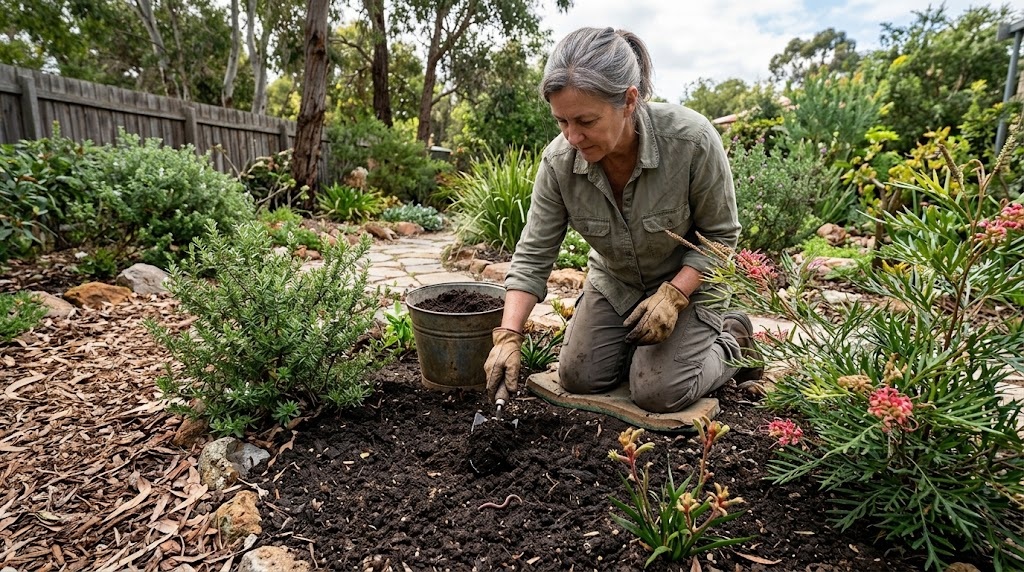
Finding earthworms in a garden bed often feels like a good sign. It suggests the soil offers at least some food, moisture, and shelter.
But earthworm activity is not something a gardener can force with one product. Temperature, moisture, organic matter, roots, and disturbance all affect what happens below ground.
For existing beds, garden bed preparation should focus on improving habitat without damaging the plants already there. Piggypost can fit that plan as a soil improver.
Think Habitat First, Not Worm Numbers
What Conditions Support Earthworms?
Earthworms need a workable soil environment. Organic material can provide food, while moisture and surface cover can help protect the habitat.
That does not mean every amended bed will show the same biological response.
A shaded bed, exposed sandy bed, and heavily compacted site can respond very differently.
The useful goal is to improve soil conditions. Worm activity can then be treated as one part of the wider soil system.
What Does DSATCO Say About Piggypost?
DSATCO describes humus-rich Piggypost as a mature soil improver containing living microbes.
The product page also says its humus helps create an environment for worms and other larger soil biology.
That is the supported claim. It should not be expanded into a promise of maximum earthworm activity.
Piggypost does not need an exaggerated biological claim to have a clear role in garden bed preparation.
Blend Soil Improver Without Rebuilding the Whole Bed
How Can Piggypost Be Added Around Established Plants?
An established bed is different from an empty planting area. Roots already occupy the soil, so aggressive digging can do more harm than good.
Work in small sections between plants. Gently open the upper soil without cutting major roots.
Blend the soil improver into those workable areas according to current product directions.
Keep the material away from direct buildup against stems and trunks. The aim is to improve soil around roots, not bury the plant base.
How Much Disturbance Is Useful?
More cultivation does not automatically create better garden bed preparation.
If the soil already has useful structure, preserve it where possible. Add organic material with the least disruption needed.
After incorporation, water according to the needs of the plants and soil.
Then protect the soil surface. A covered root zone can help maintain a more stable environment than bare soil.
Protect the Improved Soil Surface
Which Mulch Can Follow Piggypost?
DSATCO offers several mulches with different ingredients and textures.
Lupin Mulch is based on WA lupin plant material with chicken manure. The site says it supports soil biology as it breaks down.
That surface role can complement, rather than replace, the soil-improvement work below.
Keep mulch selection tied to the plants and surface conditions in the established bed.
Triple-C Mulch combines cereal crops, chicken manure, and canola. It is presented as an organic surface mulch for WA gardens.
Its formulation is different from Lupin Mulch, so the two should not be treated as interchangeable names.
Choosing one clear surface product also keeps maintenance simple around established roots.
A shredded sugar cane mulch is another surface option. It is designed to cover garden soil and break down over time.
Use one that fits the bed. The aim is not to create the most complicated product stack.
Should Lawn Areas Be Treated the Same Way?
No. Existing lawn and established garden beds are different applications.
DSATCO product range is grouped by intended use, including a separate lawn product.
That helps prevent a garden-bed routine from being copied directly onto turf.
The soil surface, root system, and maintenance method are different in an established lawn.
For turf, lawn top-dress fertiliser is the product DSATCO presents for established lawns.
That keeps garden bed preparation advice from being stretched into a lawn treatment that the article has not verified.
There are also useful soil signs that do not involve counting worms. A bed can become easier to work, hold moisture more evenly, and support steadier root growth.
Organic fragments may begin integrating into the upper soil rather than sitting unchanged on the surface.
These changes are observations, not guaranteed outcomes from one product. They should be considered alongside watering, mulch, plant cover, and seasonal conditions.
Avoid digging through the bed simply to look for worms. Repeated inspection can disturb the habitat you are trying to support.
Instead, notice worms when they appear during normal gardening tasks. Treat their presence as one clue among many.
If an established bed has no visible worms, that does not prove the soil improver has failed. Local soil conditions and weather can strongly affect where worms are active.
A habitat-first approach is more useful than chasing a maximum biological result. It also keeps the article aligned with the product language on the client website.
Seasonal conditions can also change what you see. Worms may move deeper when the surface becomes hot or dry, then become easier to notice after moisture returns.
That makes a single inspection a poor basis for judging the bed.
Focus instead on maintaining reasonable moisture, surface cover, and organic inputs that suit the plants already growing there.
Avoid overwatering simply to encourage worms. Plant health and soil drainage should remain the main priorities.
The same caution applies to adding more compost. Extra product is not automatically better for earthworm activity.
Use bed preparation to solve an actual soil need, then allow time for the soil to settle and respond.
This approach keeps the product in its intended role and avoids turning normal soil biology into a marketing promise.
The same principle applies when adding new plants later. Open only the space needed for the root ball and avoid turning over the entire bed.
If the surrounding soil is already friable and protected, preserving that condition can be more useful than starting again.
When weeds are removed, fill the disturbed spot gently and restore the mulch cover.
These small maintenance habits support continuity in the root zone. They also reduce unnecessary disturbance around worms, roots, and microbial communities.
For an established garden, consistency is usually more practical than repeated major interventions.
FAQs About Earthworm Activity and Garden Bed Preparation
Does Piggypost Add Earthworms to the Garden?
The current product page does not say Piggypost supplies earthworms.
It says the product’s humus helps create an environment for worms and other macro biology.
Can I Guarantee More Worms After Application?
No. Worm activity depends on the conditions already present in the garden.
Moisture, organic material, soil texture, temperature, and disturbance can all influence the habitat.
Is Piggypost a Mulch for Existing Beds?
No. Piggypost is presented as a soil improver.
A separate surface mulch can be added after the soil has been amended.
Where Can I Check the Other DSATCO Products?
Gardeners can explore DSATCO products and read the current product pages for each application.
That is the safest way to compare soil improver, mulch, and lawn product roles.
Conclusion
Supporting soil life starts with habitat, not a target number. Organic matter, moisture, cover, and gentle soil management all contribute to that habitat.
Piggypost can add mature organic material within the soil. Surface mulch can then protect the bed above.
For an established bed with roots already in place, get established-bed guidance on 08 9671 1500.
Latest Posts
- How to Stage Bulk Bags For Soil Improvers Versus Lawn And Mulch
- How to Size Multi-Bed Garden Orders From Bulk Bag Coverage
- Coordinating Metro Stockists Sourcing and Bulk Transport for Large Projects
Reviews from
Happy Gardeners
 "Results have been spectacular. The grass has never looked healthier."
Rod


