

 Buy Online
 08 9671 1500
 office@dsatco.com
How Composted Pig Manure and Humus Help Rebuild Degraded Garden Soils
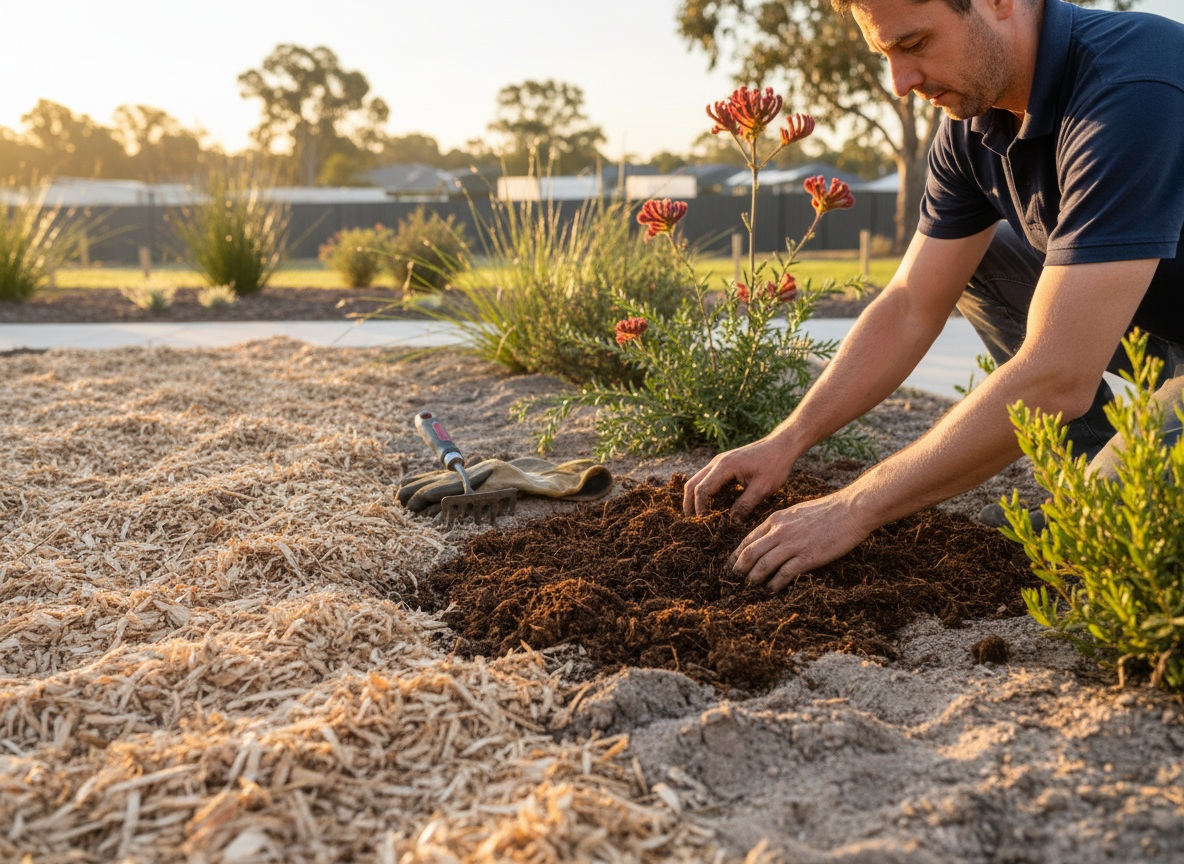
A tired garden bed often shows the same warning signs. Water disappears quickly, soil feels lifeless, and plants struggle to establish evenly.
Western Australian soils can make these problems more obvious. Sandy ground may drain quickly, while neglected beds can lose useful organic matter over time.
For gardeners researching composted pig manure, the important question is not how strong the product sounds. The real question is how mature organic matter changes the soil environment. Soil humus building starts by improving what surrounds the roots.
Why Degraded Soil Needs More Than Fertiliser
Humus Changes the Root Zone
Humus is stable organic material formed after decomposition. It becomes part of the soil rather than sitting on the surface.
For soil humus building, this matters because humus can support better soil structure and moisture retention. It also provides organic material for soil life.
DSATCO describes its mature compost soil improver as a product that adds humus and living microbes to soil. The current page positions Piggypost as a soil amendment, not a surface mulch.
That distinction is important in degraded beds. A surface cover can protect soil, but a soil improver works within the root zone.
Mature Compost Is Different From Fresh Manure
Composted pig manure has already moved through a controlled composting process. DSATCO says its process transforms raw manure and organic materials into mature compost.
The product page also states that the composting process eliminates pathogens and odours. That is a client claim about the finished product, not a blanket claim about all manure products.
Piggypost should therefore be described as mature composted material. It should not be described as raw pig manure.
The current Piggypost page does not list straw as an ingredient. For accuracy, this article does not claim that Piggypost contains straw.
Build From Below, Protect From Above
Use a Soil Improver Inside the Soil
Degraded soil needs organic matter where roots can access the improved soil environment. This is where composted pig manure can have a practical role.
Piggypost is intended to be incorporated into soil. The current product page describes it as supporting soil structure, fertility, nutrient retention, and moisture retention.
That makes it relevant when the goal is soil humus building rather than simple surface coverage.
Once the soil has been amended, a separate mulch can protect the surface. A WA sugar cane mulch is one surface option listed by DSATCO for garden beds.
Add Surface Mulch for Ongoing Protection
Surface mulch and composted soil improver should not be treated as interchangeable products. They do different jobs.
DSATCO Lupin Mulch is presented as an organic surface mulch made from WA lupin plant material with chicken manure. The site says it breaks down into humus over time.
That makes organic lupin mulch relevant after the root zone has been improved. It can cover the soil while contributing organic material as it decomposes.
Triple-C has a different formulation. DSATCO describes it as a blend of cereal crops, chicken manure, and canola.
That ingredient difference matters when choosing a surface layer. A gardener should compare the bed’s needs before selecting a mulch.
The goal is not to use every organic product. It is to match the material to the job.
For mixed garden beds, Triple-C organic mulch can be considered as a surface layer. It should still be chosen for its listed role, not as a substitute for Piggypost inside the soil.
Keep the Recovery Process Practical
Match the Product to the Garden Area
The best recovery plan starts by identifying the problem area. A garden bed, vegetable patch, and existing lawn do not need the same product.
DSATCO is a Western Australian producer of organic garden products for different soil and surface applications. Its product pages separate soil improvers, garden mulches, and lawn products by intended use.
That separation helps prevent awkward product choices. It also keeps claims tied to how the client presents each product.
A clear product role also makes future maintenance easier. Gardeners can repeat the right task without confusing mulch with soil amendment.
Existing lawns are a good example. Piggypost is a soil improver, while DSATCO presents its organic lawn top dressing for use on established lawns.
Garden recovery becomes easier to plan when each product has one clear job.
Watch the Soil, Not Marketing Promises
Degraded soil rarely changes because of one dramatic input. A more useful approach is to improve the root zone, keep the surface protected, and observe the soil over time.
Look for practical signs such as better workability, improved moisture behaviour, and stronger root establishment. These observations are more useful than unsupported claims about guaranteed results.
If several DSATCO products could fit the job, gardeners can browse the product range. Compare each product page before choosing.
This also helps separate mature compost from mulch. Both can contribute organic matter, but they are applied for different purposes.
A simple soil check can keep this process grounded. Take a small handful from the root zone when the soil is slightly moist.
Notice whether it falls apart immediately, forms a hard lump, or has a loose crumb structure. Look for roots and organic fragments.
These observations do not produce a laboratory diagnosis. They do show whether the bed is becoming easier to work.
Also watch how the surface behaves after watering. Rapid drying can suggest that surface protection still needs attention.
Plant response should be read cautiously. A plant can struggle because of light, irrigation, pests, or root damage as well as soil condition.
That is why a soil-rebuilding plan should stay focused on the soil itself. Improve structure, add appropriate organic matter, and keep the surface managed.
Avoid changing several variables at once. A simpler approach makes it easier to understand what is helping the bed.
Keep records simple if the bed has been a long-term problem. Note what was added, where it was used, and how the soil behaved later.
This does not need to become a scientific trial. It simply helps prevent repeated applications based on memory or guesswork.
FAQs About Composted Pig Manure and Humus
Is Piggypost a Surface Mulch?
No. DSATCO presents Piggypost as a mature compost soil improver.
It is intended to be incorporated into soil. Garden mulches are used separately on the surface.
Does Piggypost Contain Straw?
The current Piggypost product page does not list straw as an ingredient.
It describes the product as mature compost made from raw manure and organic materials. For that reason, Piggypost should not be marketed as a straw-based product.
Can Humus Help Sandy WA Soil?
Humus can support soil structure, nutrient retention, and moisture retention.
Those functions are relevant to sandy WA garden soils, where organic matter can be limited. Results still depend on the existing soil and garden management.
Should I Add Mulch After Improving the Soil?
A suitable surface mulch can complement a soil improver.
The soil improver works within the soil. The mulch covers the surface and can contribute more organic material as it breaks down.
Conclusion
Rebuilding degraded soil is mainly about restoring a better environment around plant roots. Mature compost can add humus and organic material directly to that zone.
Surface mulch then plays a separate role above it. Keeping those functions clear prevents overuse, product confusion, and unrealistic expectations.
For help deciding whether Piggypost suits a tired garden bed, ask about soil-improver options on 08 9671 1500.
Latest Posts
- How to Stage Bulk Bags For Soil Improvers Versus Lawn And Mulch
- How to Size Multi-Bed Garden Orders From Bulk Bag Coverage
- Coordinating Metro Stockists Sourcing and Bulk Transport for Large Projects
Reviews from
Happy Gardeners
 "Results have been spectacular. The grass has never looked healthier."
Rod


