

 Buy Online
 08 9671 1500
 office@dsatco.com
Why Sugar Cane Mulch Is One of the Best Raw Mulches for WA Gardens
Perth’s sandy soils test even the most experienced gardeners. They drain fast, heat up quickly through summer, and struggle to hold the moisture and nutrients that plants need to thrive. Choosing the wrong mulch makes those challenges harder. In WA conditions, the gap between the right mulch and the wrong one shows up quickly.
Not every mulch suits WA gardens. Some break down too fast. Others mat down and block irrigation water from reaching the root zone. Some introduce weed seeds into carefully prepared beds. This guide explains why sugar cane mulch consistently stands out as one of the best raw organic mulch options for WA gardens, and how to use it effectively across different garden types for reliable, long-lasting results through Perth’s demanding seasons.
What Makes a Raw Mulch Different
How Raw Organic Mulches Work in WA Gardens
Raw organic mulches are plant materials applied to the soil surface without composting or added nutrients. They work in three key ways. They protect soil from heat and evaporation. They block weed seed germination at the surface. And they slowly break down to add organic matter to the soil beneath.
When selecting raw mulch, Perth gardeners need to consider product quality carefully. Sandy soils on the Swan Coastal Plain drain fast and hold very little organic matter naturally. A mulch applied here needs to stay loose and porous so water can reach plant roots. It also needs to break down slowly enough to provide lasting protection without constant replacement.
The best Swan Coastal Plain mulch solves both problems at once. It must stay open enough for water to pass through, yet dense enough to block weed germination. Sugar cane mulch is one of the few raw options that reliably delivers both throughout a full WA growing season. This is why it remains the most recommended raw mulch Perth gardeners use across such a wide range of garden types.
Sugar Cane Mulch vs Bark Mulch in Perth Soils
When comparing bark mulch vs sugar cane in Perth, the most critical difference is water penetration. Fine-grade bark mulches can form a water-resistant crust as they dry out through summer. Once crusted, bark sheds irrigation water instead of absorbing it. In WA’s water-restricted climate, that is a serious problem.
The bark mulch vs sugar cane comparison also matters for organic matter contribution. Bark mulches break down very slowly, contributing minimal organic carbon to the soil. DSATCO Sugar Cane Mulch decomposes at a moderate, steady pace, returning organic carbon to the soil season after season. This is especially important for building structure in Perth’s nutrient-poor sandy soils.
Sugar cane mulch stays porous throughout its lifespan. Its coarse, interlocking fibres allow water and air to move through freely, even after months in the garden bed. Irrigate over it and the water passes straight through to the root zone below.
Why Sugar Cane Mulch Works So Well in Perth’s Sandy Soils
Moisture Retention in Sandy Perth Soils
Sugar cane mulch WA gardeners rely on for moisture retention works best when applied at 50-75mm depth. At this depth, it significantly reduces soil evaporation during Perth’s summer heat. The fibrous structure absorbs water during irrigation and releases it slowly into the soil below. Think of it as a protective sponge sitting on top of your garden bed.
This moisture retention matters enormously for raw mulch in Perth’s conditions. Bare sandy ground can lose most of its available moisture within hours on a 35°C summer day. A consistent mulch layer keeps the top layer of soil cooler and damp for far longer between waterings. Perth gardeners who mulch their beds before summer consistently report watering far less often while still maintaining healthy, resilient plants.
Mulched soil also holds its surface temperature more steadily. This protects the living microbes and beneficial organisms that keep your garden soil healthy through the hottest months of the year. Healthy soil biology means more nutrients available to your plants and stronger growth through every season.
Weed Suppression on the Swan Coastal Plain
Bare soil heats up fast across Perth’s Swan Coastal Plain. Weed seeds lying dormant in the surface layer respond to that warmth by germinating quickly. Blocking weed germination is the most effective and chemical-free way to stop them before they take hold.
Sugar cane mulch creates a dense physical barrier at the soil surface. At 50-75mm depth, it blocks the sunlight that weed seeds need to sprout. Most seeds run out of stored energy before they push through to the surface. Swan Coastal Plain mulch needs to handle bindis, capeweed, and wild oats reliably. Sugar cane does exactly that, season after season.
This physical suppression method works best against annual weeds that rely on fast surface germination. Perennial weeds with established root systems, like couch grass and oxalis, need to be removed by hand before mulching. Once cleared, the mulch layer prevents new seedlings from establishing in their place.
The Best Garden Types for Sugar Cane Mulch in WA
Vegetable Gardens and Annual Flower Beds in Perth
Annual flower bed mulch needs to be lightweight and easy to move during planting rotations. Sugar cane mulch is a natural fit for this role. It is loose enough to pull back for planting and simple to replace once seedlings are established.
Both vegetable gardens and annual flower beds benefit from consistent moisture, low weed pressure, and a mulch that shifts easily between seasonal plantings. Heavier wood-based mulches are far more difficult to move. They also tend to compact the soil when shifted repeatedly throughout the growing year.
For vegetable beds, sugar cane mulch does not tie up nitrogen the way wood chips and fresh sawdust can. It breaks down at a moderate rate, feeding the soil steadily as it decomposes. It performs particularly well around tomatoes, zucchini, lettuce, beans, and most warm-season crops grown through Perth’s long summer months. Annual flower bed mulch applied at the correct depth also reduces the frequency of hand weeding between seasonal rotations significantly.
Rose Gardens and Established Perennial Beds
Roses need consistent moisture at the root zone, protection from temperature extremes, and a mulch that reduces the risk of soil-borne fungal disease. Sugar cane mulch delivers all three in a single application.
Apply it at 50-75mm depth, keeping the mulch pulled back 100mm from the base of each rose stem. This clearance allows air to circulate around the crown and prevents moisture buildup that can encourage collar rot. It also allows Perth’s warm summer breezes to dry the soil surface naturally between waterings.
The fibrous texture reduces the splash of soil-borne fungal spores onto lower rose leaves during watering. This is particularly valuable through Perth’s humid spring conditions, when black spot pressure on roses tends to peak and spread quickly through the garden.
Native Garden Beds Across WA
Many WA native species are highly sensitive to phosphorus. High-nutrient mulches can damage or even kill phosphorus-sensitive species like banksias, hakeas, and grevilleas. When choosing native garden mulch, WA beds need a low-nutrient raw option that will not overload sensitive root systems.
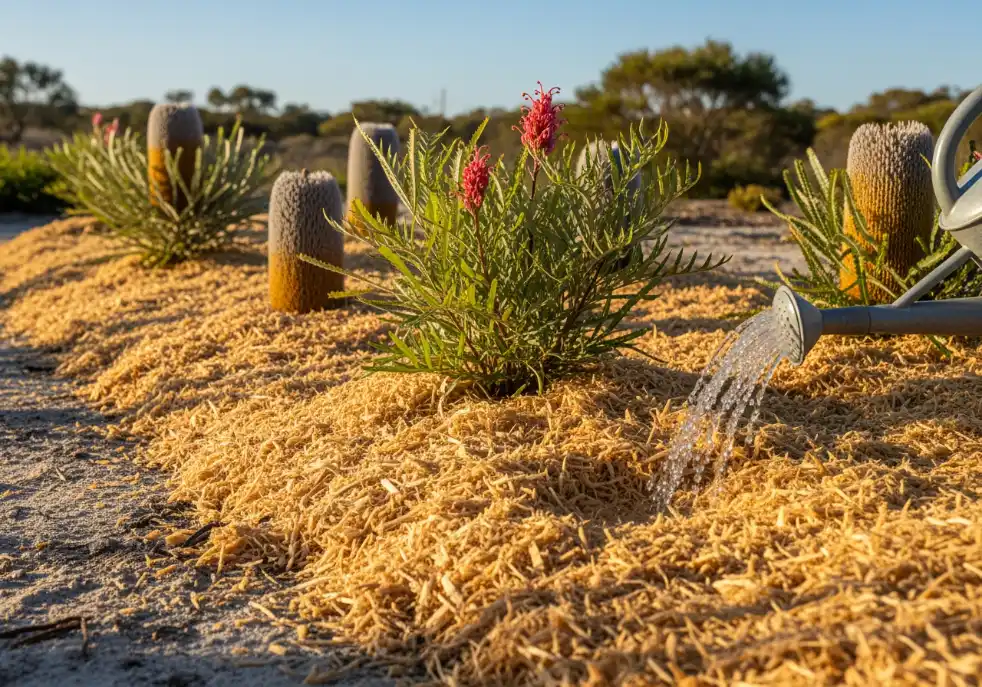
Sugar cane mulch is one of the safest choices for mulching native garden beds across WA. It provides reliable weed suppression and moisture retention without the risk of nutrient overload. Apply it at 40-50mm depth for native plantings and keep it clear of plant stems and crowns.
For mixed beds that include both native and exotic plants, DSATCO Piggypost works well as a soil preparation step in areas dedicated to exotic and heavy-feeding plants. Prepare those zones with Piggypost first, then apply sugar cane mulch across the full bed surface.
How to Apply Sugar Cane Mulch Correctly
Application Depth, Coverage, and Stem Clearance
DSATCO is a Western Australian producer of premium organic mulch and garden products, grown and sourced 100% from WA farms. The range includes Sugar Cane Mulch, Lupin Mulch, Triple-C Mulch, Piggypost, and Lawn Maximizer, all available in bags and bulk bags for home gardeners and commercial growers across Perth and regional WA.
The ideal application depth for sugar cane mulch WA gardeners should target is 50-75mm across most garden beds. At this depth, it suppresses weeds reliably and retains moisture through the season. A thinner layer of 20-30mm looks tidy initially but settles quickly and fails to block weed germination effectively over time.
Keep mulch pulled back 50-100mm from plant stems and tree trunks at all times. Mulch piled directly against stems traps moisture and creates conditions for rot and pest problems. For coverage planning, expect approximately 0.3-0.4 square metres per standard bag at 50mm depth. Always measure your beds before ordering to avoid running short mid-application.
When to Apply and When to Top Up
Timing your mulch application correctly makes a real difference to how long it performs and how effective it remains through WA’s seasons. The two best windows for sugar cane mulch application in Perth are late September to early November and late February to early April.
The spring application window locks in soil moisture before Perth’s first heat wave arrives. It also suppresses the first flush of summer weeds before they get the chance to germinate. The autumn window prepares garden beds for winter planting and allows the mulch to begin breaking down before the cooler months arrive.
Top up the mulch layer every 6-9 months. When the depth drops below 30mm, it loses its effectiveness at suppressing weeds and retaining moisture. A 20-30mm top-up usually restores full coverage without needing to remove and replace the entire existing layer.
When to Choose a Composted Mulch Instead
The Difference Between Raw and Composted Mulch
Sugar cane mulch is a raw mulch. It has not been composted or enriched with added nutrients. This makes it the right choice for gardens where you want moisture retention and weed suppression without altering the soil’s existing nutrient balance significantly.
Composted mulches work differently. DSATCO Lupin Mulch is enriched with chicken manure and is high in nitrogen. Roses, citrus, and flowering plants need nitrogen most for strong stems and abundant flowers. As Lupin Mulch breaks down, it releases nutrients slowly into the soil, acting as both a surface mulch and a slow-release fertiliser at the same time.
For new gardens, depleted soils, or heavy-feeding plants, a composted mulch delivers better results. The added nutrients and soil biology accelerate plant growth in ways that raw mulch Perth-style sugar cane alone cannot match.
Combining Raw and Composted Mulch Products
Many experienced WA gardeners use both types strategically throughout their garden. They apply composted mulch to vegetable beds and rose gardens where nutrient demand is highest. They use raw sugar cane mulch for native plantings, pathways, and annual flower beds where moisture and weed control are the primary goals.
DSATCO Triple-C Mulch is a composted blend of cereal crops, chicken manure, and canola. With a pH of 6.5, it suits garden beds where soil tends to run alkaline. This is a common condition across Perth’s coastal sandy soils. It is particularly effective in areas where weed pressure is high and nitrogen demand from plants is moderate.
If you prefer to shop at Bunnings, Vivantes Lupin Mulch is the same premium organic lupin formula, available in Bunnings stores across WA. It gives gardeners convenient local access to a quality composted mulch without needing to seek out a specialist stockist.
Conclusion
Sugar cane mulch WA gardeners depend on conserves water, suppresses weeds, and gradually improves soil structure without chemicals or complicated application methods. Whether you are mulching vegetable beds, rose gardens, or native plantings, it delivers steady, season-long results matched to Perth’s climate, soils, and seasonal conditions.
Browse the full product range to find composted options that pair perfectly with sugar cane mulch for maximum soil health. Contact us to find your nearest stockist or enquire about bulk bag availability across Perth and regional WA.
Latest Posts
- How to Stage Bulk Bags For Soil Improvers Versus Lawn And Mulch
- How to Size Multi-Bed Garden Orders From Bulk Bag Coverage
- Coordinating Metro Stockists Sourcing and Bulk Transport for Large Projects
Reviews from
Happy Gardeners
 "Results have been spectacular. The grass has never looked healthier."
Rod


