

 Buy Online
 08 9671 1500
 office@dsatco.com
How Lupin Mulch Adds Organic Nitrogen to Western Australian Garden Beds
Healthy growth can be difficult when garden soil loses nutrients quickly. This is common in beds with light, sandy soil and little organic matter.
Many Western Australian gardens also face hot, dry periods. These conditions can speed moisture loss and make nutrient management more important.
Lupin Mulch can support both jobs when it is used correctly. It covers the soil while adding organic material that contains nitrogen.
This guide explains how that nitrogen enters the soil. It also covers preparation, application, product selection, and ongoing garden care.
Understanding Organic Nitrogen in the Mulch
What Organic Nitrogen Means
Organic nitrogen is nitrogen held within plant or animal-based material. It is not immediately available like a soluble fertiliser.
DSATCO Lupin Mulch contains organically sourced WA lupin plant material with chicken manure. Its product page lists nitrogen at 17.8 g/kg.
The product also contains carbon and other minerals. These materials provide food for soil organisms as the mulch begins to break down.
For gardeners comparing a nitrogen-rich mulch for WA conditions, the nutrient source and form matter. Organic material contributes gradually instead of delivering one sudden dose.
How Nitrogen Becomes Available to Plants
Soil organisms break down organic material into simpler compounds. During this process, some nitrogen becomes available in forms plant roots can absorb.
This change does not happen all at once. Temperature, moisture, soil biology, and garden-bed condition can influence the process.
That gradual release is why organic nitrogen for garden beds works best within an ongoing soil-care plan. It is not an instant correction for a serious deficiency.
Plant symptoms can also have several causes. Poor drainage, incorrect watering, root damage, pH, or another nutrient issue may resemble low nitrogen.
Why Organic Mulch Matters in Western Australian Garden Beds
Working With Sandy, Fast-Draining Soil
Many Perth-area garden beds contain sandy soil. Water and dissolved nutrients can move through this soil quickly when organic matter is low.
Adding mature organic matter before mulching can improve the bed’s foundation. DSATCO Piggypost is described as a soil enhancer that adds humus and supports nutrient and moisture retention.
This distinction is useful. A soil enhancer is combined with the soil, whilst mulch mainly sits on the surface.
For a new or depleted bed, improving the soil first may help the surface layer do its job. Existing healthy beds may need a different approach.
An organic mulch for sandy soil should be part of that wider preparation. It cannot correct every soil issue by itself.
Protecting the Soil Surface
A surface layer helps shield soil from direct sun and moving air. This can slow moisture loss and reduce rapid temperature changes near roots.
The mulch also adds organic matter as it decomposes. Over time, this can support soil texture and biological activity.
However, mulch does not replace sensible irrigation. Check moisture beneath the layer because the surface may look dry whilst the soil remains damp.
Around young plants, observe drainage and root health closely. A constantly wet layer may not suit plants that prefer drier conditions.
At the middle of your planning process, DSATCO provides product information for garden beds, lawns, and soil improvement. Check each page before choosing a product.
Choosing and Applying the Mulch
Prepare the Bed Before Mulching
Start by removing established weeds and unwanted growth. Water very dry soil, then check whether it absorbs moisture evenly.
For productive beds, consider the existing soil before adding a surface layer. A WA sandy soil mulch performs better when the soil beneath can hold water and nutrients.
This preparation also matters when using organic nitrogen for garden beds. Roots need suitable moisture, drainage, and soil conditions to use available nutrients.
If you are comparing nutrient-focused products, DSATCO Triple-C Mulch is a separate blend of cereal crops, chicken manure, and canola. Its page describes it as nitrogen-rich and water-retaining.
The products are not interchangeable in every situation. Compare their listed ingredients, pH, texture, and intended uses before choosing.
Spread and Water the Mulch Correctly
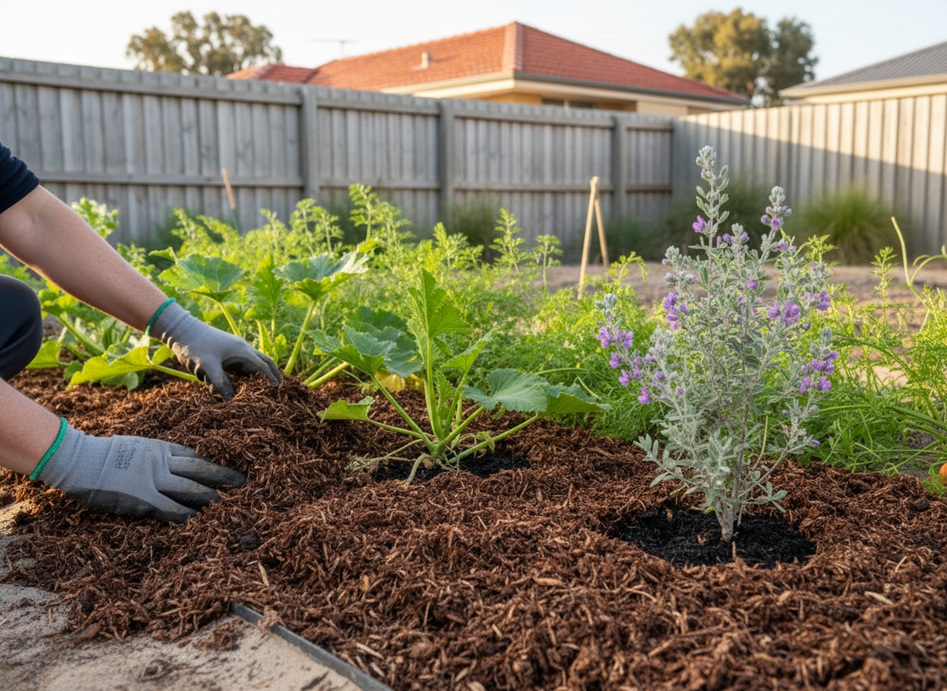
The manufacturer recommends a layer 40 to 50 mm thick. It also advises leaving 100 mm around plant bases and watering thoroughly.
Keep the material away from trunks, crowns, and stems. This reduces persistent dampness directly against sensitive plant tissue.
Wear gloves and a mask during application. The manufacturer also advises keeping the material damp to reduce inhalation of fine particles.
Once spread, check that water passes through the layer. Correct application should let irrigation reach the soil rather than run away.
Building a Practical Garden-Care Plan
Match the Product to the Garden Task
A useful garden plan separates soil improvement, surface mulching, and lawn care. This prevents one product being used outside its stated purpose.
DSATCO Sugar Cane Mulch is another surface-mulching option. Its page focuses on moisture retention and weed suppression.
Lawns need a separate treatment pathway. DSATCO Lawn Maximizer is presented as an organic top-dress fertiliser for existing lawns, not a garden-bed mulch.
These distinctions matter when planning mulch for Western Australian gardens. Product choice should follow the area, plant type, soil condition, and maintenance goal.
A gardener seeking a nitrogen-rich mulch for WA beds should still compare the full product purpose. Nitrogen content is only one selection factor.
Review the Mulch Layer Over Time
Organic mulch changes as it weathers and decomposes. Wind, irrigation, birds, soil organisms, and garden activity can alter the layer.
Check for exposed soil, compacted patches, weeds, or material touching plant stems. Top up only where the layer has become too thin.
Avoid applying fresh mulch automatically on a fixed date. The right timing depends on the actual condition of the bed.
These checks also help an organic mulch for sandy soil remain useful. Uneven coverage can leave some areas exposed to faster drying.
Gardeners comparing pack formats and related products can browse the DSATCO range. Confirm current sizes and ordering details on the live pages.
Frequently Asked Questions
Is This Mulch the Same as Fertiliser?
No. A nitrogen-rich mulch for WA garden beds is not the same as a soluble fertiliser. Its organic nutrients are released as the material breaks down.
A soluble fertiliser may act more quickly and serves a different purpose. Plant needs should be assessed before adding either product.
Can It Be Used Around Vegetables and Fruit Trees?
It may suit productive garden beds where organic mulch and added nutrients are appropriate. Plant needs, drainage, soil condition, and irrigation still matter.
Follow the manufacturer’s application guidance and keep the material away from stems and trunks. Do not assume one mulch suits every plant.
How Often Should the Mulch Be Replaced?
There is no reliable universal schedule. Breakdown speed changes with climate, moisture, soil life, bed activity, and application depth.
Inspect the layer and top up when coverage becomes thin or uneven. Avoid burying an adequate layer beneath unnecessary new material.
Does the Product’s pH Matter?
Yes, because plants differ in their preferred soil conditions. The product page lists a pH of 7.5.
That figure describes the product, not the final pH of your garden bed. Soil, irrigation water, amendments, and decomposition affect the wider environment.
Conclusion
Organic nitrogen enters the soil gradually as plant-based mulch decomposes. The surface layer also protects soil and adds organic matter over time.
Good results begin with healthy soil, correct application, suitable watering, and regular observation. Mulch for Western Australian gardens should support that wider plan.
For help comparing product uses and pack options, ask about the right mulch on 08 9671 1500.
Latest Posts
- How Finely Textured Sugar Cane Straw Aids Moisture Retentiveness
- When to Apply Sugar Cane Mulch to Sensitive Backyard Garden Borders
- Using Lawn Maximiser as an Organic Top Dress for Perth Domestic Turf
Reviews from
Happy Gardeners
 "Results have been spectacular. The grass has never looked healthier."
Rod


