

 Buy Online
 08 9671 1500
 office@dsatco.com
The Benefits of a Composted Cereal Crop and Chicken Manure Blend for WA Soils
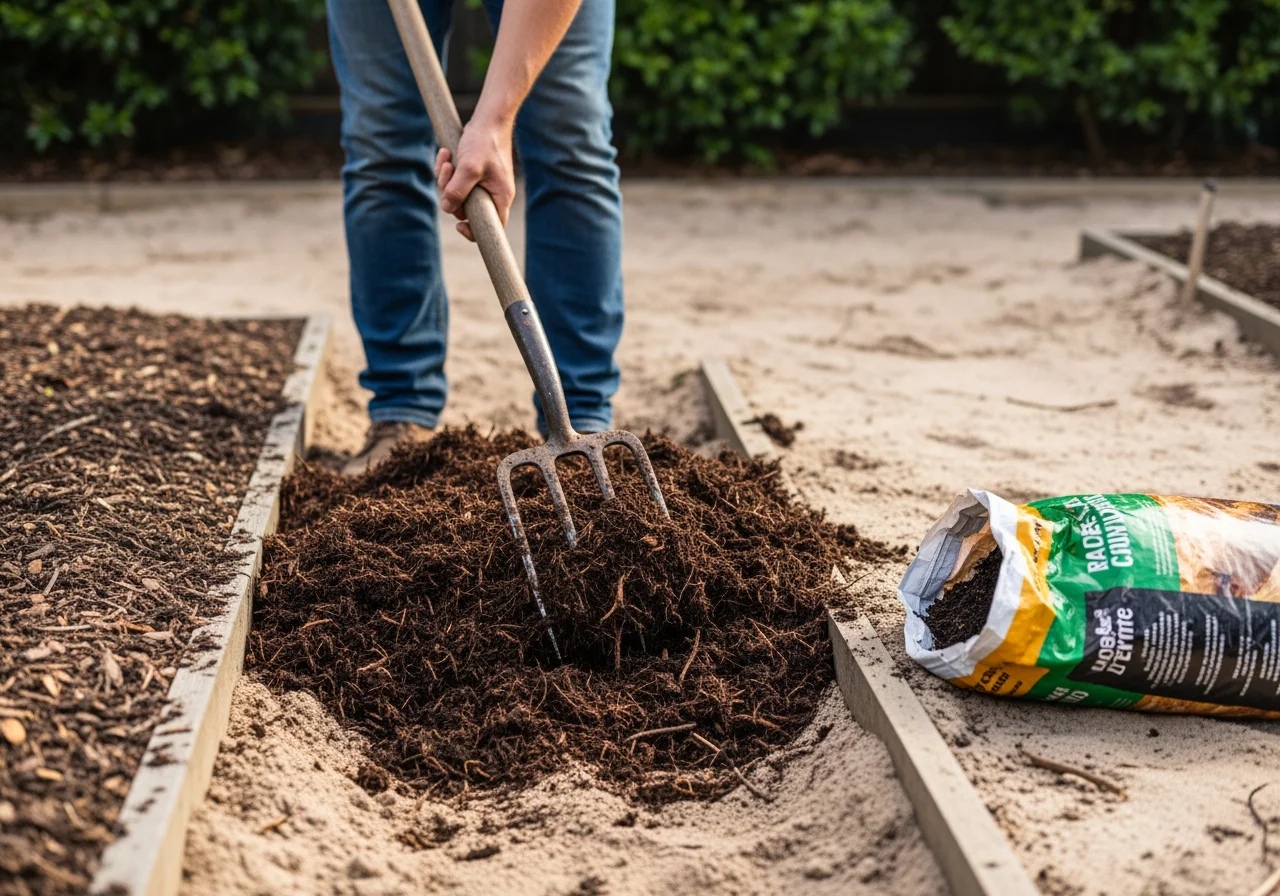
Perth’s sandy soils drain fast, hold few nutrients, and struggle to support the lush growth most WA gardeners want. That is not a failure of effort. It is geology. The Swan Coastal Plain is built on ancient sand deposits that simply do not behave like the rich loams featured in gardening guides from the eastern states.
The benefits of mulch extend far beyond surface coverage in WA gardens. Composted cereal and chicken manure blends add what WA soils lack most: organic matter, slow-release nutrients, and living biology. These blends transform sand into a growing medium that can actually hold water, feed plants, and support the microbial activity that drives long-term garden health.
Understanding how a good mulch for gardens works in Perth’s conditions explains why composted blends are one of the most practical investments a local gardener can make. This article covers how these products improve water retention, nutrition, and soil structure across every season.
Why WA Soils Need More Than Fertiliser
Synthetic fertilisers provide a quick fix. They do not fix the soil itself.
How Sandy Soil Fails Perth Gardeners
Sandy soils are low in everything that makes soil fertile. They lack organic matter, so they cannot hold water or nutrients. They are also low in clay particles, which normally act as tiny sponges to store moisture and minerals between waterings. When you apply synthetic fertiliser to sand, most of it washes through the profile before roots can absorb it. You might see a quick green-up, but within weeks the nutrients are gone, leached into the groundwater or flushed away by winter rains.
An organic soil amendment WA soils actually need works fundamentally differently. A composted cereal and chicken manure product does not just feed your plants. It rebuilds the soil structure itself. It replaces the organic binders that make water and nutrient retention possible in the first place.
The Difference Organic Matter Makes
Sandy soil nutrient retention is essentially zero without organic matter. Nutrients applied to raw sand simply do not stay in the root zone long enough to do their job. As composted material breaks down into humus, it changes the physical behaviour of the soil. Humus-rich soil holds water, stores nutrients, and supports the biology that releases those nutrients to plant roots on demand. This is a structural fix that accumulates over time, not a temporary boost that disappears with the next rain.
DSATCO Triple-C Mulch is built on exactly this principle. It is a composted blend of cereal crop residues, chicken manure, and stabilised plant material, engineered to deliver real and lasting soil improvement for Perth and regional WA gardens. Using it as mulch for garden bed preparation gives sandy soils the structural foundation they need before planting begins.
What Makes the Cereal and Chicken Manure Combination So Effective
The pairing of cereal crop residues and composted chicken manure is not accidental. Each component addresses a different weakness in WA sandy soils.
Carbon from Cereal Crops
Cereal crop residues, typically wheat, oat, or barley straw, are high in carbon. When composted, they break down into stable organic matter that improves soil structure. This material acts as scaffolding in sandy soil, creating small pockets that trap water and air and give root systems something to anchor in. It also feeds beneficial soil fungi, which form networks that help plant roots access nutrients and moisture more efficiently than roots alone can manage.
For garden beds that need deep biological rebuilding, DSATCO Piggypost complements this approach at the root zone level. It is a mature compost made from pig manure, rich in humus and living microbes. Applied and dug into garden beds before or alongside cereal crop mulch, it builds biological activity throughout the entire root zone and fast-tracks the transformation from gutless sand to productive soil.
Nitrogen from Composted Chicken Manure
Chicken manure is nitrogen-rich and packed with phosphorus, potassium, calcium, and micronutrients. Fresh chicken manure is too strong to apply directly. It can burn plant roots and create ammonia problems. When composted with cereal straw, however, the nitrogen stabilises into forms that release slowly and safely over many months.
The composting process also generates enough internal heat to kill weed seeds and pathogens. This means a quality composted blend WA gardens receive is clean, safe, and ready to apply directly around established plants without any risk of burning. The finished product smells earthy rather than like manure, a sign that composting has been completed properly rather than rushed. The real benefits of mulch made from composted chicken manure only show fully once that curing process is complete.
How Composted Cereal and Chicken Manure Improves Water Retention
Water retention is the single biggest challenge for Perth gardeners, and it is where composted organic soil amendments make their most visible impact.
DSATCO is a Western Australian company that produces premium organic mulch and garden products, grown and sourced 100% from WA farms. Every product in the range is formulated for Perth’s specific conditions, using WA-grown and sourced materials processed on WA farms, not adapted from blends designed for wetter climates elsewhere.
Adding Organic Sponge Material to Sandy Soil
When you apply a composted cereal and chicken manure blend, you are adding material that can hold many times its own weight in water. The composted straw acts like thousands of tiny sponges, capturing moisture during irrigation and releasing it slowly as the soil dries between waterings. This creates more consistent moisture levels in the root zone, which means plants grow better, suffer less heat stress, and require less frequent watering through summer. For anyone sourcing bulk mulch Perth-wide, this water-saving benefit is one of the most important reasons to choose a composted organic blend over a raw or synthetic alternative.
Sandy soil nutrient retention also improves dramatically once organic matter levels rise. Composted blends hold nutrients within the topsoil profile, preventing them from washing down into groundwater during heavy winter rains. Keeping nutrients in the root zone where they belong also reduces fertiliser runoff into local waterways, an important consideration for WA gardeners near rivers and coastal areas.
Preventing Nutrient Leaching in Practice
Organic manure blends Perth soils are well suited to work over a timeframe of months rather than days. As the organic matter integrates with the sandy profile, it creates stable chemical bonds that hold nitrogen, potassium, and trace elements in place. This means less frequent fertiliser top-ups, lower overall input costs, and soil that keeps getting better rather than requiring constant intervention to maintain.
How Composted Cereal Mulch Supports Slow-Release Nutrition
Synthetic fertilisers deliver nutrients fast, sometimes too fast for sandy WA soils to hold.
The Value of Gradual Organic Nitrogen Release
Composted cereal and chicken manure releases nutrients gradually as soil microbes break down the organic material. This process speeds up when plants are actively growing in warm weather and slows in winter when growth pauses. The result is a nutrient supply that aligns naturally with plant demand. Instead of a quick spike followed by depletion, you get a steady stream of nutrition that can last three to six months from a single application.
For garden beds where high nitrogen demand is a priority, including roses, leafy vegetables, and citrus, DSATCO Lupin Mulch is a strong complementary product to cereal crop mulch WA gardeners already use. It delivers a particularly nitrogen-rich composted blend from WA lupin plant material and chicken manure. Using Lupin Mulch on dedicated rose or vegetable beds and Triple-C on native and mixed plantings gives you a tailored approach to organic soil amendment WA gardening benefits from most. When choosing the best mulch for vegetable garden Australia conditions, high-nitrogen organic blends like Lupin Mulch are particularly well suited to Perth’s warm growing season.
Why Composted Blends Beat Fresh Manure Every Time
Fresh chicken or sheep manure is too strong to apply directly to garden beds. It can burn plants, release ammonia that damages roots, and introduce weed seeds. Fresh pig manure carries the same risks when applied raw, which is why composting is essential regardless of the manure source. A properly composted cereal and chicken manure blend has gone through the intense decomposition phase already. The carbon-to-nitrogen ratio is balanced before it reaches your garden. Nutrients are stable, available, and safe to use immediately around all plant types including food crops. This is what makes a composted blend the best mulch for vegetable garden Australia-wide, delivering nutrition without the risks that come with raw manure.
Best Application Methods for WA Gardens
How you apply a composted cereal crop mulch WA soils need depends on what you are growing and the current condition of your soil.
New Beds, Established Beds, and Seasonal Planting
For new garden beds, spread a 75 to 100mm layer over the soil surface and dig it into 150 to 200mm depth. This incorporates organic matter throughout the root zone and gives you a strong foundation before planting. Water thoroughly after digging to help the material settle and activate. For established beds, apply 40 to 50mm as a top dressing around existing plants. When applying mulch for garden bed top dressing, keep it away from plant stems. Nutrients leach down into the root zone with each watering, and earthworms gradually pull organic matter into the soil profile below.
For vegetable gardens, work your composted blend WA gardens depend on into the soil at least two weeks before planting. This allows residual composting activity to finish and ensures the material is fully integrated before seedlings go in. For lighter seasonal cover between major applications, DSATCO Sugar Cane Mulch provides fast, effective coverage that complements a composted blend across different beds and seasonal rotations.
Timing for Perth’s Mediterranean Climate
Autumn is the best time for major soil improvement work. Apply composted blends in March to April, before winter rains begin. This allows the material to integrate with the soil and begin releasing nutrients just as spring growth starts. The winter rains carry soluble nutrients into the root zone rather than flushing them away, because plants are actively absorbing them as temperatures rise in August and September.
Spring applications work well for vegetable gardens and annual flower beds. Apply in August or September, after the last heavy rains but before summer heat arrives. This supports the main growing season and helps plants establish strong root systems before summer stress kicks in. For bulk mulch Perth deliveries, ordering ahead of the autumn or spring window ensures you have enough material on hand to complete a full soil preparation before the season arrives.
Long-Term Soil Building With Composted Blends
Results from composted cereal and chicken manure applications appear gradually, but they compound and accumulate with each season. This is true whether you are using the blend as mulch for garden bed preparation or as a seasonal top dressing around established plants.
What Changes Over the First Season
Within two to four weeks of application, sandy soil that was loose and free-flowing starts to feel slightly more cohesive. It holds its shape better and does not dry out as quickly between waterings. Within four to six weeks, plants show stronger growth and darker foliage as nutrients become available through microbial mineralisation. Sandy soil nutrient retention improves noticeably. Water stays longer in the topsoil, and roots can find what they need between waterings.
For WA lawns also declining on sandy soil, DSATCO Lawn Maximizer is a purpose-built organic top-dress fertiliser for turf. It works on the same principle as composted cereal and chicken manure for garden beds, rebuilding soil structure beneath the grass for lasting water retention and healthier root growth.
Building a Soil That Improves Every Year
Within three to six months, organic matter has integrated throughout the topsoil. Dig down 100 to 150mm and you will see darker colour, better structure, and often visible earthworm activity, signs of a soil beginning to function like loam rather than raw sand. After two to three years of consistent composted blend WA garden applications, even the sandiest Perth soil can support productive, low-maintenance gardens.
The benefits of mulch compound with each passing season. Choosing a good mulch for gardens and applying it consistently is what separates a garden that struggles each summer from one that becomes easier to manage every year. Each application builds on the previous one, and WA gardeners who commit to a regular soil improvement practice find their garden maintenance requirements decreasing year by year rather than increasing.
This is what makes organic manure blends Perth soils reward most. Explore the full DSATCO product range to find the right composted blend for your soil type, plant mix, and garden size.
Conclusion
Perth’s sandy soils will not fix themselves. With regular applications of a composted cereal and chicken manure blend, however, you can build soil that holds water, feeds plants, and supports thriving biology across every season. This is not a one-time fix. It is a practice of consistent improvement that rewards patience with progressively better results throughout your garden.
Give your soil the foundation it needs. Shop online or contact the team on 08 9671 1500 to find the right product for your beds.
Latest Posts
- How Finely Textured Sugar Cane Straw Aids Moisture Retentiveness
- When to Apply Sugar Cane Mulch to Sensitive Backyard Garden Borders
- Using Lawn Maximiser as an Organic Top Dress for Perth Domestic Turf
Reviews from
Happy Gardeners
 "Results have been spectacular. The grass has never looked healthier."
Rod


