

 Buy Online
 08 9671 1500
 office@dsatco.com
How to Use Pig Manure in Vegetable Gardens in WA
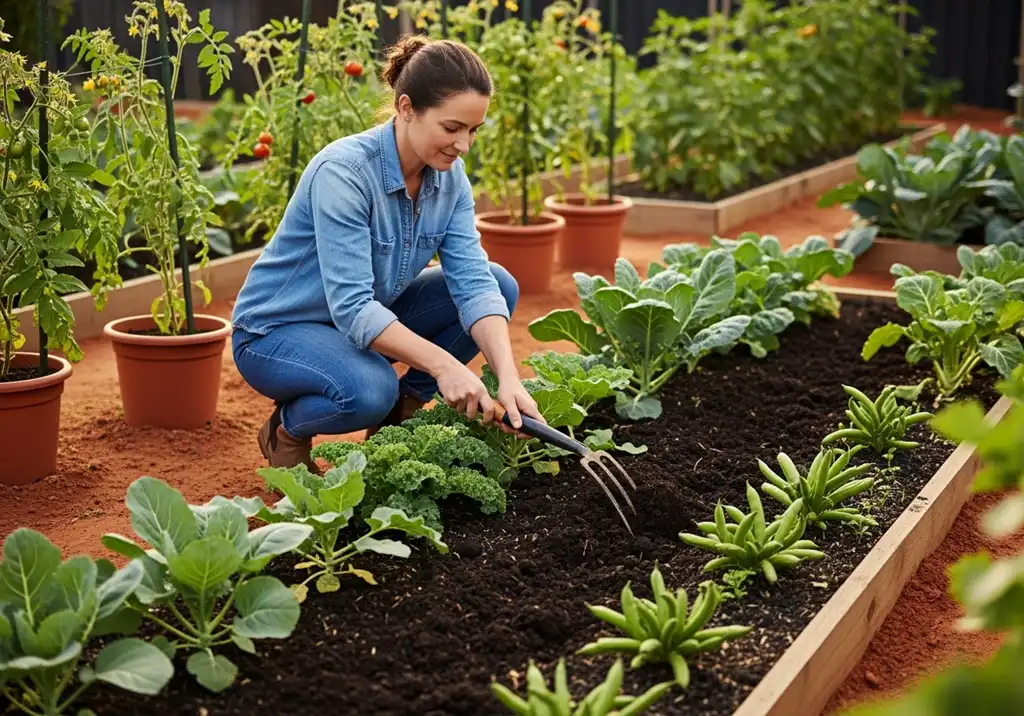
WA’s sandy soils drain fast, hold little organic matter, and need regular feeding to grow productive vegetables. Composted pig manure is one of the most effective soil amendments available to Perth vegetable gardeners. Using pig manure in vegetable gardens that get the best results in WA means choosing properly composted product that simultaneously adds stable humus, delivers slow-release nutrients that feed plants through the growing season, and introduces living microbes that rebuild the soil biology essential for productive vegetable growing.
This guide shows you exactly how to use composted pig manure in WA vegetable gardens, from preparing new beds to feeding established crops, with application guidance by vegetable type and seasonal timing specific to Perth’s Mediterranean climate. Composted manure WA garden beds perform best with is the foundation of productive sandy soil growing, and getting the application right makes a measurable difference season after season.
Understanding how pig manure vegetable gardens in WA benefit from composted organic inputs differs from general gardening advice. Perth’s specific soil and climate conditions mean the timing, application method, and product choice all need to suit WA rather than being lifted from guides written for cooler, wetter climates. The pig manure vegetable gardens WA rely on most effectively is composted product that has been processed specifically for the high-heat, fast-draining sandy soil conditions Perth gardeners manage.
Why Pig Manure Works So Well in WA Vegetable Gardens
Sandy soils dominate the Swan Coastal Plain and much of Perth’s residential garden landscape. These soils lack organic matter, drain nutrients faster than clay-bearing alternatives, and struggle to support the microbial life that healthy vegetable gardens depend on. Vegetable garden pig manure applications address all three shortfalls in a single product. When it comes to WA vegetable soil amendment options, composted pig manure consistently delivers more comprehensive improvement than single-nutrient fertilisers or soil conditioners that address only one problem at a time.
Composted pig manure like DSATCO Piggypost delivers what WA vegetable soils consistently need: high nitrogen content for leafy greens and brassicas, stable humus that improves soil structure and water retention, and living microbes that convert organic matter into plant-available nutrients. It acts as both a soil conditioner and a slow-release fertiliser in one application.
What Composted Pig Manure Delivers to Sandy WA Soil
DSATCO Piggypost is produced through a 12-18 month composting process from pig manure, resulting in a product that is approximately 70% humus with living microbes. The composting process eliminates pathogens, weed seeds, and harmful bacteria while preserving and enriching beneficial microbial content.
As it breaks down in sandy WA soil, it adds humus that holds water and nutrients in a form plant roots can access. This is the key difference from synthetic fertilisers, which deliver nutrients quickly but do nothing to improve the soil’s fundamental ability to hold what you give it. Every application of composted pig manure WA vegetable gardeners make adds to a cumulative improvement in soil structure that pays dividends across multiple growing seasons.
The Difference Between Raw and Composted Pig Manure
Never use raw pig manure directly in vegetable gardens. Raw manure contains ammonia levels that burn plant roots, and it can harbour pathogens including E. coli and Salmonella that are not acceptable in food production beds.
Composted pig manure is an entirely different product. The 12-18 month composting process heats material to temperatures that eliminate all pathogens and weed seeds while producing stable, safe organic matter. Well-composted pig manure has an earthy smell, a dark crumbly texture, and can be applied directly to vegetable beds without risk.
DSATCO Piggypost is pasteurised through this extended composting process and is safe to apply to any vegetable bed, including those growing food for direct consumption. The composting timeline is non-negotiable for food safety.
How to Apply Pig Manure to New Vegetable Beds in WA
New vegetable beds benefit most from composted pig manure worked into the soil before planting. This approach places organic matter, nutrients, and living microbes throughout the root zone where new plants will feed from their first week in the ground.
The DSATCO site recommends a mix ratio of 2 parts soil to 1 part Piggypost for best results in a single application. For ongoing results, an annual application at a weaker ratio maintains the organic matter built through previous applications.
Step-by-Step Preparation of a New Vegetable Bed
Clear the area of weeds, grass, and debris. If the soil is compacted, break it up with a garden fork to at least 20cm depth before adding anything.
Spread DSATCO Piggypost across the entire bed at the recommended depth and work it into the top 150-200mm of soil. You want it distributed throughout the root zone, not sitting on the surface. Water thoroughly to activate microbial life and begin the nutrient release process. Wait 1-2 weeks before direct seeding to allow microbial activity to stabilise; seedling transplants can go in immediately.
What Happens to Soil Structure After Application
The humus in Piggypost begins binding sandy particles into aggregates. These aggregates hold water and nutrients far more effectively than individual sand particles. Soil that was previously pale and fine-textured starts to darken and develop a more crumbly, open structure within a few weeks of a thorough application.
Over multiple seasons of consistent composted pig manure WA vegetable garden applications, this improvement compounds. Soil that once dried out within days of watering starts holding moisture for longer. Fertiliser stays in the root zone rather than washing through with the next irrigation.
Feeding Established Vegetable Beds with Pig Manure
Established vegetable beds need regular organic matter replenishment throughout the growing season. Vegetables are heavy feeders that strip nutrients faster than ornamental gardens, making ongoing composted pig manure applications a practical part of productive WA vegetable gardening.
How to Apply Composted Pig Manure Around Established Plants
Apply Piggypost as a side dressing around established plants. Spread it around the base of each plant, keeping it 50-100mm clear of stems to prevent moisture accumulation against plant tissue that can cause rot or fungal disease.
Lightly fork it into the top 50mm of soil if the surface is compacted, or leave it as a surface dressing if roots are close to the surface. Both approaches work well. Forking in speeds nutrient release; leaving it as a surface dressing allows it to work gradually through rainfall and irrigation. The DSATCO site recommends 2kg of Piggypost per mature rose bush and 20kg per square metre in vegetable gardens as reference rates.
Watering After Composted Pig Manure Application
Water thoroughly after every application of composted pig manure to vegetable beds. The living microbes in Piggypost need moisture to become active and begin the nutrient release process. Dry product sitting on the surface in Perth’s summer heat delivers minimal benefit until it receives adequate moisture.
In Perth’s dry summer, apply Piggypost before a scheduled irrigation cycle or before a forecast rain event. This ensures the product activates immediately rather than sitting inert on the soil surface.
Application Rates by Vegetable Type
Different vegetables have different nutrient demands. The DSATCO site recommends 20kg of Piggypost per square metre in vegetable gardens as a general application guide. Within that framework, adjusting how you apply it based on crop type improves results.
Heavy Feeders: Leafy Greens, Brassicas, and Corn
Leafy greens including lettuce, spinach, kale, and bok choy, along with brassicas and corn, thrive with generous pig manure vegetable garden applications. These crops have high nitrogen demands and respond strongly to the steady nitrogen release from decomposing Piggypost. Pig manure WA vegetables in the heavy-feeder category grow strongest when beds receive a thorough composted pig manure application before planting and a light side dressing midseason.
Apply thoroughly before planting these crops. Using composted pig manure vegetables and leafy greens need most means targeting the crops that strip nutrients fastest from WA sandy soil.
Moderate Feeders: Tomatoes, Capsicums, and Cucumbers
Fruiting vegetables need steady nutrition but are sensitive to excess nitrogen, which pushes leafy growth at the expense of flower and fruit production. Apply Piggypost before planting at a moderate rate. When plants begin to flower, a light side dressing of composted pig manure around each plant supports the nutrient demands of fruit development without pushing excessive vegetation.
Light Feeders: Root Vegetables
Root vegetables grow best in well-structured soil with moderate nitrogen. Carrots, beetroot, radishes, and turnips develop the best shape and flavour in soil that has good structure without excessive nitrogen. When managing vegetable garden pig manure applications for root crops, apply Piggypost more lightly before planting. Excess nitrogen causes extensive leafy top growth and poorly shaped roots in root vegetable crops.
Seasonal Timing for WA Vegetable Gardens
Perth’s Mediterranean climate creates two distinct vegetable growing seasons. Timing composted pig manure applications to align with these seasons ensures nutrients are available when plants need them most.
Autumn Preparation for Cool-Season Vegetables
Late March or early April is the best time to prepare beds for cool-season vegetables. Apply composted manure WA garden beds need during this window, work it into the soil, and allow 2-3 weeks for it to settle before planting. The warm autumn soil keeps microbial activity high, so nutrients become available quickly.
Pig manure WA vegetables grow best in is one that delivers slow-release nitrogen alongside humus-building properties. Cool-season crops including broccoli, cauliflower, kale, lettuce, peas, and broad beans all benefit from beds that have been prepared with composted pig manure in the weeks before planting. Pig manure vegetable gardens planted in autumn that perform best through winter are those prepared with composted product before the first cool-season seedlings go in.
Spring Preparation for Warm-Season Vegetables
August is the time to prepare beds for warm-season vegetables. Apply composted manure WA vegetable gardeners prepare spring beds with in August, work it into the soil, and plant out seedlings or seeds in September once soil temperatures are rising consistently. Allow at least 2 weeks after application before direct seeding to let microbial activity stabilise. Warm-season crops including tomatoes, capsicums, eggplant, zucchini, cucumber, pumpkin, beans, and corn all respond strongly to beds prepared with composted pig manure ahead of planting. The composted pig manure vegetables like tomatoes and capsicums receive through spring bed preparation supports their transition from seedling to heavy-bearing plant through WA’s long summer growing period.
Combining Composted Pig Manure with Mulch
Composted pig manure and mulch work together as a two-tier system for WA vegetable beds. The composted pig manure feeds from below, adding humus, nutrients, and microbial activity to the soil profile. The mulch above protects the soil surface, slows evaporation, and adds additional organic matter as it breaks down.
This combination is particularly effective through Perth’s dry summer months when unprotected soil loses moisture rapidly and composted pig manure without surface coverage can dry out before delivering its full benefit.
The Best Mulch Pairings for Vegetable Beds
DSATCO Lupin Mulch suits nitrogen-hungry crops like brassicas and leafy greens. It is made from WA lupin plant material and chicken manure, which adds additional nitrogen as it breaks down above the Piggypost layer below.
DSATCO Sugar Cane Mulch suits root vegetables and fruiting crops where more controlled nitrogen delivery is preferred. Its lower nitrogen content means you have greater control over overall soil nutrient levels when combined with Piggypost.
How the Layering System Protects WA Vegetable Beds in Summer
Apply Piggypost to the bed, water it in thoroughly, then apply mulch at 40-50mm depth on top. The mulch keeps the soil surface cooler, slows evaporation, and prevents Piggypost from drying out in Perth’s summer heat before microbial breakdown has had time to proceed.
The two products together reduce how often vegetable beds need irrigation and maintain more stable soil temperature conditions through the hottest months. This stability benefits both soil biology and vegetable root health through WA’s extended summer season.
Common Mistakes When Using Pig Manure in Vegetable Gardens
Errors to Avoid in WA Vegetable Garden Beds
Using raw pig manure in any vegetable garden bed is a clear and unacceptable risk to plant health and food safety. Raw manure is too high in ammonia, may contain active pathogens, and will burn root tissue. Only fully composted pig manure products should ever be used in vegetable gardens.
Applying too close to plant stems is another common error. Keep composted pig manure at least 50-100mm clear of stems and plant crowns. Moisture accumulation against stem tissue creates conditions for collar rot and fungal disease.
Failing to water after application is one of the most common and easily avoided mistakes. Dry Piggypost sitting on the surface delivers no benefit until moisture activates the microbial content. Water deeply after every application and ensure the product reaches moisture from irrigation or rainfall within a day or two of application.
Conclusion
Composted pig manure is one of the most effective soil amendments available to WA vegetable gardeners. It addresses the core limitations of Perth’s sandy soils simultaneously: poor organic matter content, fast drainage, and insufficient nutrients for productive vegetable growing. As a WA vegetable soil amendment, composted pig manure stands out because it improves three distinct aspects of soil health in a single application rather than targeting just one.
The composted manure WA vegetable gardeners apply consistently is what builds the progressively better soil that makes every subsequent season easier to manage and more productive.
DSATCO is a Western Australian company that produces Piggypost through a controlled 12-18 month composting process from locally sourced pig manure, delivering a stable, humus-rich soil conditioner designed for Perth’s soil and climate conditions.
Apply Piggypost at the right rates for your crops, time applications to align with WA’s two vegetable growing seasons, and combine with mulch for the best results. For general ornamental beds alongside your vegetable garden, DSATCO Triple-C Mulch provides balanced, long-lasting coverage. For gardeners who prefer to pick up product in person at Bunnings, the Vivantes Lupin Mulch range offers the same quality DSATCO formula in convenient retail bag sizes. Avoid raw manure, water thoroughly after every application, and maintain the consistent application cycle that builds progressively better soil with every season.
Find the right DSATCO product for your vegetable garden by calling 08 9671 1500 or reaching out online, or browse the full DSATCO product range including Piggypost and all mulch options suited to WA vegetable beds.
Latest Posts
- How Finely Textured Sugar Cane Straw Aids Moisture Retentiveness
- When to Apply Sugar Cane Mulch to Sensitive Backyard Garden Borders
- Using Lawn Maximiser as an Organic Top Dress for Perth Domestic Turf
Reviews from
Happy Gardeners
 "Results have been spectacular. The grass has never looked healthier."
Rod


