


 Buy Online
 08 9671 1500
 office@dsatco.com
How to Calculate How Much Bulk Bag Mulch You Need for Your Garden or Lawn
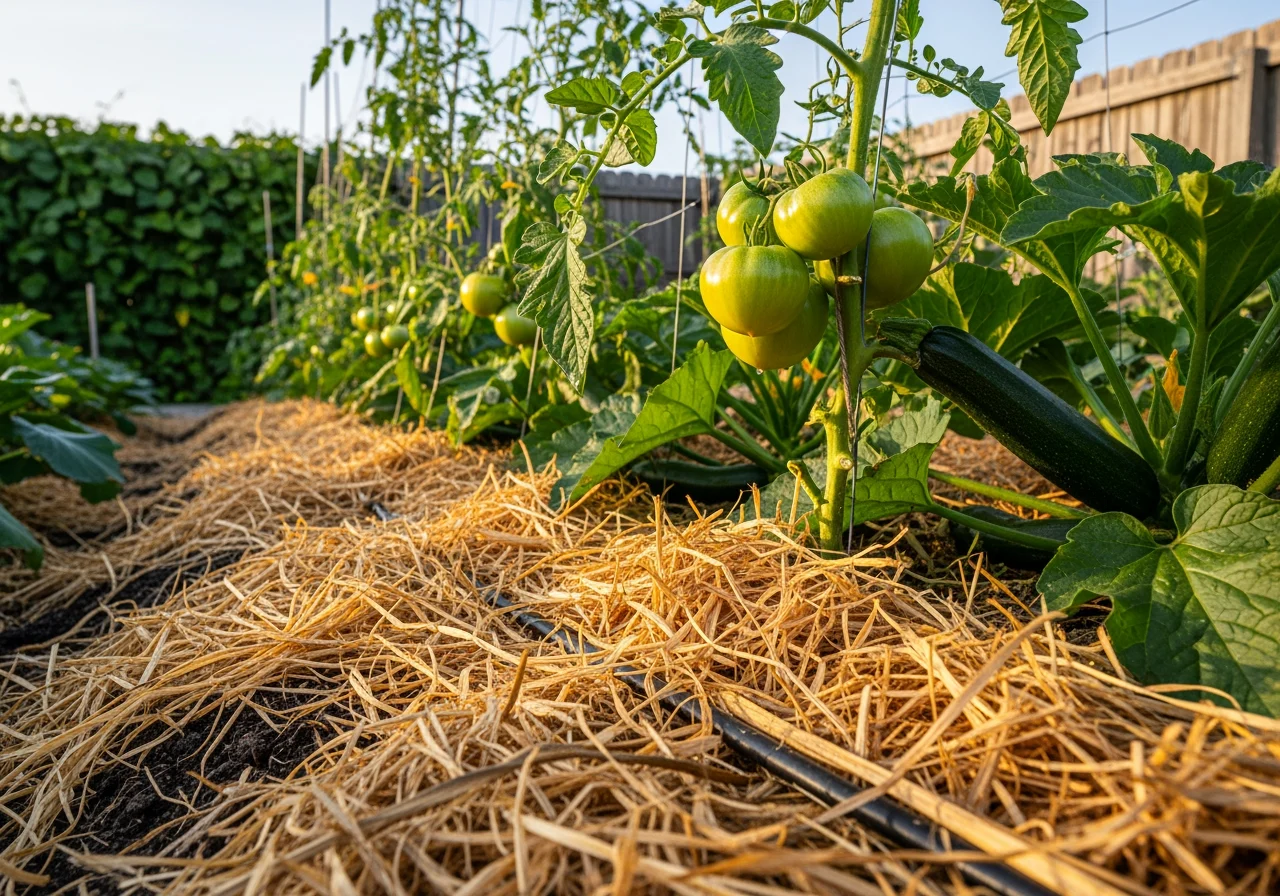
Ordering bulk mulch in Perth is one of the most practical decisions a WA gardener can make, but only if you order the right amount. Too little and you end up paying a second delivery fee to finish the job. Too much and you have product sitting on the driveway while half the garden waits for attention. Getting the volume right before you order saves time, money, and the frustration of running short halfway through a job.
Perth’s sandy soils drain fast and heat up quickly in summer. A thin layer of mulch does not provide effective weed suppression, does not retain enough moisture, and dries out before the week is out. Understanding the benefits of mulch is the starting point, but knowing exactly how much to order is what turns good intentions into a garden that actually performs through the hottest months of the year.
The calculation itself is straightforward once you understand the three numbers that matter: your garden bed area in square metres, the depth you want to apply in millimetres, and the volume in cubic metres that determines how many bags to order. Using a simple mulch calculator approach, area multiplied by depth equals volume, removes the guesswork entirely.
This guide walks through every step of the calculation process. From measuring standard and irregular garden beds to understanding bulk bag coverage rates and knowing when to add extra for settling, it is your complete volume estimation guide for confident bulk ordering across WA.
Why Mulch Depth Matters More Than Most Perth Gardeners Realise
Most gardeners underestimate how much mulch depth is needed to get real results in WA conditions. A 20mm layer looks neat when you first spread it, but it does not have the mass to block weed seeds from germinating, does not hold enough moisture to make a difference in sandy soil, and breaks down quickly in Perth’s heat. The full benefits of mulch only come through when you apply enough depth to insulate, suppress, and retain moisture properly.
What Happens When You Apply Mulch Too Thin
When mulch depth WA gardeners apply falls below 40mm for standard garden beds, the practical results disappear fast. The surface dries out within days of a hot spell. Weed seeds push through the thin layer within weeks. And the organic matter breaks down before it has a chance to feed the soil microbes that improve your beds over time.
This is why understanding mulch depth before you calculate your order quantity matters. If you calculate based on a 20mm application because that is what looked right when you used retail bags, you will order too little. The mulch will not perform the way it should in WA’s climate.
Recommended Mulch Depths for WA Garden Types
Knowing the right depth for your specific garden type is your starting point for accurate calculation. For most garden beds in WA, including ornamental borders, established shrub beds, and native gardens, 40 to 50mm is the practical standard. This depth suppresses weeds effectively, retains moisture through summer, and breaks down gradually to feed the soil.
For vegetable gardens and rose beds where you want mulch for a garden bed to also improve the soil as it decomposes, a deeper layer can be beneficial. Around established trees, apply with a clear gap of at least 100mm from the trunk to protect the root collar. DSATCO Lupin Mulch is a nitrogen-rich organic option made from 100% WA lupin plant material and chicken manure, particularly well suited to these beds. Check the product page for its recommended application depth and coverage rates.
Lawn top-dressing is a completely different application to garden bed mulch. Products designed for existing lawns are applied at a much shallower rate than surface mulch. Calculate lawn areas separately from garden bed areas when working out your total order.
The Core Formula: Area, Depth, and Volume
Every bulk mulch calculation comes down to one formula: area in square metres multiplied by depth in metres equals volume in cubic metres. Once you have it, you can work out the right quantity for any bed, any depth, any garden.
The unit that trips people up is depth. Your mulch depth will be in millimetres. To use the formula, you must convert that depth to metres first. Divide your millimetre figure by 1,000. So 50mm becomes 0.05 metres. 75mm becomes 0.075 metres. 100mm becomes 0.1 metres.
Knowing your cubic metre requirement before you speak to bulk mulch suppliers Perth-wide means you order confidently rather than guessing at quantities. Choosing good mulch for gardens in WA starts with getting this number right.
Step-by-Step Calculation for a Standard Garden Bed
Here is a worked example using a typical Perth suburban garden bed. You have a rectangular bed measuring 8 metres long by 3 metres wide. You want to apply mulch at 50mm depth.
Step one: calculate the area. 8 multiplied by 3 equals 24 square metres. Step two: convert depth to metres. 50mm divided by 1,000 equals 0.05 metres. Step three: multiply area by depth. 24 multiplied by 0.05 equals 1.2 cubic metres.
Your formula gives you 1.2 cubic metres. One standard bulk bag holds one cubic metre of product. Note that organic mulch products are compressed in the bag and expand when spread, so actual coverage can exceed the raw formula. Always check the product page coverage information before confirming your bag count.
This volume estimation guide works for any bed shape once you have the area in square metres. The formula stays the same.
Using the Formula for Multiple Beds
Most Perth gardens have several separate beds to mulch. Calculate each one individually, then add the volumes together for your total order.
Imagine three beds: a 20 square metre native garden at 50mm depth, a 12 square metre rose bed at the same depth, and a 15 square metre vegetable patch at 75mm depth.
Native garden: 20 multiplied by 0.05 equals 1 cubic metre. Rose bed: 12 multiplied by 0.05 equals 0.6 cubic metres. Vegetable patch: 15 multiplied by 0.075 equals 1.125 cubic metres. Total: approximately 2.7 cubic metres.
Add 10 to 15 per cent for settling before finalising your bulk mulch delivery Perth order. The extra product covers natural compaction and ensures every mulch for garden bed area gets proper coverage through the season.
DSATCO Triple-C Mulch is a nitrogen-rich blend of cereal crops, chicken manure, and canola, composted to be weed, seed, and disease free. It suits a wide range of WA garden types and is available in a 1000L bulk bag for larger projects.
How to Measure Irregular Garden Beds
Perth gardens rarely follow neat rectangles. Curved native beds, kidney-shaped lawn edges, and borders that follow fence lines all require a slightly different approach to measurement.
Measuring Curved and Kidney-Shaped Beds
The simplest method for curved beds is to break the shape into rough rectangles you can measure with a tape measure, calculate each rectangle separately, and add them together. You do not need precision here. You are ordering mulch, not laying tiles.
For a bed that curves around a feature tree or follows a sweeping lawn edge, measure the longest length and widest width of the entire area, calculate as a rectangle, then subtract around 20 per cent for the curved sections. This gives a close enough estimate for ordering purposes. Rounding up slightly ensures you do not run short.
For garden beds with large established plants inside the bed area, subtract the footprint of those plants from your total mulchable area. A mature shrub takes up space you will not be mulching, so accounting for it gives a more accurate calculation and avoids over-ordering.
Measuring Circular Beds and Triangle Shapes
Circular garden beds use the formula: area equals pi (3.14) multiplied by the radius squared. If you have a circular bed with a 2 metre radius, the area is 3.14 multiplied by 4, which equals approximately 12.5 square metres.
At 50mm depth, that is 12.5 multiplied by 0.05, which equals 0.63 cubic metres. Check your product page to confirm coverage and bag count before placing your order.
For triangular beds, common along fence lines or in corner plantings, the formula is: area equals base multiplied by height, divided by 2. A triangular bed with a 4 metre base and 3 metre height gives an area of 6 square metres.
Most gardeners add 10 per cent to all irregular bed calculations as a buffer. Leftover mulch stores well if kept covered and shaded, and you will use it for top-ups through the season. When choosing good mulch for gardens with complex shapes and multiple planting areas, a small buffer is always a sensible safety margin rather than a waste.
Understanding Bulk Bag Coverage Rates
DSATCO is a Western Australian company that produces premium organic mulch and garden products, grown and sourced 100% from WA farms. Their bulk bags hold one cubic metre of product and are compressed, so the product expands when spread and covers more area than a raw calculation suggests. Before finalising any bulk mulch Perth order, cross-check your formula result against the product page coverage information.
Coverage from One Cubic Metre at Different Depths
For DSATCO bulk bags, the product pages are the most reliable guide to coverage before you order. As a general reference, DSATCO’s 1000L bulk bags are designed to cover approximately 40 to 50 square metres at the standard 40 to 50mm application depth. At deeper application rates, coverage will reduce proportionally. Check your chosen product page for guidance on specific depths outside the standard recommendation.
Use these figures as a cross-check alongside your formula calculation. If the product page coverage suggests a different bag count to your formula result, trust the product page. Getting the mulch depth WA conditions require right is what separates a confident order from one that runs short.
DSATCO Sugar Cane Mulch is 100% grown and produced in Wongan Hills, WA. It is available in 55L bags, shredded to a fine consistency for even distribution, and suits a wide range of garden beds where a straw-based organic mulch is preferred.
Adjusting for Compaction and Settling
Organic mulch settles and breaks down naturally after application. A thick layer will compact over time as rainfall and soil biology work through the organic matter. This decomposition feeds your soil, but it does mean the depth you achieve on day one will reduce over the weeks that follow.
To account for this, add 10 to 15 per cent to your calculated volume before ordering. On exposed or sloped sites where wind or rain can shift lightweight mulch, 15 per cent is the smarter buffer.
DSATCO Piggypost is a mature soil enhancer made through a 12 to 18 month composting process and composed of around 70% humus. It is incorporated into the soil as a conditioner rather than applied as a surface mulch, and is calculated and ordered separately from your mulch layer.
Matching Mulch Type to Your Garden
The formula is the same regardless of which product you choose. But the right product affects how well the mulch performs at the depth you apply it. The full benefits of mulch in WA conditions depend as much on product choice as on application depth. Trusted bulk mulch suppliers Perth gardeners use carry a range of organic options, and knowing which product suits each area helps you order with confidence.
Best Products for Vegetable Gardens and Roses
DSATCO Lupin Mulch is made from 100% WA organic lupin plant material with chicken manure. It is nitrogen-rich, pasteurised to be weed, seed, and disease free, and well suited to vegetable gardens and rose beds. For gardeners who prefer to buy at Bunnings, Vivantes Lupin Mulch is the same WA-grown organic formula available in-store. The calculation method is identical regardless of which brand you choose.
DSATCO Sugar Cane Mulch suits a wide range of garden beds. It builds soil carbon and improves moisture retention as it breaks down. It is a practical choice when you want good mulch for gardens that need reliable weed suppression and steady organic matter input.
For ornamental beds, native gardens, and large-area coverage, DSATCO Triple-C Mulch is a nitrogen-rich, composted cereal crop blend. It is weed, seed, and disease free and works well across both ornamental and productive WA gardens.
Products for Lawn Top-Dressing and Soil Conditioning
Lawn areas need a different calculation to garden beds because the application rate is much shallower. DSATCO Lawn Maximizer is applied to existing lawns as a top dressing fertiliser. It is a blend of lupin chaff, canola straw, and chicken manure, shredded fine and pasteurised to be weed, seed, and disease free. Calculate your lawn area separately and check the product page for coverage rates before ordering.
DSATCO Piggypost is a soil enhancer for conditioning, not a surface mulch. For new lawn establishment, incorporate it into the soil before laying turf or oversowing, then calculate your garden bed mulch separately.
Common Calculation Mistakes Perth Gardeners Make
Understanding where the calculation goes wrong saves you from a second bulk mulch delivery Perth trip or watching unused product break down on the driveway. Two mistakes account for most ordering problems WA gardeners encounter with their bulk mulch Perth orders.
Entering Depth as Millimetres Instead of Metres
The most common mistake is leaving depth in millimetres when running the formula. The calculation requires depth in metres. 75mm is 0.075 metres, not 75. Entering the millimetre figure directly gives you a result that is 1,000 times too large.
Writing the depth conversion down as a separate step first, dividing by 1,000, is a simple habit that prevents this every time.
Measuring Total Bed Footprint Instead of Mulchable Area
The second mistake is measuring the total footprint of a bed without subtracting for plants, paths, and hardscaping within it. If your 30 square metre garden bed includes a water feature, a seating area, and several established trees, your actual mulchable area might be closer to 20 square metres. Measure the spaces you are actually covering, not just the outer boundary.
A third issue is forgetting the settling buffer. Running out of mulch for garden bed areas with one section still bare is more frustrating than having a small amount left over. Add 10 to 15 per cent to every order and use any remaining mulch for top-ups through the year.
Placing Your Order with Confidence
Once you have your total cubic metres, round up to the nearest whole bag and use any remaining product for top-ups as the season progresses. When planning a bulk mulch Perth project across multiple areas, apply your settling buffer to the full order total rather than to each bed individually.
Before you order, browse the full DSATCO product range online, with bag sizes and product details to help you choose the right product for each area.
If you are unsure about your measurements or want to confirm the right product, the DSATCO team can help. Provide your bed dimensions and intended depths, and they can confirm the right quantity and product for your garden.
Ask the DSATCO team about bag sizes, bulk options, and stockist locations on 08 9671 1500.
Latest Posts
- How Finely Textured Sugar Cane Straw Aids Moisture Retentiveness
- When to Apply Sugar Cane Mulch to Sensitive Backyard Garden Borders
- Using Lawn Maximiser as an Organic Top Dress for Perth Domestic Turf
Reviews from
Happy Gardeners
 "Results have been spectacular. The grass has never looked healthier."
Rod


